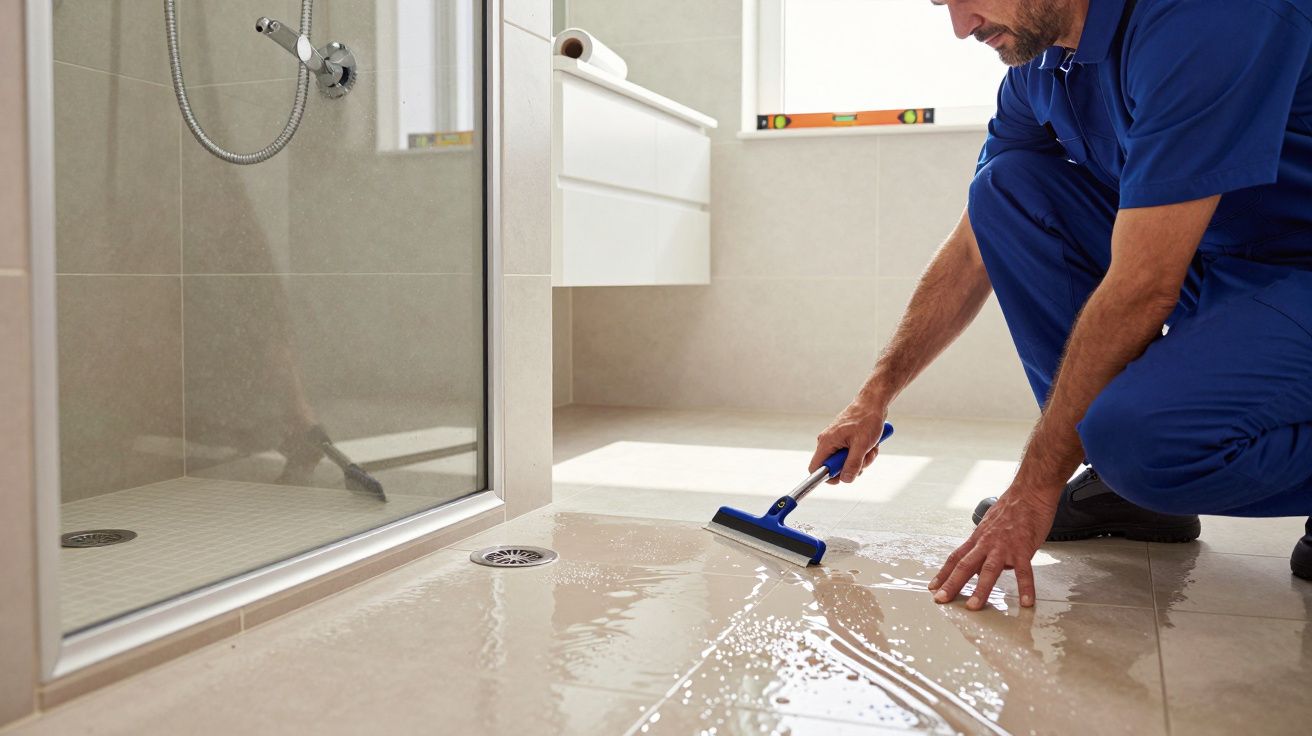
Wet room design looks deceptively simple: tile everything, slope the floor, add a drain, done. But the moment you turn the whole bathroom into the “shower area”, drainage engineering stops being a background detail and becomes the main event, because water now has more ways to escape and fewer places to hide. If you’re planning a refurb, this is why wet rooms can fail quietly-until they don’t.
I learned this watching a fitter chase a stubborn puddle that always formed by the door, no matter how carefully he squeegeed. The tiles were immaculate, the drain was new, and yet the water behaved like it had its own opinion. It did: the plumbing logic underneath was built for a tray shower, not a flooded floor.
A wet room isn’t a shower without a tray - it’s a different water map
In a standard bathroom, water has a job title. It falls into a defined catchment (the tray), gets captured quickly, and the rest of the floor stays mostly dry. Your pipework can be “good enough” because the system isn’t asked to manage much spread.
In a wet room, water is allowed to wander. Spray hits walls, runs down corners, tracks under a vanity, and meets condensation and mop water on the same surface. The floor becomes the collection zone, which means you’re not just draining volume-you’re managing flow paths.
That’s why tiny errors matter. A millimetre of fall that’s fine under a shower screen can be the difference between “dries in 20 minutes” and “always damp by the skirting” when the whole room is in play.
Why drainage has to be faster and smarter
People assume the problem is “not enough drain”. Sometimes it is, but more often it’s about how the drain receives water and how the pipework lets it leave.
A wet room drain is asked to do three things at once:
- Catch water arriving from multiple directions, not just directly above.
- Cope with peak discharge (rain-shower heads can be brutal).
- Resist slow build-up of hair, soap and fine silt that spreads across the room rather than staying in a trap basket.
The practical outcome is a shift in priorities. You’re choosing grate position, trap type, pipe diameter, and route with a mindset closer to drainage engineering than “bathroom plumbing”.
“If the fall and the pipe run are fighting each other, the tiles will always get blamed first,” a plumber told me on a job where the drain was perfect and the outlet wasn’t.
Falls, floors, and the hidden geometry that decides whether it puddles
Wet rooms live or die on falls. Not “a slope somewhere”, but a continuous, intentional set of gradients that pull water to the drain without creating little dams.
Common trip points:
- Door thresholds: the flattest part of the room is often where you least want water to linger.
- Large-format tiles: they look sleek, but can struggle to express subtle multi-directional falls.
- Linear drains: brilliant when set up correctly, unforgiving when the fall isn’t consistent along their length.
A good installer will talk about where the water will travel, not just where the drain sits. The best wet rooms feel boring in use: no chasing beads with your foot, no wet socks two hours later, no darkened grout lines at the perimeter.
Pipe runs: the unglamorous reason wet rooms need a plan, not a guess
Under a tray, you can sometimes get away with an awkward pipe route because the tray holds water back until it finds the waste. A wet room doesn’t store; it relies on continuous removal.
That makes pipework rules feel stricter:
- Shorter is better: long horizontal runs add friction and invite slow drainage.
- Fewer bends: every elbow is a chance for hair and soap to settle.
- Correct pipe sizing: undersized wastes cope at first, then turn “mysterious” as soon as real life arrives.
- Ventilation and trap stability: poor air admittance can lead to gurgling, slow draw-down, or trap seal issues.
If you’re renovating an upstairs bathroom, add the structural reality: you may not have depth for the ideal fall on the waste pipe. That’s when the design needs to adapt-different drain form, different location, sometimes a pumped solution-rather than forcing the same logic into a tighter void.
Waterproofing isn’t just “paint-on tanking” - it’s a system that must match the drain
Wet rooms often get discussed as if waterproofing is a product. In practice it’s a relationship: tanking, floor former, drain flange, tile adhesive, grout, and movement joints all need to behave like one continuous barrier.
Two details people miss:
- Drain-to-membrane connection: the most vulnerable joint in the room is where the waterproofing meets the drain body. If that interface isn’t designed and installed as a system, you’re relying on hope and silicone.
- Movement and edges: wet rooms see temperature swings, moisture cycles, and vibration. Perimeters and changes of plane need proper joints so the “watertight box” doesn’t crack at its seams.
A wet room can look flawless and still leak slowly into a ceiling below. It’s rarely dramatic. It’s often just persistent, gentle failure.
The simple logic shift: design for recovery, not perfection
Real bathrooms aren’t controlled environments. Someone will aim the handset at the door, forget the extractor, overfill the bath, mop with too much water, or shed hair like it’s a hobby. Wet room design succeeds when it anticipates all of that and still recovers: drains quickly, dries predictably, and doesn’t punish you for living in it.
A quick sense-check before you commit:
- Where will water go if it lands anywhere on the floor?
- Can the drain keep up with your shower’s realistic flow rate?
- Does the waste route allow proper fall and access for maintenance?
- Is the waterproofing/drain detail from one compatible system?
- What’s the plan for drying and ventilation after use?
The best wet rooms don’t feel like engineering. They feel like freedom. The engineering is simply what makes that freedom safe.
FAQ:
- Do wet rooms always need a linear drain? No. Point drains can work very well, especially in smaller rooms, as long as the falls are designed cleanly and the drain has adequate capacity.
- Is slow drainage usually a tile-fall problem or a pipe problem? It can be either. Persistent puddling near the drain often points to fall geometry; slow draw-down and gurgling can indicate waste routing, trap issues, or poor ventilation of the pipework.
- Can I fit a wet room upstairs in a typical UK house? Often yes, but the joist depth and available void can limit pipe falls. This is where drain positioning, pipe sizing, and sometimes a pumped waste become design decisions, not afterthoughts.
- Is tanking enough to stop leaks? Tanking is vital, but it must connect correctly to the drain and be installed as a complete system (membrane, corners, joints, compatible adhesives and grout). A weak drain interface is a common failure point.
- How do I reduce lingering damp in a wet room? Prioritise fast drainage (proper falls and capacity) and fast drying (effective extraction, sensible heating, and surfaces that don’t trap water at edges and thresholds).





Comments (0)
No comments yet. Be the first to comment!
Leave a Comment