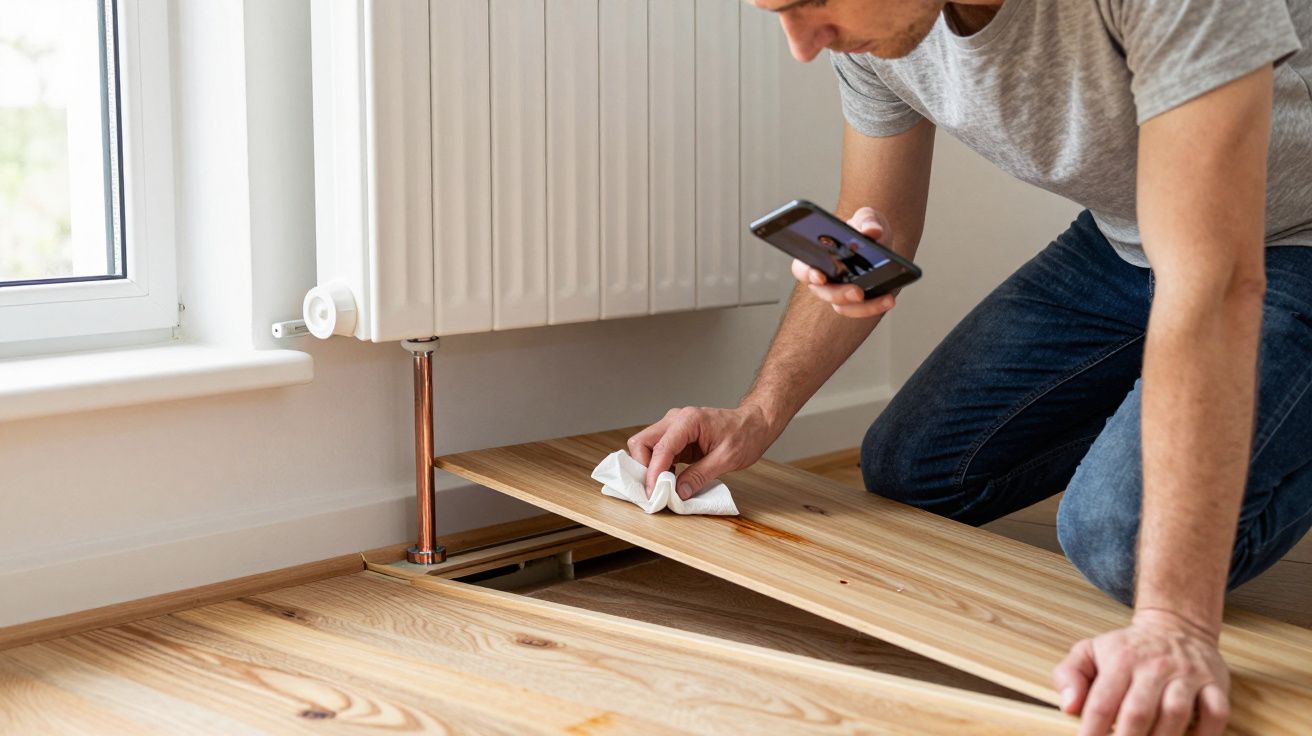
You pull up a floorboard, chase a new cable run, or move a radiator, and suddenly the house has opinions. Concealed pipework and the pressure changes that come with draining down, refilling, and reconfiguring a system can turn “fine for years” into a leak by tea time. It matters because the damage is rarely dramatic at first-just a damp patch, a faint hiss, a ceiling stain that grows while you sleep.
Renovations don’t create weaknesses so much as reveal them. Old joints that were quietly coping get nudged, stressed, dried out, or asked to handle a new flow pattern, and they respond the way ageing materials do: by showing you where they’re tired.
Why old pipes behave until you disturb them
Most older plumbing sits in a stable routine. Temperatures rise and fall in the same way, valves are rarely touched, and any tiny seep has often sealed itself with scale or corrosion products. The system “learns” its own quirks, and you learn to ignore the odd bang or slow-to-warm radiator.
Renovation work breaks that truce. You drain water out, introduce fresh oxygenated water, twist pipe runs to make space, and ask fittings to move after decades of not moving at all. Even a small change-like lifting boards to insulate-can flex a pipe just enough to open a hairline gap at a soldered joint.
Pipes don’t love change. They love routine, support, and gentle temperatures.
The common triggers: what renovations do to concealed pipework
1) Movement and vibration: the “it was fine yesterday” leak
Pulling up floors, drilling joists, chasing walls, or even heavy foot traffic during a project can shift pipes that were wedged into place by plaster, old clips, and sheer luck. Copper work-hardens; old plastic can creep; push-fit fittings can unseat if the pipe isn’t fully supported.
Small movement matters most where you can’t see it: under baths, behind kitchen units, and in ceiling voids. Those are also the places a drip can run along timber and show up metres away, confusing the diagnosis.
2) Draining down and refilling: fresh water, fresh problems
When you empty a system, rubbers and fibre washers can dry and shrink slightly. When you refill, they swell again-sometimes unevenly, sometimes not at all if they’re perished. That’s why a valve that never dripped can start weeping after you’ve isolated and reopened it.
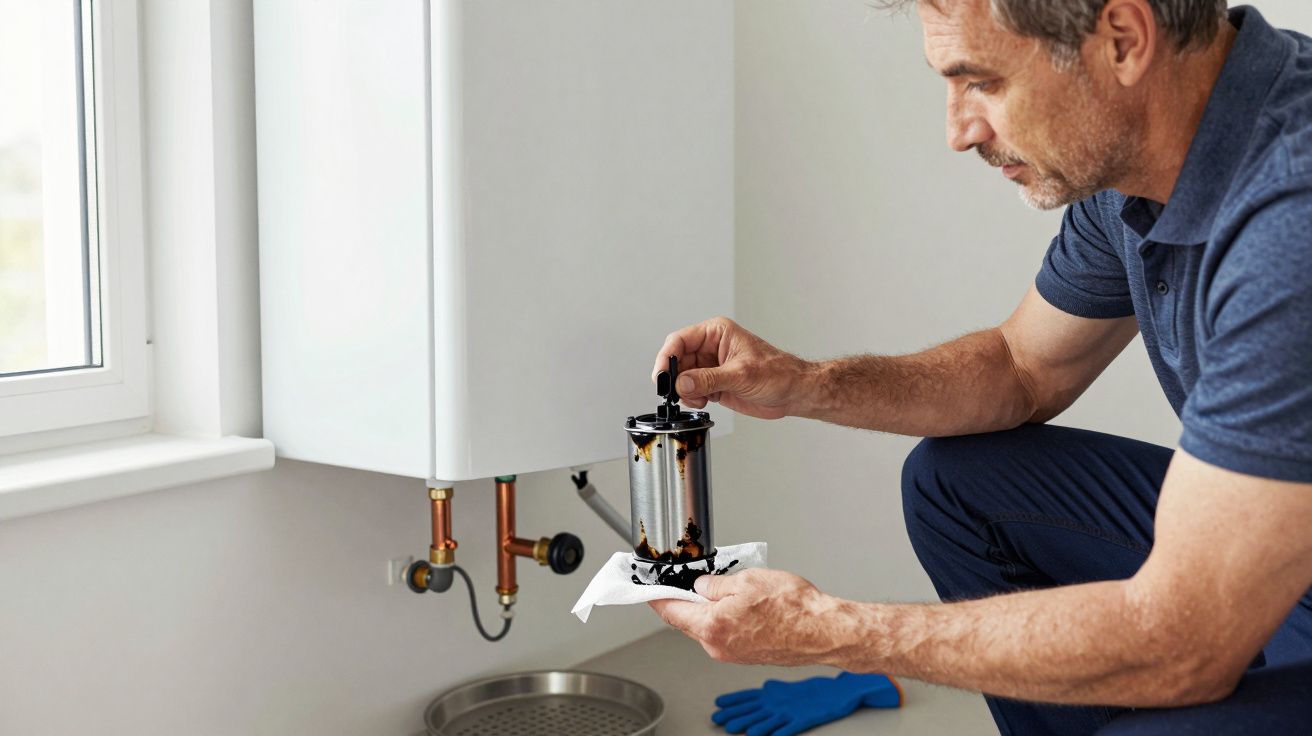
Refilling also brings fresh oxygen, which can kick-start corrosion in steel components and dislodge sludge. If you’ve changed radiators or altered pipework, you’ve also changed flow resistance. That can move debris to new choke points and cause pump strain or noisy circulation.
3) Pressure changes: the stress test nobody booked
Even if your water pressure isn’t “higher than normal”, renovations often cause pressure changes in the practical sense: sections are capped, pipe runs shorten, pumps are upgraded, mains are reconnected and tested. A joint that tolerated gentle, steady conditions may not tolerate repeated surges.
A classic example is swapping a gravity-fed setup for a combi boiler, or adding a powerful shower. The hidden pipework may have been installed for lower pressure and lower demand, and the renovation accidentally becomes its first real pressure trial.
4) Heat cycling after upgrades: expansion finds the weak link
New boilers, smarter controls, underfloor heating manifolds, and bigger radiators can alter how quickly and how often pipes heat up and cool down. Expansion and contraction isn’t a problem when pipes can slide slightly in clips and sleeves. It is a problem when they’re tight through joists, embedded in screed without allowance, or pinned against sharp edges.
That’s when you get ticking, knocking-and eventually, rubbing that wears a pinhole in copper or stresses a joint.
Where weaknesses typically show up first
Some failures are predictable. If you’re renovating, treat these spots as “high suspicion” even if you can’t see them yet:
- Compression joints tucked under floors near radiators (often disturbed when rads are removed).
- Old service valves and isolators that haven’t been turned in years.
- Push-fit fittings hidden behind units without proper pipe inserts or support.
- Pipes passing through joists without grommets/sleeves (rubbing plus expansion).
- Mixed-metal connections (copper to steel) where corrosion is more likely.
A useful rule: if it was hard to access for the original installer, it will be the first place you wish had been done better.
A quick “before you close it up” check that saves ceilings
You don’t need to become a plumber, but you do need a habit: test before you tile, board, or seal.
- Photograph runs and joints before covering. Future you will thank present you.
- Pressure test where possible (your plumber can do this properly; it’s standard on good jobs).
- Bring the system up gently after refilling: slow fill, bleed, check, recheck.
- Inspect at three moments: cold, fully hot, and the first cool-down.
- Use dry tissue on joints for a quick tell; a slow weep shows up fast on paper.
The expensive part of a leak is rarely the water. It’s what the water touches while you’re not looking.
If you’re changing layouts: what to ask for (and why)
Renovations are the best time to improve reliability, not just aesthetics. If pipework is being altered, ask about these details-because they’re what stop call-backs:
- Proper clipping and support spacing (prevents movement and joint stress).
- Sleeving where pipes pass through timber or masonry (prevents rubbing and noise).
- Accessible isolators for new bathrooms/kitchens (so future fixes don’t require demolition).
- Avoiding buried joints where possible (especially in walls and floors).
- Correct pipe sizing if you’re adding outlets or upgrading showers (reduces velocity and surging).
Good concealed work looks boring. That’s the point.
Warning signs after a renovation (don’t ignore these)
In the first days and weeks, your house will give small hints before it gives you damage. Pay attention to:
- A new musty smell near skirting or cabinets.
- Paint or plaster that looks slightly darker, not necessarily wet.
- Boiler pressure dropping repeatedly (sealed systems should stabilise).
- Sudden noisy pipes, hammering, or a pump that sounds strained.
- A hot spot on a floor where there shouldn’t be one.
If something feels “off”, stop assuming it’ll settle. Settling is for dust; leaks are for finding.
FAQ:
- Why do leaks appear weeks after the work, not immediately? Slow weeps can take time to saturate timber and show through finishes. Heat cycling can also gradually open a marginal joint.
- Is it normal for boiler pressure to drop after refilling? A small initial adjustment can be normal after bleeding radiators, but repeated drops usually point to a leak or a faulty expansion vessel/relief valve.
- Can I just tighten a compression joint under the floor? Sometimes, but overtightening can deform olives or crack old fittings. If you can’t inspect properly and dry-test afterwards, get a professional.
- Do I need to replace all old pipework during a renovation? Not always. Targeted replacement of suspect sections, valves, and inaccessible joints often delivers the best reliability for the budget.
- What’s the safest way to close walls and floors back up? Only after a pressure test (where possible) and several hot/cold cycles with visual checks. Photos and access panels in key zones are cheap insurance.





Comments (0)
No comments yet. Be the first to comment!
Leave a Comment