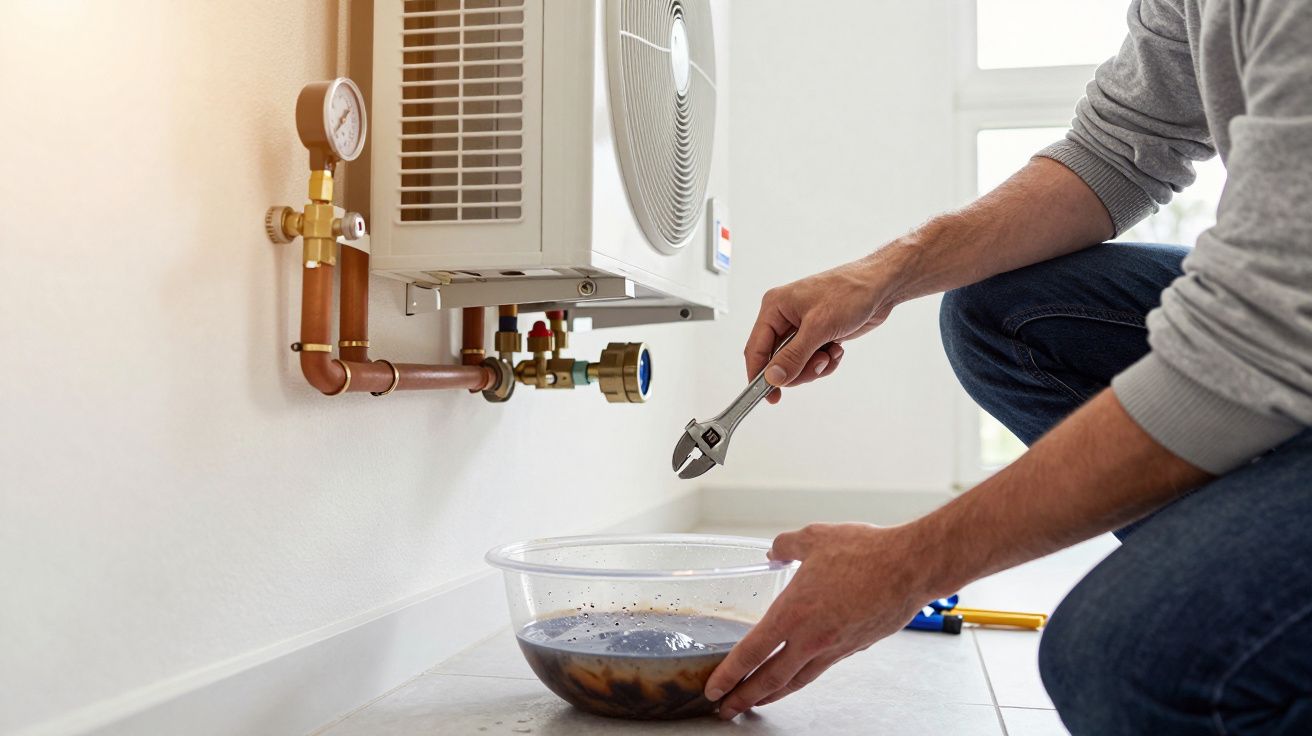
The call always starts the same way: a new-build, a tidy plant room, and a homeowner confused that the heating keeps cutting out. Heat pumps are sold as the modern, efficient answer - but installation stress can make them behave like an old boiler on its last legs, even when everything is brand new. If you’re paying for electricity and comfort, those early failures matter, because they’re usually preventable.
The most frustrating part is the timing. The system passes handover, it warms the house once or twice, and then the pump alarms, the flow drops, or the unit locks out on a cold evening when you need it most. Nothing “wore out”. Something got pushed, pinched, starved, or dirtied on day one.
New doesn’t mean settled
A heating system is a bit like a fresh plastered wall: it looks finished before it’s actually stable. Pipework is still shedding debris, air is still finding high points, and controls are still trying to make sense of a building that hasn’t dried out.
Heat pumps, in particular, are less forgiving than boilers. They run longer, at lower temperatures, and rely on steady flow rates. When the hydraulics aren’t calm, the pump is the first component to complain - and sometimes the first to fail.
The quiet reasons pumps fail early
Most “brand new pump” problems aren’t about a defective motor. They’re about conditions the pump was never meant to live with, created by rushed commissioning or small oversights that stack up.
Here are the repeat offenders.
1) Dirt and swarf: the invisible grit that eats impellers
New pipework is rarely clean inside. Cutting copper, reaming plastic, threading steel, installing radiators - it all leaves fines behind. Add flux residue, jointing compound, bits of PTFE tape, and you’ve got a grinding paste moving round a high-efficiency circulator.
If the system wasn’t properly flushed and filtered, the pump becomes the sacrificial part. It can jam, run hot, or wear prematurely.
- Metallic swarf can score bearings and impellers.
- Flux and sludge can foul strainers and narrow ports.
- Debris can lodge in valves, forcing the pump to work against a partially closed system.
2) Air: not just gurgling, but cavitation
A bit of air noise is annoying. Persistent microbubbles are destructive. When a pump pulls against air pockets, it can cavitate - tiny vapour bubbles collapsing at the impeller - which sounds like gravel and slowly chews surfaces.
Air also reduces effective flow, which many heat pump controllers interpret as a fault. So the system cycles: start, alarm, stop, repeat. That stop-start pattern is pure wear.
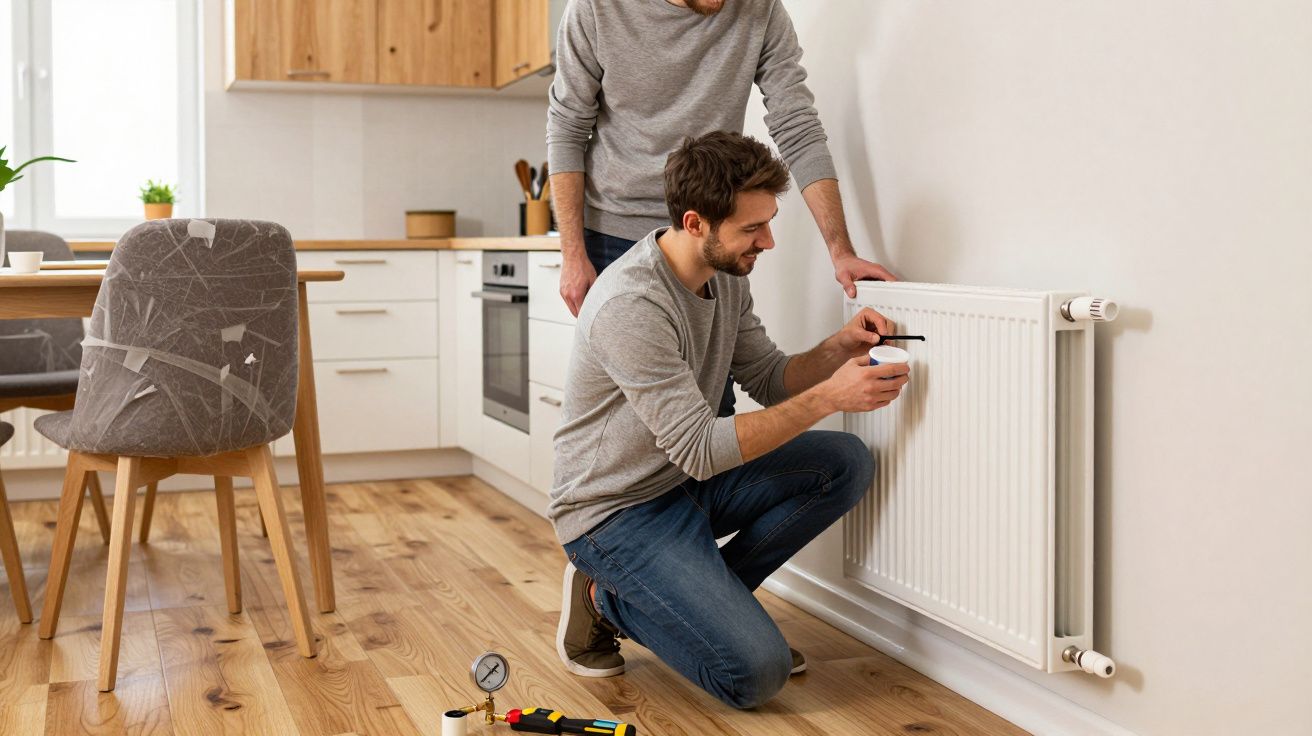
Practical clue: if you’re bleeding radiators weekly in a “new” system, the pump is living in a bad atmosphere.
3) Dead legs, closed valves, and “it’ll do” pipe sizing
Pumps are happiest when the system provides a clear, correctly sized path. But in the real world, someone leaves a service valve half shut, a bypass is missing, or pipework has been necked down to make it fit.
Heat pumps need consistent flow to protect the compressor and deliver heat. Restrict the circuit and you create high differential pressure: the pump runs harder, gets hotter, and may trigger protection faults.
Common installation stress patterns include:
- Undersized primary pipework between the unit and buffer/low loss header.
- Balancing valves never set, leaving some circuits starved.
- A bypass omitted or set incorrectly, causing short-circuiting or dead-heading.
4) Wrong glycol concentration (or the wrong stuff entirely)
On systems with external pipework or ground loops, glycol is often added for frost protection. Too much glycol makes the fluid thicker, harder to pump, and less able to carry heat. Too little risks freezing - and that can burst pipes and seize pumps.
It’s not only the percentage; it’s the product. Some mixes aren’t compatible with seals or are topped up with random inhibitors. The pump then runs against higher viscosity or deteriorating fluid, and pays the price.
5) Electrical supply and controls: the pump is a messenger
A modern circulator is electronics-heavy. Voltage dips, poor earthing, noisy supplies, or incorrect control wiring can cause intermittent stops that look like “pump failure” but are really power quality or control logic problems.
If a pump repeatedly loses its signal, it may:
- Default to a low speed when the system needs high flow.
- Overheat from stalled conditions.
- Fail early because it’s constantly being started under load.
The easy checks that stop a repeat call-out
You don’t have to be an engineer to ask the right questions. When a new system is misbehaving, the goal is to find whether the pump is being abused by the environment around it.
A good installer will be comfortable walking you through these basics:
- Filter and magnet: is there a proper strainer/magnetic filter, and has it been cleaned after the first weeks?
- Proof of flushing: was it powerflushed (where appropriate) and chemically cleaned, or just “filled and hoped”?
- Air management: is there an automatic air vent at the right high points, and has the system been properly purged?
- Flow evidence: can they show the designed flow rate and the measured flow rate during commissioning?
- Valve positions: are all service valves fully open and locked, with balancing completed rather than guessed?
- Glycol test: if glycol is present, has concentration been measured with a refractometer, not estimated?
Let’s be honest: handovers are busy. People want the paperwork signed, the app connected, the job done. But pumps don’t care that the kitchen is finished; they only care about flow, cleanliness, and conditions.
What “good commissioning” actually looks like
Commissioning can sound like a box-ticking exercise. In a heat pump system, it’s closer to setting a rhythm: stable circulation, stable temperatures, stable control.
A solid commissioning visit usually includes:
- Flush, clean, refill, dose inhibitor - then clean the filter again after the first run period.
- Purge air methodically (not just “bleed the rads”) and confirm quiet circulation.
- Set pump mode/speed for the actual system, not a default.
- Balance emitters so the heat pump isn’t forced into high temperature to compensate.
- Verify heat pump flow rate at different operating points, not only at one snapshot.
“A pump that fails early is often doing its best in a system that’s asking too much of it.”
If your brand new system keeps eating pumps
Don’t accept “bad luck” as the full explanation. Pumps do fail sometimes, but repeat failures usually mean the same underlying stress is still there, quietly unchanged.
Use this quick guide to steer the conversation:
| Symptom | Likely cause | What to ask for |
|---|---|---|
| Noisy, rattly pump | Air/cavitation or restriction | Purge procedure + check valve positions |
| Pump hot, low flow alarms | Blocked filter/strainer, debris | Clean filter and show what was found |
| Works, then fails again weeks later | Ongoing contamination | Proof of proper flush + inhibitor + follow-up clean |
FAQ:
- Why would a pump fail within months in a new heat pump system? Most often because of debris, air, or restricted flow created during installation and commissioning. The pump is sensitive to poor hydraulics and contamination.
- Is it normal to keep bleeding radiators on a new system? A little air is common at first, but repeated bleeding suggests trapped air or poor air separation, which can lead to cavitation and pump wear.
- Do heat pumps need different pipework standards than boilers? They tend to need steadier flow and careful sizing because they run longer at lower temperatures. Small restrictions that a boiler “tolerates” can cause heat pump faults.
- Should the installer come back after a few weeks? Ideally, yes. A follow-up to clean filters, recheck flow, and confirm stable operation catches early debris and settling issues before they become failures.
- Can I just replace the pump and move on? You can, but if the root cause is dirt, air, or restriction, the new pump will be stressed in the same way and may fail again.



Comments (0)
No comments yet. Be the first to comment!
Leave a Comment