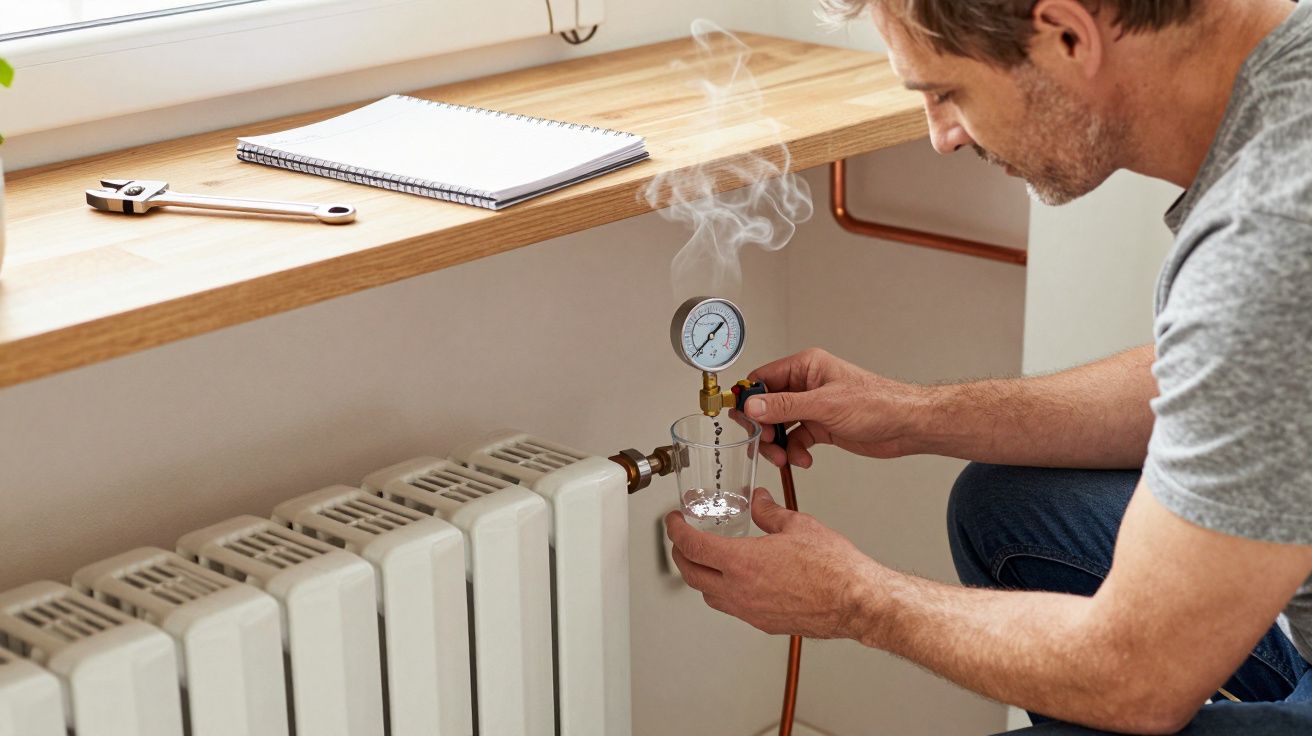
The first week after a refit is often when the house starts talking back. Heat pumps that ran quietly before can suddenly hiss, gurgle, or thrum, and the most common culprit is air entrapment somewhere in the system. It matters because that noise is usually a symptom of poor circulation, wasted energy, and wear on parts that are meant to last.
You hear it at awkward times: a slosh in the airing cupboard at midnight, a rattle as the unit ramps up at breakfast, a faint “kettle” sound near a radiator that never used to complain. The installer may have left everything spotless, but the water circuit doesn’t care about tidy pipework-it cares about flow.
The mystery noise that arrives after “everything’s been improved”
A refit changes the hydraulics even when nobody intends it to. A new buffer tank, a different pump, rerouted pipe runs, TRVs swapped, or a fresh flush and refill can all introduce new high points and new places for air to linger. The system often runs fine for a day or two, then the trapped air finds its way into a pump volute, a plate heat exchanger, or a tight elbow and starts making itself heard.
The pattern is familiar: the heat output is mostly there, but it feels uneven. One circuit warms slowly, another gets hot then cools, and the pump sounds like it’s chewing gravel when it changes speed. A noise with a timing usually has a cause, and after refits that cause is frequently air being carried around until it finally collects.
What air entrapment is really doing “under the hood”
Air in a sealed heating circuit isn’t just a bubble you can ignore. It reduces the effective cross-section of the pipe, disrupts flow measurement, and encourages cavitation-tiny vapour pockets collapsing inside the pump that can sound like sizzling or crackling. It also interferes with heat transfer, so the heat pump compensates by running harder, which can make the whole installation seem louder even if the compressor is healthy.
Refits are prime time for this because fresh fill water carries dissolved gases. As the system heats and cools, those gases come out of solution and collect at high points. Add a bit of turbulence from a higher-speed circulation pump and you’ve got the perfect delivery mechanism: air gets swept along, then parked in the quietest corner it can find.
You can often “map” the issue by where you hear it:
- Gurgling in pipes or radiators: air pockets moving or expanding.
- A rattly, gravelly pump: cavitation or air passing through the impeller.
- Clicking at valves: flow instability as air compresses and releases.
- A rushing noise at one radiator: restricted flow forcing higher velocity through a partially blocked section.
Why refits trigger it (even when the installer did everything right)
The awkward truth is that bleeding once is rarely enough. A system that has been drained and refilled needs time, temperature cycles, and proper separation to get rid of air. If the refit also changed the balance of the system, you can end up with higher velocities in some branches and low flow in others-both conditions that encourage air to hang around.
Common refit triggers include:
- New high points created by rerouting pipework around joists or doorways.
- Higher pump speeds (manual or auto) after upgrades, making turbulence worse.
- A new cylinder coil or plate heat exchanger, which can trap microbubbles initially.
- Magnetic filter cleaned/reinstalled and not fully vented, leaving a pocket.
- Expansion vessel or top-up loop work, introducing air or disturbing pressure.
Let’s be honest: most of us hear the first gurgle and hope it will “settle down”. Sometimes it does. Often it just relocates.
How to settle the system without guessing
Start with observation, then do the least dramatic thing that addresses the physics: give air a route out, and keep the water moving steadily while it does.
- Check system pressure when cold (follow your installer’s target; many homes sit around 1.0–1.5 bar cold). Low pressure makes air problems worse and can pull more air in at weak points.
- Bleed radiators at the high points and any manual air vents on cylinders/buffers-then recheck pressure. If you bleed without topping back up correctly, you can trade “noise” for “no circulation”.
- Run the heat pump for a full cycle, then bleed again the next day. Fresh gas comes out of solution after heat-up; one pass rarely clears it.
- Listen at the pump when it ramps. If the noise is worst during speed changes, ask the installer to verify pump settings and whether auto-adapt is appropriate for your system.
- Confirm there’s effective air separation (automatic air vent at the right location, or a proper deaerator). The best bleed point is where microbubbles are encouraged to rise-not just where it’s convenient to fit a vent.
If the noise persists, don’t keep endlessly topping up. Repeated filling introduces more dissolved gas and can accelerate corrosion inhibitor dilution. The goal is stable pressure, stable flow, and a reliable way for microbubbles to leave.
“After a drain-down, the system has to exhale,” one commissioning engineer told me. “If it can’t, the pump ends up doing the breathing-and you hear every breath.”
The small checks that stop a big annoyance becoming a fault
Some post-refit noise is benign; some is an early warning. These quick checks help you decide whether you’re dealing with normal commissioning or a setup issue worth a call-out.
- Noise plus poor heat delivery (cold rooms, short cycling, frequent defrost disruption): treat it as a system problem, not a cosmetic one.
- Noise that changes when you close/open a zone: suggests balancing issues or a branch trapping air.
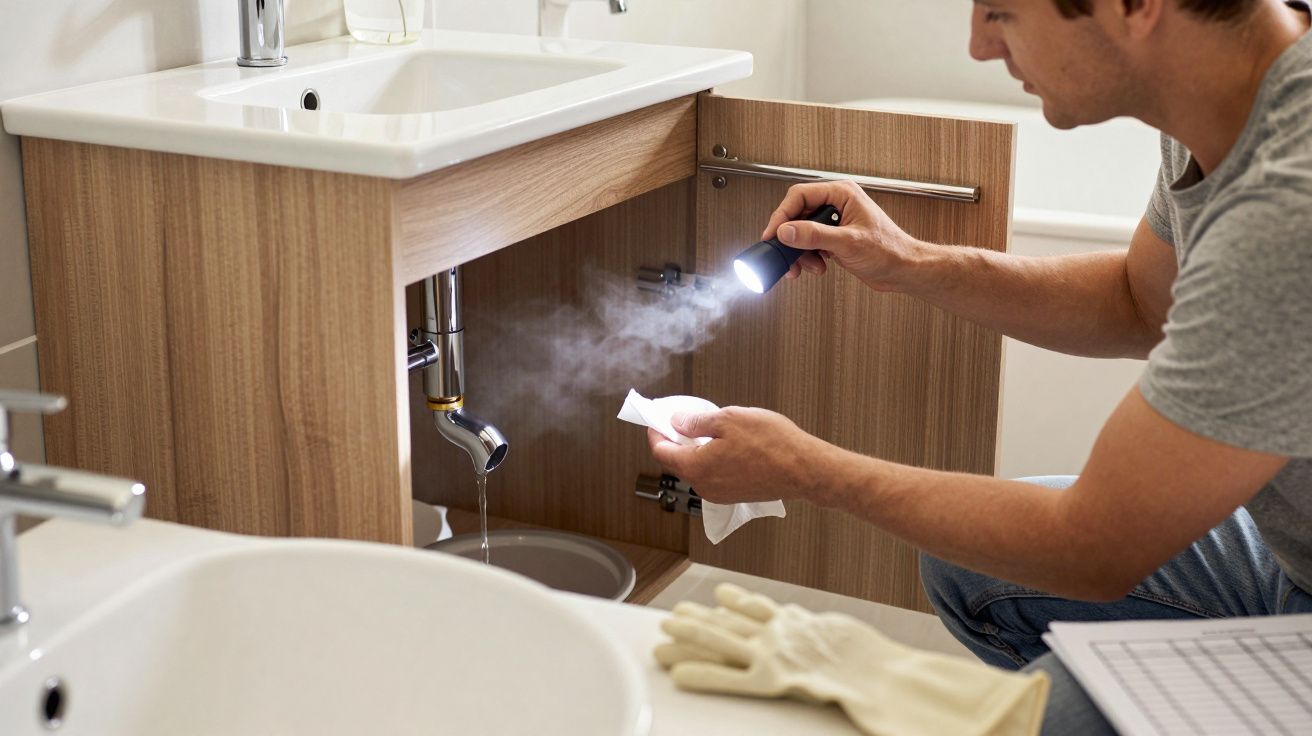
- Repeated pressure drops: could mean a leak or an automatic air vent passing water; both deserve attention.
- New “whoosh” at thermostatic valves: can be differential pressure too high after refit-balancing or DP bypass settings may be needed.
A properly commissioned heat pump system is rarely silent, but it should be steady: a consistent hum outdoors, and indoors a background circulation sound you stop noticing. Gurgling and gravel noises are the system telling you it’s not yet in equilibrium.
| What you notice | Likely cause | What to do next |
|---|---|---|
| Gurgling in radiators | Air pocket at high point | Bleed, restore pressure, repeat after a day |
| Rattly/“gravel” pump noise | Cavitation or air through pump | Check pressure, vent, review pump speed/settings |
| One area noisy after refit | Flow imbalance + trapped air | Balance circuits; verify air vent/deaeration |
FAQ:
- Why did the noise start days after the refit, not immediately? Dissolved gases come out of the fresh fill water as temperatures cycle. Air often takes a few runs to gather into audible pockets.
- Will bleeding radiators fix it permanently? Sometimes, but many systems also need effective microbubble separation near the heat source. Bleeding alone can miss air circulating in the plant room.
- Is pump noise always air entrapment? No. It can be high differential pressure, incorrect pump settings, debris after a flush, or a failing bearing. Air is common after refits, but not the only cause.
- Should I keep topping up pressure until it stops? Don’t do it repeatedly. Frequent top-ups add oxygen and dilute inhibitor; if pressure keeps dropping, get the system checked for leaks or vent issues.
- When should I call the installer back? If you hear cavitation-like rattling, have uneven heating, see frequent faulting/short cycling, or pressure won’t stabilise after proper venting.





Comments (0)
No comments yet. Be the first to comment!
Leave a Comment