A new bathroom feels like a clean slate. Your plumbing systems don’t get the memo, and the load increase arrives on day one: more fittings, higher flow rates, longer hot-water runs, and more frequent use. It matters because the weak point usually isn’t the shiny suite you can see, but the older pipework and ventilation you can’t.
You notice it as “mystery” problems: a shower that goes hot-cold, a loo that gurgles, a smell that appears only in the evening, or a drain that can’t keep up when the basin and shower run together. None of it feels dramatic at first. Then it becomes the new normal.
The hidden mismatch: new fixtures, old assumptions
Older bathrooms were often designed around one bath, one basin, one WC, and modest usage patterns. Modern refits add rainfall showers, twin basins, wall-hung WCs with concealed cisterns, and sometimes a second bathroom where there wasn’t one before. The fixtures look efficient, but the combined demand can be bigger, sharper, and less forgiving.
The awkward truth is that plumbing is a system, not a set of products. You can install a powerful shower on pipework that was sized for a slow-fill bath and get exactly what you’d expect: noise, pressure drop, and constant “fiddling” with taps to stabilise temperature.
A bathroom upgrade doesn’t just add comfort. It changes the hydraulic behaviour of the whole house.
Where the stress shows up first
Most failures don’t announce themselves with a burst pipe. They appear as small, repeatable annoyances that map neatly to capacity limits.
- Pressure and flow: the shower is great until someone turns on a tap downstairs.
- Hot water delivery: longer runs to a new ensuite mean more heat loss and longer waits.
- Drainage speed: a modern shower can outpace an older 40 mm waste, especially with hair and soap.
- Ventilation and smells: siphons get disturbed, traps run dry, or air admittance valves start doing acrobatics.
If your house has had “years of being fine”, that can actually mask the issue. The old setup may have been operating comfortably under its limits. The refit moves you closer to the edge.
Supply side: why water in becomes complicated
Pressure isn’t the same as flow
People talk about “good pressure” as if it’s one thing. In reality, pressure (the push) and flow (the volume) can diverge depending on pipe size, restrictions, and how many outlets run at once.
Common bottlenecks after a new bathroom include:
- Undersized supply pipes feeding the new room, especially if it’s been tee’d off an existing run.
- Old stop taps and service valves that are partially seized or scaled up internally.
- Longer pipe runs to loft conversions or rear extensions that add friction loss.
Hot water: the quiet capacity limit
The new shower is usually the first place you feel it. A high-flow shower can drain a stored cylinder quickly, and combi boilers have maximum continuous hot-water output that can be exceeded by one “luxury” fitting.
If you’ve added a second shower, you’ve also added a behavioural shift: two people bathing at once becomes normal. The system might never have been asked to do that before.
Waste side: why water out is often the real culprit
The waste pipework in older homes was often installed with generous tolerance for a single bath emptying now and then. Modern showers can deliver steady flow for 10–20 minutes, and that exposes every compromise: shallow gradients, long horizontal runs, and too many bends.
The siphon problem people mistake for “a bad smell”
Smells after a refit are frequently about air, not dirt. When water rushes past a junction, it can create negative pressure that tugs water out of traps (the water seal that blocks sewer gases). If the system can’t get air in fast enough, it takes it from the nearest trap.
Typical signs include:
- Gurgling noises after flushing.
- A smell that appears after the shower runs.
- A basin that drains “in pulses”.
That’s drainage ventilation, not a cleaning issue.
“It worked before”: the load increase that changes everything
New bathrooms don’t only add fixtures. They change timing. A family may now shower more often, run extraction fans more, use macerators, and rely on concealed cisterns that are harder to spot when they’re quietly leaking.
Even small continuous leaks matter. A slow cistern leak can keep a fill valve chattering and a pipe gently flowing for hours, which can affect pressure stability in some setups and mask larger issues until something else tips it over.
A quick pre-refit check that saves a post-refit headache
You don’t need to become a plumber. You just need to treat the refit like a system upgrade, not a cosmetic change.
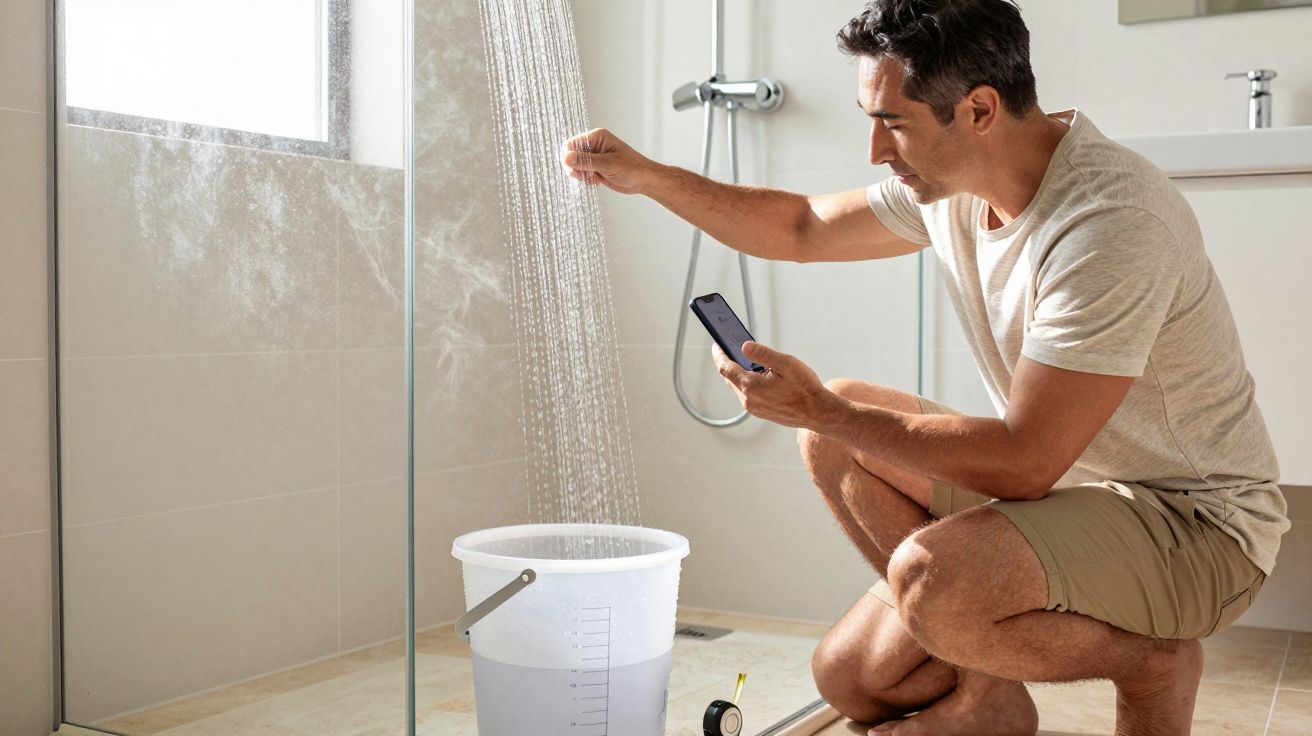
- Measure incoming flow (not just pressure) at the kitchen tap with a bucket and timer.
- Check pipe sizes feeding the bathroom and the location of tees; long skinny runs are a red flag.
- Confirm hot-water capacity: combi output or cylinder recovery rate versus the shower’s actual demand.
- Inspect drainage routes: waste pipe diameter, gradient, and whether the stack ventilation is adequate.
- Plan access: isolation valves and service hatches for concealed components.
A decent installer will talk about these without being prompted. If the conversation stays stuck on tile choices and tap finishes, you’re missing the bit that protects your walls and ceilings later.
When an upgrade needs an upgrade
Sometimes the correct fix isn’t “a better shower”. It’s rebalancing the underlying plumbing systems so the new bathroom behaves like it belongs.
| Symptom | Likely system stress | Common remedy |
|---|---|---|
| Hot-cold shower swings | Competing demand, boiler/cylinder limit | Thermostatic valve, re-pipe, capacity upgrade |
| Slow shower tray draining | Waste undersized/poor fall | Larger waste, shorter run, improved gradient |
| Gurgling and smells | Poor venting or trap siphonage | Vent improvements, AAV placement, stack check |
The point isn’t to make old houses “modern”. It’s to make modern bathrooms honest about what they ask from old infrastructure.
Key idea to keep: you’re not buying fixtures, you’re changing behaviour
A bathroom renovation is a lifestyle upgrade: faster showers, more simultaneous use, higher comfort expectations. That’s exactly why it’s worth doing. But it’s also why the background network-pipes, valves, vents, and drains-needs to be treated as part of the project, not a footnote.
Done properly, the new room won’t just look calm. The house will sound calm too.






Comments (0)
No comments yet. Be the first to comment!
Leave a Comment