A leak after handover feels like betrayal: the tiles are pristine, the silicone is new, and the invoice is already filed away. In bathroom refurbishments, post-installation settlement is one of the most common reasons “finished” work starts misbehaving in the first few weeks, and it matters because water never stays politely where you want it. It finds the quiet gap, the soft joint, the tiny fall that’s just slightly off-and then it keeps going.
Most new-bathroom leaks aren’t dramatic pipe failures. They’re small, steady issues that only show up once the room has been used, warmed, cooled, loaded with moisture, and walked on day after day.
The first weeks are a stress test, not a victory lap
A bathroom can look perfect on day one and still be moving underneath. Timber joists flex a touch, new plaster and adhesives finish curing, and sealants go from “freshly applied” to “fully working”. Even a millimetre of movement is enough to break a watertight line around a tray or bath.
That’s why the first month is when homeowners notice the tell-tales: a faint damp mark on the ceiling below, a musty smell in the vanity, or a grout line that darkens and never quite dries. It’s not always poor workmanship. Often, it’s the room settling into real life.
A bathroom doesn’t fail all at once. It usually whispers first.
Post-installation settlement: what it is and where it bites
Settlement is the tiny shift that happens when new weight and new connections meet an old structure. A stone floor, a suspended timber floor, and a concrete slab all move differently, and a refurbishment can introduce new stresses: heavier tiles, a new bath, a walk-in enclosure, or a wall-hung WC frame.
Common “bite points” include:
- The bath edge or shower tray perimeter where silicone bridges two materials that move at different rates
- Pipework joints that were tightened when everything was dry and cold, then loosen slightly with heat cycles
- Tile backer boards or plasterboard that compress a fraction at fixings
- Waste connections that are aligned perfectly-until the tray settles and changes the angle by a hair
The frustrating bit is how normal it can look. You might only see it when the shower has been running for ten minutes and the floor has warmed up.
The usual suspects: where new bathrooms most often leak
Most leaks after handover come from a handful of repeat locations. If you’re trying to diagnose without ripping the room apart, start with these.
- Shower waste and trap: A slightly skewed compression fitting or a trap not fully seated can weep under flow, not under a quick test.
- Bath waste/overflow: Overflows often leak only when the bath is filled above a certain point, which many snag checks never do.
- Shower screen channels and fixings: Water can track down screw holes or behind channels if the sealing strategy relies on silicone alone.
- Tile grout mistaken as waterproofing: Grout isn’t a tank. If there’s no proper waterproofing behind wet-zone tiles, water can migrate slowly.
- Silicone joints at movement points: Corners, tray-to-tile, bath-to-tile-anywhere two planes meet and flex.
A helpful rule: if the leak appears only during use and disappears afterwards, suspect wastes, seals, and tracking paths before you suspect a burst pipe.
Why “it passed the test” still isn’t the same as real use
Installers often test quickly: run the shower, watch the waste, check visible joints. That’s sensible, but it’s not the same as a household pattern-longer showers, hotter water, kids splashing, a bath filled to the overflow, cleaning chemicals, doors being slammed, floors being stepped on.
Water also behaves differently once surfaces are soaped and tension changes. It clings, it sheets, it tracks along a channel you didn’t know existed. A pinhole gap behind a screen can stay dry in a quick run, then leak reliably once the enclosure is used the way people actually use it.
The small installation choices that make leaks more likely
Certain choices during bathroom refurbishments don’t guarantee a leak, but they raise the odds-especially when settlement starts.
Trays and baths without solid support
If a tray or bath isn’t properly bedded (appropriate mortar bed, frame support, or manufacturer-approved base), it can flex under load. Flexing breaks the silicone bond, and once that edge is compromised, water gets behind and stays there.
Poor falls and flat spots
A floor can look level and still hold water against a joint. Wet rooms and low-profile trays are especially sensitive: a subtle flat spot can keep water lingering at the perimeter, slowly working at sealant and grout.
Mixing systems without a clear waterproofing plan
Tiles, boards, tanking, membranes, sealants-each has a role. Trouble starts when grout is treated as the waterproof layer, or when tanking stops short of the true splash zones. You don’t see the mistake immediately; you see it as a damp patch weeks later.
What you can do in the first 30 days (without panicking)
If you’ve just taken handover, you can reduce risk and catch issues early without turning your bathroom into a crime scene.
- Run the shower for 10–15 minutes while checking the ceiling below and the vanity base, not just the tray edge
- Fill the bath to just under the overflow, then drain it while watching the waste area
- Keep the room well-ventilated so condensation doesn’t masquerade as a leak
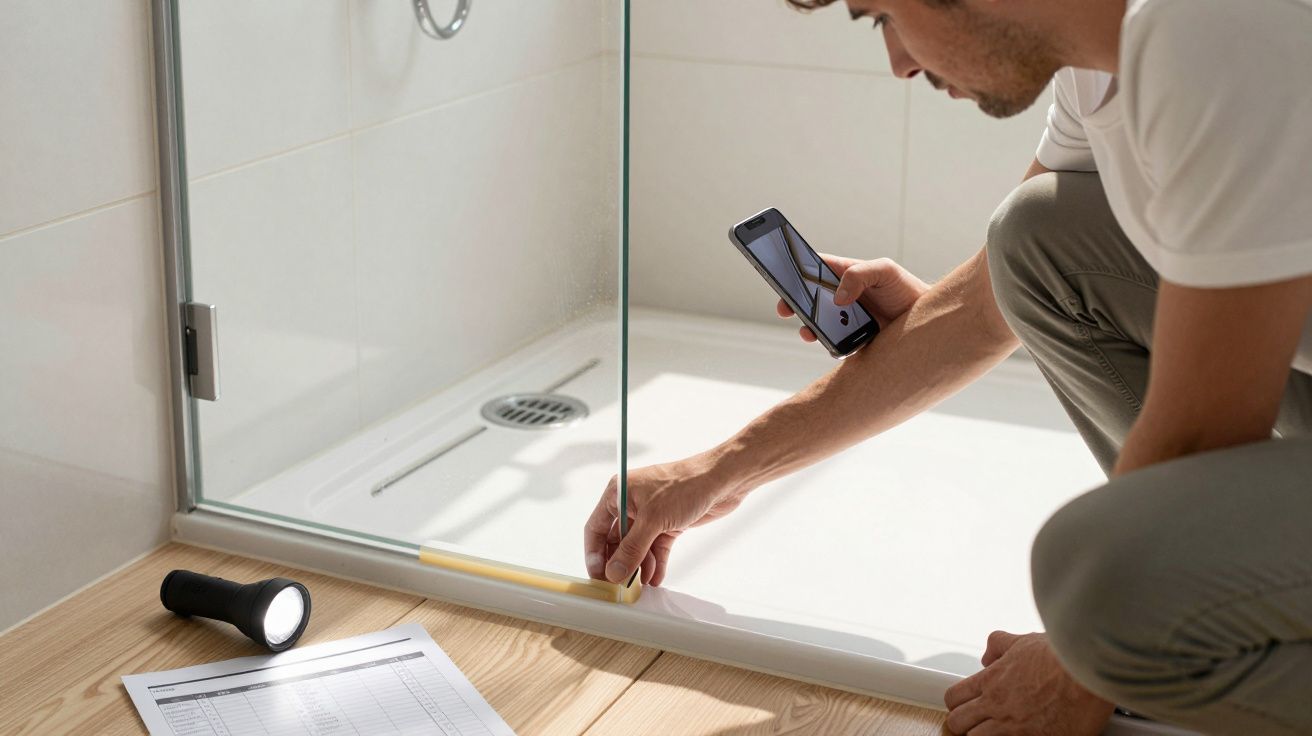
- Photograph silicone lines and any suspect marks weekly-patterns are easier to prove than memories
- Avoid re-siliconing immediately if a leak is suspected; it can hide the path and complicate warranty discussions
If something is damp, resist the urge to “just seal it”. The visible drip is often the end of the journey, not the start.
A quick triage guide: symptom to likely source
| What you notice | Most likely area | First check |
|---|---|---|
| Damp ceiling below shower | Waste/trap or tray edge | Trap connections, tray movement |
| Wet vanity base | Basin waste or supply joints | Tap tails, trap, isolation valves |
| Damp patch near screen | Screen channel/fixings | Screw holes, bottom seal, silicone gaps |
| Musty smell, no obvious water | Slow tracking behind tiles | Grout cracks, missing tanking signs |
When to call the installer (and what to ask)
If your refurbishment is recent, bring the installer in early. Leaks rarely improve on their own, and “waiting to see” can turn a simple seal issue into swollen flooring and mould.
Ask direct, practical questions:
- What waterproofing system was used in the shower area (tanking, membrane, boards), and where does it start/stop?
- Is the tray/bath fully supported to manufacturer spec?
- Can we do a controlled test: isolate shower, then bath, then basin-one at a time?
- If post-installation settlement is suspected, what is the planned remedy: re-bed, re-seal, adjust waste alignment?
A good contractor won’t be offended by clarity. They’ll usually welcome it, because finding a leak early is cheaper for everyone.
The quiet takeaway
Most leaks after handover aren’t a sign that the whole bathroom is doomed. They’re often the ordinary result of a new room settling, small movement meeting fine tolerances, and water doing what it always does: taking the easiest route. Catch it early, test methodically, and treat the waterproofing strategy-not the shiny surface-as the thing that truly makes a bathroom “finished”.
FAQ:
- Why would a brand-new shower leak only sometimes? Intermittent leaks often point to water tracking paths, slight movement, or a waste connection that only weeps under longer flow and heat expansion.
- Is grout meant to stop water? Grout is not a waterproof barrier. It helps finish and protect the surface, but wet zones should rely on tanking/membranes and correct detailing behind tiles.
- Should I re-silicone straight away if I see a gap? Not if you suspect an active leak. Re-siliconing can mask the route water is taking; it’s better to identify the source first, especially under warranty.
- How long does post-installation settlement last? Typically the first few weeks to a couple of months, depending on structure, materials, and load. Any movement-sensitive joints should be detailed to accommodate it.
- What’s the most common leak point after a refurbishment? Shower wastes and tray/bath perimeters are frequent culprits-small alignment or support issues can show up only after regular use.





Comments (0)
No comments yet. Be the first to comment!
Leave a Comment