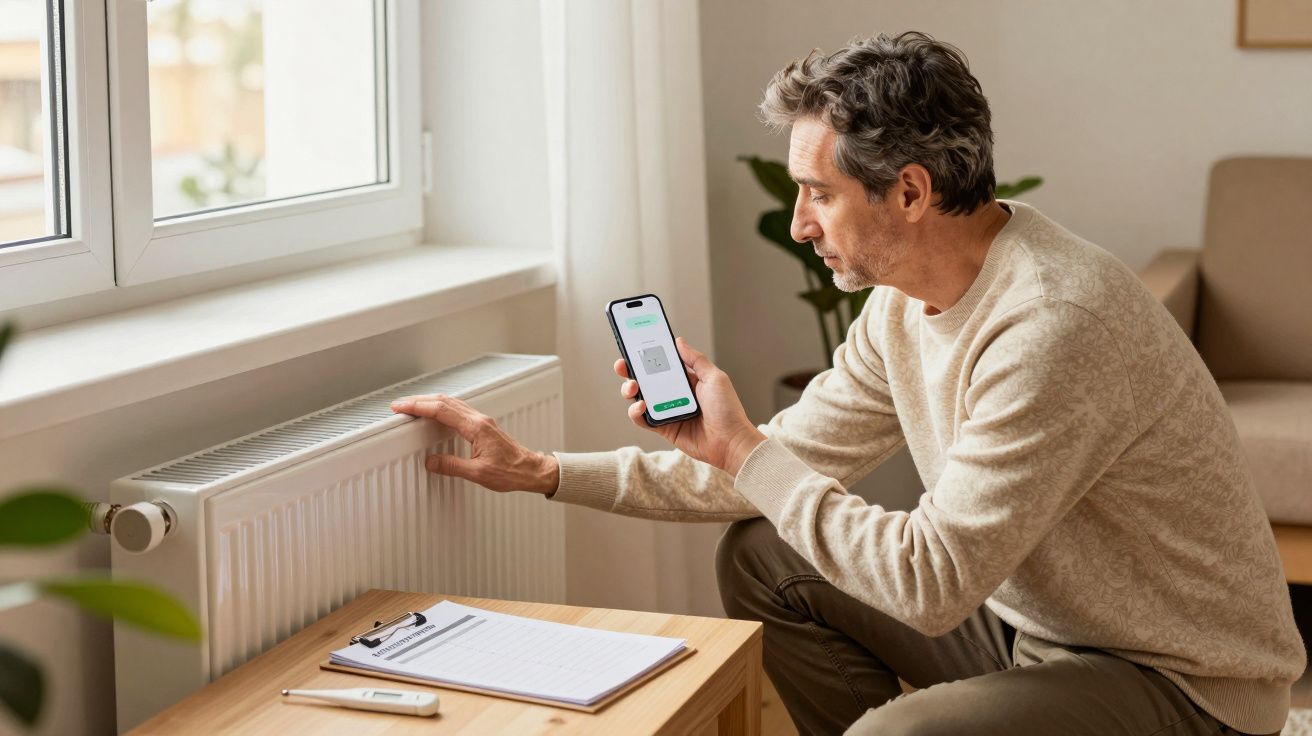
You sign off heating upgrades expecting quieter rooms and lower bills, then the first thing you hear is: “It’s freezing in here.” That early adjustment period is real, and it catches households, tenants and even maintenance teams off guard because comfort is as much habit as it is temperature.
The surprise isn’t that new kit behaves differently. It’s that people interpret those differences as faults, and they complain before the system has had a fair chance to settle, be tuned, and be understood.
The complaint curve starts with lost certainty
Old heating systems are often inefficient, but predictable. Radiators get hot fast, thermostats feel “responsive”, and occupants learn the quirks: which room runs warm, which one never quite gets there, when to nudge the dial. That lived-in knowledge is a kind of control, even when the building is wasting energy.
Heating upgrades remove those familiar signals. Flow temperatures drop, warm-up times stretch, and the house feels different at the same setpoint. People don’t complain because they hate efficiency; they complain because the feedback they relied on has changed.
Comfort is not just heat delivered. It’s heat delivered in the way people expect.
Common triggers in the first two weeks
Most early reports land in a narrow band of issues that are noticeable, understandable, and not always “real faults”.
- “The radiators aren’t hot” (they may be warm by design with low-temperature heating)
- “It takes ages to heat up” (timers and weather compensation change the rhythm)
- “One room is roasting, one is cold” (balancing and emitter sizing show up immediately)
- “The heat keeps turning off” (smart controls learning occupancy, or short cycling from commissioning settings)
- “It’s noisy” (air in pipework, pump speed, valves, expansion noises)
None of these are rare. The mistake is treating them as surprises.
Why better systems can feel worse at first
Many upgrades work by lowering peak temperatures and smoothing delivery. Heat pumps, hybrid systems, modern boilers with weather compensation, and smart zoning all aim for steadier indoor conditions. That steadiness can feel underwhelming if you expect the old “blast of heat” effect.
There’s also a psychological trap: when people know money has been spent, they watch the system more closely. Every click, every delay, every lukewarm radiator becomes evidence. The same occupant who tolerated a chilly back bedroom for years may now report it on day three.
The mismatch: “hot surfaces” versus “warm rooms”
Occupants often judge performance by touch. A radiator that used to hit 70°C and now sits at 40–50°C can feel “broken” even if the room reaches 20°C, just more gradually. If you do not explain that shift before handover, the first complaint is almost pre-written.
The adjustment period is partly physics, partly people
Yes, the building needs time. New control strategies need tuning. Air works its way out of pipework, TRVs settle, and heat emitters reveal where the house is draughtier than assumed. But the bigger reset is behavioural: people must re-learn how to run the home.
If an upgrade introduces zoning, for example, a hallway thermostat no longer “represents” the whole house. If the system relies on continuous low-level heating, turning it on for one hour in the morning (because that used to work) can leave the home feeling cold all day.
What often needs commissioning, not confrontation
Early complaints are frequently resolved by methodical checks rather than dramatic interventions.
- Verify flow temperature strategy (and explain it to occupants).
- Balance emitters and confirm valves are operating correctly.
- Check sensor locations, schedules and deadbands in controls.
- Bleed air where needed and confirm pump settings.
- Confirm hot water priority settings aren’t starving space heating at peak times.
The best fixes look boring on paper. That’s why they’re missed when everyone is stressed.
The hidden culprit: expectations set at install, not in winter
A system installed in spring can “pass” because nobody is truly cold. Then the first proper cold snap arrives, and the gap between design intent and lived experience becomes obvious. By then, the homeowner’s story is already formed: we upgraded, and it got worse.
It helps to say the quiet part out loud: an upgrade is not a magic switch. It is a change in how comfort is produced. If you prepare people for a learning curve, you turn complaints into feedback.
The best time to prevent a complaint is before anyone has lived one cold evening with the new system.
A simple pre-handover script that reduces call-backs
- What will feel different (radiator temperature, warm-up time, control behaviour).
- What “normal” looks like in week one (minor noises, gradual heat, small tweaks).
- What to do before calling (check schedules, leave it steady for 24 hours, note room temps).
- When to call immediately (pressure drops, error codes, no hot water, leaks).
It’s not marketing. It’s literacy.
What good looks like after settling
After the adjustment period, the pattern usually flips. Homes become more consistent, bills stabilise, and comfort stops requiring constant fiddling. The complaints dry up because the system becomes legible: people know what it’s doing and why.
A useful test is not “are the radiators hot?” but “does each room hold its target temperature without drama?” That’s the promise heating upgrades are meant to keep-and they often do, once the household catches up to the new normal.
Quick checklist: you’re past the rough patch when…
- Rooms reach setpoints reliably across a typical day.
- Schedules match real occupancy (not last year’s routine).
- Temperature swings are smaller, not bigger.
- Hot water performance is predictable.
- Occupants stop touching controls out of habit.
If you’re still not there, treat it as commissioning work, not regret. The early complaints are usually the start of optimisation, not evidence the upgrade was a mistake.
FAQ:
- Why does my upgraded system feel weaker than the old one? Many modern setups deliver heat more steadily at lower temperatures, so you lose the “hot radiator” sensation even when the room ends up warm.
- How long is a normal adjustment period? Often one to three weeks, depending on weather, control complexity, and how quickly the system is balanced and tuned.
- Should I keep turning it up to make it respond faster? Usually no. Big setpoint jumps can cause overshoot, short cycling, or confusion with smart controls; steady settings tend to work better with low-temperature systems.
- What’s one thing that prevents most early complaints? A clear handover that explains what will feel different and what “normal” looks like, plus a scheduled follow-up to tweak settings once the home has been lived in.



Comments (0)
No comments yet. Be the first to comment!
Leave a Comment