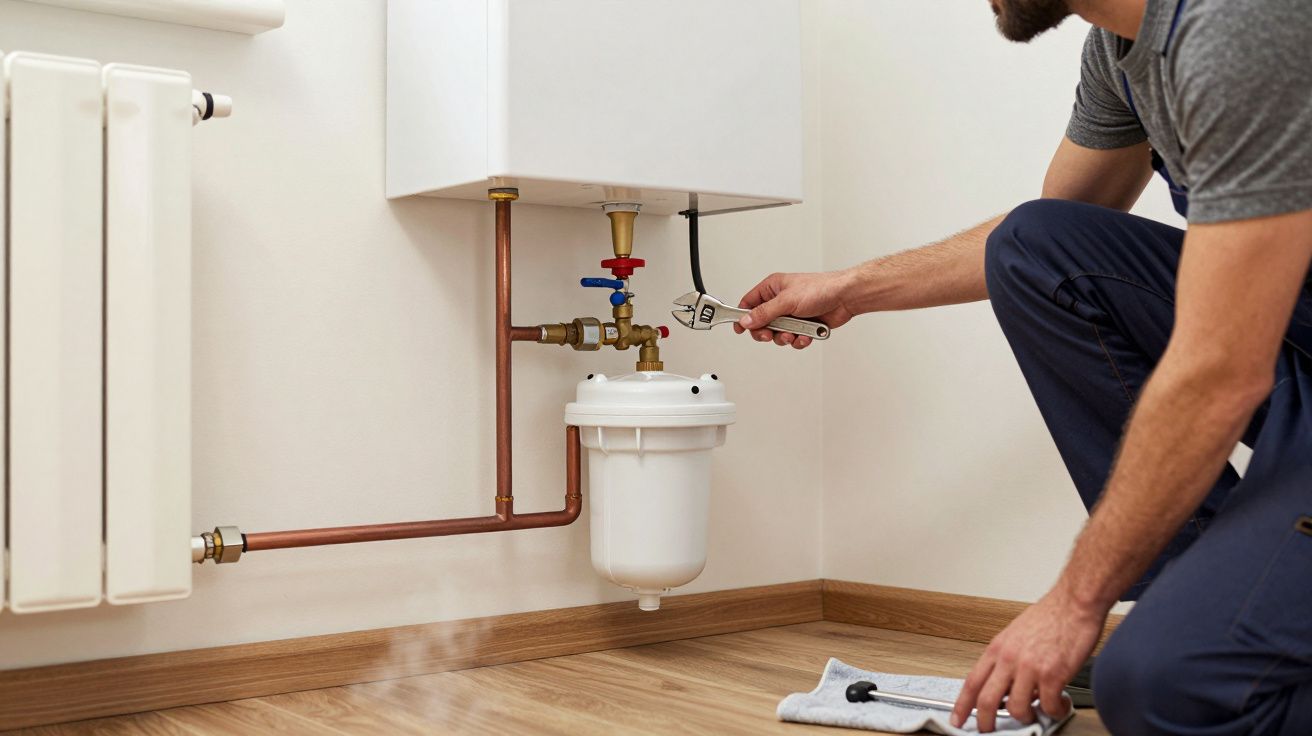
You finish the upgrade, tidy the tools, and feel that clean little relief: warmer rooms, quieter pipework, better controls. Then the heating stutters, or goes cold, and the engineer says the pump has failed. Central heating pumps often take the blame in this moment, but the trigger is frequently system imbalance introduced by the very changes meant to improve things.
It’s the timing that feels personal. Nothing was wrong “before”, so the failure reads like sabotage by efficiency. In reality, upgrades change flow rates, pressures, temperatures, and the amount of sludge a system suddenly decides to move, and pumps are the first moving part to complain.
The awkward truth: upgrades make water behave differently
A pump doesn’t “make heat”. It moves water through boilers, radiators, valves, bypasses, and sometimes underfloor loops, all with their own resistance. Change the resistance and you change what the pump has to do every minute of the day.
Common upgrades that shift the hydraulics:
- Swapping a boiler for a modern condensing one (different required flow rates, different control logic).
- Adding thermostatic radiator valves (TRVs) or upgrading to smart TRVs (more zones closing more often).
- Fitting a magnetic filter and powerflushing (great idea-also great at dislodging old debris).
- Adding or resizing radiators (new “easier” paths for water that steal flow elsewhere).
- Introducing underfloor heating mixed circuits (extra pumps, blending valves, low-temperature loops).
None of these is “bad”. They just change the rules, and pumps are built around assumptions.
Why pumps fail right after the work: the usual culprits
You can almost map the failures to the first few days of operation. The symptoms vary-noise, overheating, intermittent cut-outs, seized rotors-but the causes tend to repeat.
1) A closed-down system and nowhere for the water to go
After TRVs or zoning upgrades, more valves close more aggressively. If there isn’t a proper automatic bypass valve (ABV), or it’s set wrongly, the pump can end up pushing against a near-closed circuit. Differential pressure spikes, flow collapses, and the pump runs hot and stressed.
You might notice radiators “whoosh”, or a high-pitched hiss at valves, or the boiler short-cycling because flow is unstable. The pump hasn’t suddenly become fragile; it’s been asked to do a job with the exits locked.
2) System imbalance that was hidden by the old setup
Many older systems are “balanced” only in the sense that everyone got used to the cold bedroom and the too-hot lounge. When upgrades increase pump capability or alter valve behaviour, those old imbalances become more extreme.
A classic pattern is: nearest rads steal most of the flow, the far circuit starves, the boiler ramps to compensate, and the pump spends its life chasing an unstable target. That’s how you get hot-and-cold radiators, gurgling, and repeated callouts that end with “the pump’s on its way out”.
3) Debris gets stirred up at exactly the wrong time
Powerflushing, draining down, cutting into pipework, swapping valves-each can loosen sludge and magnetite. That material doesn’t politely wait for a filter; it moves until it finds a narrow gap.
Where are the narrow gaps? Pump impellers, pump bearings, heat exchangers, and the tiny waterways in modern boilers. A pump can seize after an upgrade not because it was “old”, but because it swallowed the first big mouthful of the system’s past.
A magnetic filter helps, but only if it’s fitted correctly, cleaned after the initial run-in, and backed up by decent flushing and inhibitor.
4) Wrong pump setting for the new reality
Many modern circulators have modes: constant pressure, proportional pressure, fixed speed, even auto-adapt. After upgrades, leaving the pump on the previous speed or the wrong control curve can create either:
- Too much differential pressure (noise, valve wear, bypass overuse).
- Too little flow (boiler overheating, lockouts, poor heat distribution).
Set too high, the pump can also entrain air and make the system sound like it’s boiling when it isn’t. Set too low, it looks like “the boiler isn’t powerful enough” when it’s simply not being fed.
5) Installation details that don’t look dramatic, but are
Some failures are brutally mundane. The upgrade is fine; the commissioning isn’t.
Watch for:
- Pump installed with the shaft not horizontal (wear and noise).
- Valves left partially closed after works.
- Air not fully purged after a drain-down.
- Incorrect wiring on pump overrun or controls (pump running when it shouldn’t, or not running when it must).
- Missing/incorrectly set ABV after zone valves were added.
- No inhibitor top-up after fresh water was introduced.
Let’s be honest: nobody wants to spend another hour bleeding and re-bleeding radiators when the customer just wants heat. But those last steps are often what decides whether the pump lasts ten years or ten days.
The checklist that prevents the “it died after you touched it” moment
If you’re a homeowner, you don’t need to diagnose the pump model or read wiring diagrams. You do need to ask for the boring evidence that the system has been set up for the upgrade, not just connected to it.
Ask your installer (or check your paperwork) for:
- Balancing: confirmation that radiator lockshields were adjusted after the changes, not before.
- Bypass: an automatic bypass valve fitted and set appropriately for your system.
- Cleanliness: magnet filter fitted (where appropriate) and a plan to clean it after the first week or two.
- Water quality: inhibitor added, and ideally a quick check of system water condition.
- Pump mode: which setting/mode was chosen and why (especially if smart TRVs/zoning were added).
- Commissioning notes: temperatures, pressure, and any error codes observed during start-up.
If any of this sounds like “extra”, that’s the point. Pumps fail when the system is treated as a set of parts rather than a set of behaviours.
What “normal” looks like after an upgrade
A newly upgraded system can make different noises and run on a different rhythm. That doesn’t automatically mean damage, but there are a few early signs that you should act on quickly, before a pump cooks itself trying to cope.
Early warnings worth taking seriously:
- TRVs whistling or hissing when rooms are warming up.
- Radiators that heat only at the top, or only nearest the boiler.
- Boiler short-cycling (on/off rapidly) once several rooms reach temperature.
- A pump that’s hot to the touch and audibly straining.
- Repeated need to bleed radiators (air ingress or poor purge).
If you catch these in the first week, you’re usually fixing settings and balance, not replacing hardware.
A small map of causes and fixes
| What changed | What it can trigger | What usually fixes it |
|---|---|---|
| Smart TRVs / zoning | High pressure, low flow when valves close | Fit/set ABV; correct pump mode; rebalance |
| Powerflush / drain-down | Debris movement, pump seizure | Clean filter; flush properly; add inhibitor |
| New boiler / higher efficiency | Different flow demand, cycling | Set pump curve; check bypass; verify design flow |
FAQ:
- Can a pump genuinely “fail” from an upgrade? Yes, but usually because the upgrade changed flow/pressure conditions or shifted debris. The pump is reacting to the new system behaviour rather than randomly dying.
- Is system imbalance really that serious? It can be. Imbalance can starve parts of the system, cause noise, increase cycling, and keep the pump working at stressful pressures for long periods.
- Do I always need an automatic bypass valve? If you have zone valves or lots of TRVs that can shut down flow, an ABV is often essential to protect flow and keep the pump from dead-heading. Your system layout determines it.
- Should I replace the pump immediately if it’s noisy after an upgrade? Not automatically. Noise often points to pressure issues, air, or balancing problems. A pump swap without fixing the cause can lead to the new pump failing too.
- How soon should a magnetic filter be cleaned after works? Often within the first couple of weeks of running, because that’s when loosened debris is most likely to collect. Check the manufacturer guidance and your installer’s notes.






Comments (0)
No comments yet. Be the first to comment!
Leave a Comment