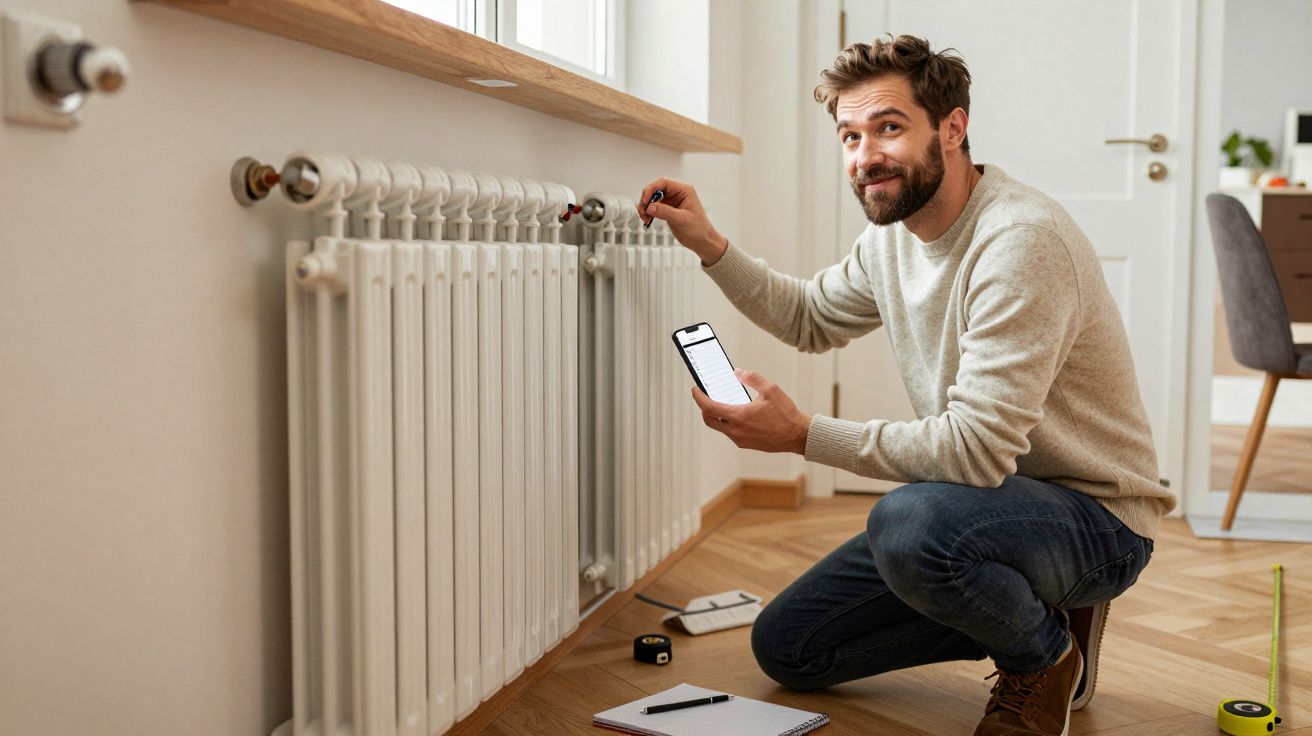
Heat distribution can feel strangely uneven after renovations, even when the boiler is healthy and the radiators “work”. Often the culprit is pipe rerouting - new layouts, extensions, or moved radiators that quietly change how hot water travels through your home. If one room turns tropical while another never quite warms up, it’s not in your head; it’s the system telling you the flow has changed.
It usually starts with a small annoyance. The back bedroom takes an hour to get lukewarm, the hallway radiator is always scorching, and you find yourself fiddling with the thermostat like it’s a volume knob that only affects one speaker. Renovations don’t just change walls and windows; they change the physics of your heating circuit.
What “uneven” heating really means
Uneven heating isn’t just “cold spots”. It’s a pattern: some radiators heat fast while others lag, some heat only at the top, and some rooms overshoot while others never reach set temperature. After building work, that pattern often matches the new pipe path rather than the size of the radiators.
In a typical wet central-heating system, hot water wants the easiest route. If you’ve unknowingly made one route easier - shorter, larger diameter, fewer bends - the system will favour it. The radiators on the “easy” run get plenty of flow, and the ones at the end of the line make do with scraps.
Why renovations upset the balance (even when nothing is “broken”)
Renovations create small, logical choices that add up to a big hydraulic change. A plumber reroutes around a new door opening. A radiator gets moved to suit furniture. A floor comes up and the new pipes take a different path because it’s quicker and cheaper.
None of that is wrong. But heating systems are fussy about balance, and they remember the old layout.
Common renovation triggers include:
- Radiators relocated farther from the manifold/boiler, increasing resistance.
- Extra radiators added to an existing circuit without rebalancing.
- Mixed pipe sizes (for example, a new 10mm microbore section joined into 15mm).
- More elbows and tight bends introduced where pipes dodge steelwork or cabinetry.
- New open-plan areas that change heat loss and airflow, making “comfortable” harder to predict.
The pipe rerouting effect: hot water takes the path of least resistance
Pipe rerouting often creates a “favourite loop”. The nearest or least restrictive run gets strong flow, heats up quickly, and returns warm water to the boiler sooner. That can make the boiler cycle off earlier, especially if a thermostat sits in one of those fast-warming areas.
Meanwhile, a radiator on a longer, more restrictive branch may never see the same flow rate. It isn’t that the water is cold - it’s that not enough of it is passing through.
A quick tell is timing: if your nearest radiators get properly hot within minutes while the farthest ones stay tepid for ages, you’re usually looking at a flow distribution issue, not a boiler capacity issue.
The three usual suspects after building work
1) Air and debris, newly introduced
When pipes are cut, drained, and refilled, air gets trapped and muck gets disturbed. That can make one radiator heat only at the top (or gurgle), and it can partially block valves and tees.
Bleeding helps, but if the system water is dirty after works, a proper flush and inhibitor dose often matters more than another ten minutes with a bleed key.
2) Balancing that no longer matches the new layout
Before renovations, the lockshield valves may have been set (even accidentally) in a way that suited the old pipework. After changes, those settings can be wildly wrong.
The radiators that now have the easiest route will hog flow unless their lockshields are tightened down to force water onwards.
3) Controls in the “wrong” place for the new home
A thermostat in an old hallway might now sit in a warmer open-plan space, or near a new radiator that heats quickly. The heating turns off because that spot reaches target - while the rest of the house is still catching up.
This is why uneven comfort can be a controls problem as much as a plumbing one.
A simple diagnostic you can do before calling anyone
You don’t need to dismantle floors to learn something useful. You just need to observe the warm-up.
- Start with the system cold (heating off for a couple of hours).
- Turn the heating on and note which radiators get hot first.
- After 10–15 minutes, check the “problem” radiators:
- Is the flow pipe hot but the radiator not? (valve/flow restriction)
- Is the top hot and bottom cold? (sludge or poor flow)
- Is one side warm and the other cooler? (low flow through the rad)
- Check whether the room with the thermostat warms unusually fast.
Write it down. Patterns are gold for diagnosing heat distribution issues, and they help a heating engineer fix the right thing rather than swapping parts at random.
Fixes that usually work (and what order to try them in)
Most post-renovation unevenness is solvable without drama, but the order matters.
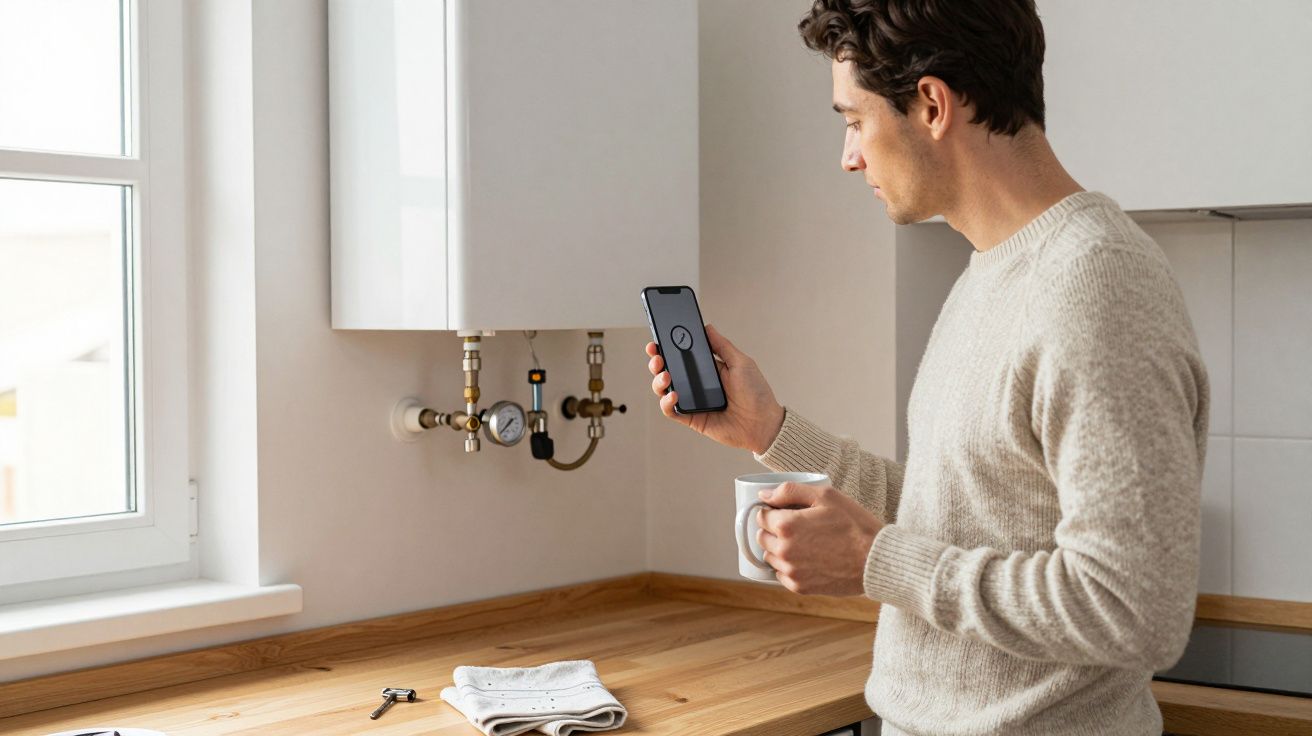
- Bleed radiators and top up pressure (if you have a combi/system boiler). Don’t keep topping up weekly; that points to a leak.
- Rebalance the system: open all TRVs fully, then adjust lockshields so the quick radiators are slightly “choked” and the slow ones get more flow.
- Check valve orientation and TRV pins: TRVs can stick after being off during works, and some valves don’t like being fitted backwards.
- Powerflush or targeted flush if water is black/brown or radiators have persistent cold bottoms.
- Consider a differential bypass valve (DBV) or pump setting adjustment if flow noise/cycling appeared after changes.
- Relocate or add controls: moving the thermostat, adding zoning, or using smart TRVs can stop one fast room dictating the whole house.
If pipe rerouting created very long runs or mixed pipe sizes, you may also need a more structural fix - splitting a circuit, upsizing a section, or adding a proper manifold arrangement. That’s not common for minor works, but it’s not rare after big extensions.
The quiet lesson renovations teach your heating
Heating is a system of small resistances, not a simple on/off machine. When you renovate, you change paths, volumes, and heat loss - and the water responds with ruthless efficiency, favouring whatever route you accidentally made easiest.
If your home suddenly feels patchy after the dust settles, treat it as a balancing and flow question first. Most of the time, the boiler is fine. It’s the journey the heat now has to take that needs attention.
Quick red flags (worth a professional look)
- One radiator gets hot even when others are barely warm.
- Boiler cycles on and off rapidly since the renovation.
- You’re bleeding radiators constantly or pressure keeps dropping.
- Cold bottoms persist across multiple radiators.
- New pipework is notably noisy (whistling, rushing, hammering).
FAQ:
- Why did this only start after the builders left? Draining/refilling introduces air and shifts debris, and pipe rerouting changes resistance in the circuit. Both can reveal imbalances that weren’t obvious before.
- Can I fix uneven heating just by bleeding radiators? Sometimes, but not reliably. Bleeding helps trapped air; it won’t correct poor heat distribution caused by imbalanced lockshields, restrictive new runs, or mixed pipe sizes.
- Does adding bigger radiators solve it? Bigger radiators can help heat output, but if flow is the issue they may still underperform. It’s usually smarter to confirm flow and balancing first.
- Is it a pump problem? It can be, but pumps are often blamed unfairly. After renovations, the more common issue is that the system needs rebalancing to suit the new pipework and room layout.



Comments (0)
No comments yet. Be the first to comment!
Leave a Comment