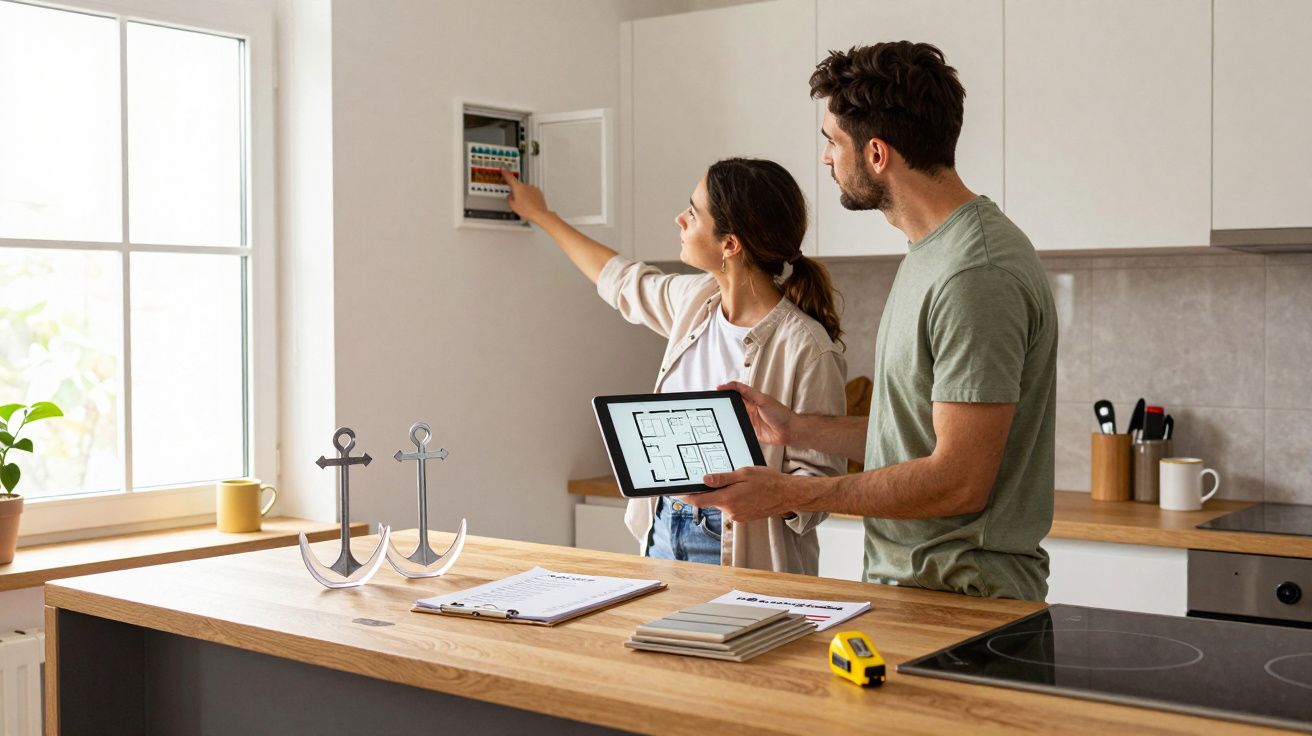
Home renovations used to be a fairly simple sequence: save, design, book trades, then live in dust until it’s done. In practice, 2026 upgrade trends are turning that into something closer to project management, because costs, energy rules, and lead times now move faster than your mood board. For homeowners, the big change is that “what to do” matters less than “when to decide”.
You can feel it already. One neighbour is waiting on a heat pump quote, another can’t get matching bricks, and someone else is rethinking the whole kitchen because a new appliance choice changes the cabinetry. The build itself hasn’t become impossible - the planning window has.
Why 2026 feels like a turning point
Planning used to start with aesthetics. In 2026, it starts with constraints: energy performance targets, finance rates that punish indecision, and supply chains that reward early orders. The best-looking plan on paper can still collapse if your key items land six weeks late or your electrics can’t handle what you’ve specified.
There’s also a quieter shift: upgrades are getting more “systems-based”. A kitchen refit now touches ventilation and load capacity. A loft conversion bumps into heating design and insulation strategy. The work is less about swapping finishes and more about upgrading how the home behaves.
The new order is simple: performance first, then layout, then finishes. Do it backwards and you pay twice.
The new default: plan around energy and electrics
In the UK, more households are moving towards electric-first homes - whether that’s driven by bills, comfort, resale value, or future regulation. That means your consumer unit, cabling, and ventilation become the hidden backbone of the whole upgrade.
A common 2026 scenario looks like this: you want underfloor heating, induction, an EV charger, and a compact rapid-heating oven that replaces the microwave. Each choice is reasonable on its own. Together, they can push your electrical demand beyond what your current setup can safely support.
Before you fall in love with tiles and taps, get clear on:
- Electrical capacity: consumer unit condition, spare ways, earthing, and any need for an upgrade
- Ventilation: especially if you’re improving airtightness or adding powerful extraction
- Heat strategy: heat pump readiness, radiator sizing, hot water cylinder space, controls
- Fabric basics: insulation, draught proofing, glazing plans - the stuff that makes every other upgrade work
The 2026 upgrade trends that are reshaping budgets
Some trends look like style, but behave like infrastructure. They change joinery sizes, power requirements, and even room layouts. That’s why they don’t fit neatly into the old “we’ll choose that later” approach.
1) Compact, high-performance kitchens
Countertop rapid ovens, boiling-water taps, integrated compost caddies, and better extraction are pushing kitchens towards “small but capable”. People are giving up one big appliance in favour of two smaller ones that do more, faster.
The knock-on effect is planning. A rapid oven needs clearance and ventilation; an induction hob often pairs best with a specific extractor setup; a recycling drawer needs space you can’t magic up after the cabinetry is ordered.
2) Comfort upgrades that hide in the walls
Acoustic insulation between rooms. Better internal doors. Secondary glazing in awkward properties. Quiet fans that run constantly instead of loudly when you remember.
These aren’t glamorous, but they change how a home feels day to day. In 2026, more homeowners are budgeting for “invisible comfort” alongside the visible finishes - and they’re glad they did when the novelty of new paint wears off.
3) Low-waste, low-tox choices (without the lecture)
People still want a beautiful home. They just increasingly want it without the smell that lingers for weeks, and without chucking half a kitchen into a skip because one unit doesn’t match.
Expect more demand for:
- repairable worktops and cabinet fronts
- low-VOC paints and adhesives
- reclaimed or “character” materials where it suits the house
- designs that let you replace parts, not rip out wholes
The mistake that will cost the most in 2026
Leaving long-lead decisions until “after we’ve started”.
It’s not just about delays; it’s about redesign. If your chosen tiles are out of stock, you can usually switch. If your chosen windows are delayed, the plastering, flooring, and decorating schedule can unravel. If your heat system changes late, pipework routes and cupboard sizes can suddenly be wrong.
A practical rule many renovators are adopting: lock in anything that affects structure, services, or dimensions earlier than you think is reasonable.
A simple planning sequence that fits how projects work now
This is the calmer version of renovation planning - less romantic, more effective.
- Survey first: damp, structure, electrics, drainage, ventilation. Don’t guess.
- Decide the “performance spec”: insulation level, heating approach, ventilation approach.
- Confirm service routes: where pipes, ducts, and cables will actually go.
- Freeze dimensions: cabinetry, sanitaryware sizes, door swings, clearances.
- Order long-lead items early: windows, specialist finishes, bespoke joinery, heat pump kit.
- Then choose the pretty stuff: tiles, colours, handles, lights - with fewer nasty surprises.
You still get a home you love. You just stop asking your builder to solve design problems at 7:15am on plaster day.
What to do this winter if you’re upgrading in 2026
Winter is when good planning quietly wins. Trades are booking ahead, manufacturers change ranges, and quotes tighten once everyone rushes in spring.
Do three things now:
- Get an electrician to sanity-check your future load (induction, EV, heating, extra sockets).
- Ask every quote to state assumptions (what’s included, what isn’t, what could change).
- Build a “decision calendar” with deadlines for items that affect dimensions and lead times.
That’s how you avoid the classic renovation feeling: spending a fortune and still making choices in a panic.
FAQ:
- Will 2026 actually be more expensive for home renovations? Not automatically, but indecision is likely to cost more. Early surveys, clear specs, and ordering long-lead items sooner reduce redesign and delay costs.
- Which upgrades should I plan first: kitchen, bathroom, or energy? Start with energy and electrics if you’re changing how the home runs (heating, insulation, ventilation, major appliances). Kitchens and bathrooms go more smoothly once the “systems” are decided.
- Do I need to upgrade my consumer unit for modern appliances? Not always, but it’s increasingly common when adding induction, EV charging, electric heating, or multiple high-load appliances. A qualified electrician can assess capacity and compliance.
- What’s the safest way to avoid delays? Finalise choices that affect sizes and service routes early (windows, doors, cabinetry, heating kit, ventilation). Leave easily-swapped finishes until later.



Comments (0)
No comments yet. Be the first to comment!
Leave a Comment