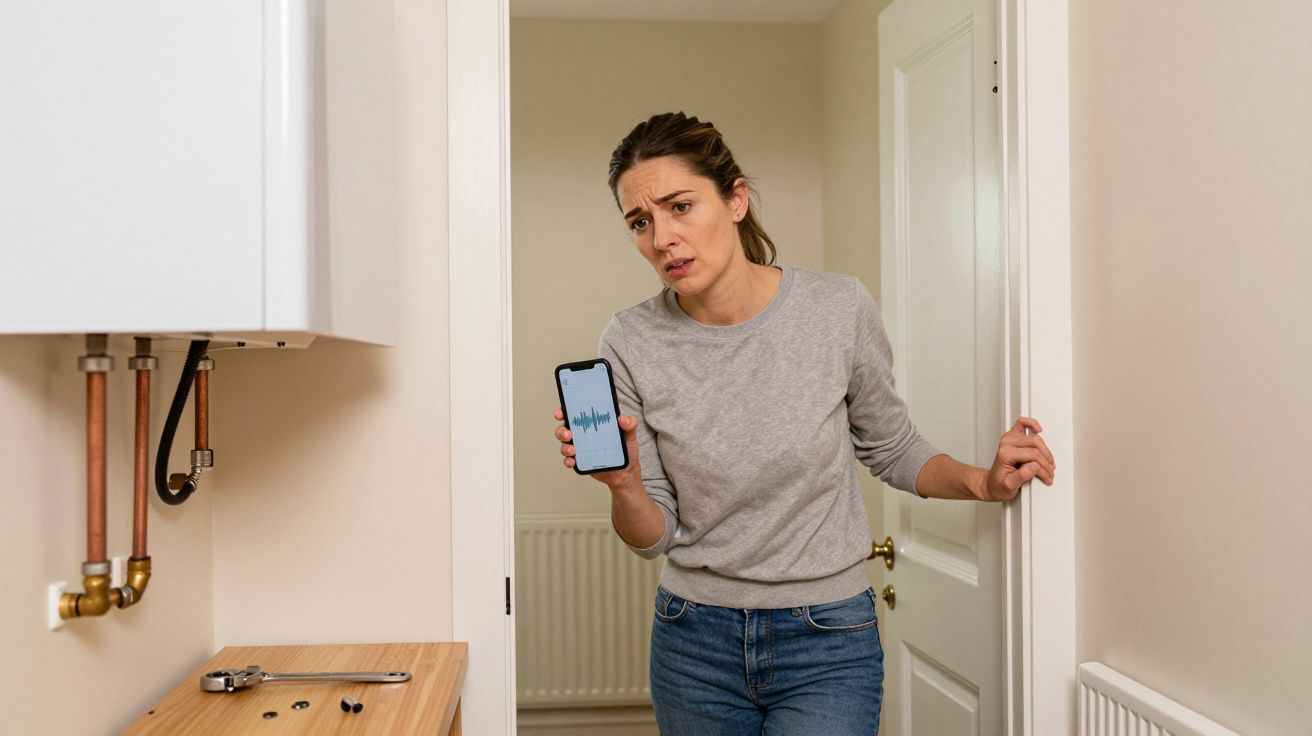
On a cold weekday evening, Hannah stood in the hallway of her semi in Leeds, listening to the boiler do what it always does: click, hum, a brief rush of water, then quiet. The new sound wasn’t dramatic - a soft thud, almost polite - but it was enough to make her Google “water hammer noise”, and enough for an engineer to start talking about pipe stress signals like they were a kind of body language. That’s the uncomfortable part: when heating sounds nearly normal, the system can be quietly telling you it’s under strain.
You expect a broken system to shout. In real homes, it often whispers. A faint knock after the pump stops. A tick that follows the radiator warming. A “just once” bang when the hot tap is turned off. It’s easy to live around it - right up until a joint weeps, a valve sticks, or a pipe starts rubbing through a joist somewhere you can’t see.
The odd truth: the most worrying noises aren’t always the loudest
A classic water hammer noise is that sharp bang you hear when a valve shuts quickly and the moving water hits a sudden stop. In plumbing textbooks it’s clean and obvious. In houses, it often shows up as something softer: a dull knock, a drum-like thump, or a single “clack” that you can’t quite place.
Engineers worry about the pattern, not the drama. The same pressure wave that makes a big bang can also make a small one - and both carry load into pipe clips, soldered joints, valves, and heat exchangers. Those are your pipe stress signals: tiny, repeated forces that add up because the system cycles thousands of times a winter.
If you only listen for “catastrophic” sounds, you miss the bit where the damage is still cheap.
What’s actually happening inside the pipe (in plain English)
Picture a column of water moving through copper or plastic pipework. Now imagine you shut a valve quickly - a zone valve closes, a thermostatic radiator valve snaps down, a tap shuts, a washing machine solenoid clicks off. The water’s momentum doesn’t vanish; it turns into a pressure wave that travels back through the system and bounces off bends, tees, pumps, and cylinders.
That wave can do three very normal-looking things:
- Make pipes jump against a clip or joist (the knock you hear).
- Make a valve chatter briefly (a machine-like rattle).
- Make the pipe expand/contract with a tick as it warms (easy to confuse with “just heating up”).
The “almost normal” version is often the most misleading, because you write it off as typical winter behaviour.
Why heating systems are especially good at hiding the problem
Central heating adds two complicating factors: temperature change and cycling.
When pipes warm, they expand; when they cool, they contract. If a pipe is tight through a hole in a stud wall, or hard up against a floorboard, that movement becomes ticking and creaking. That’s not always water hammer noise - but it can mask it. The knock from a pressure wave can get buried inside a chorus of thermal movement, and the system sounds “busy” rather than “wrong”.
Then there’s cycling. Modern boilers modulate and stop/start; pumps ramp; zone valves open and close. Each transition is a chance for a small pressure shock. One thud a night is forgettable. Ten thuds a day for three months is a wear pattern.
The sounds engineers file under “pay attention”
You don’t need a stethoscope and a spreadsheet. You just need to notice when the sound happens, and what else is happening at the same time.
1. A single knock right as something stops
If the bang coincides with the pump stopping, a zone valve closing, or a tap shutting, that’s prime water hammer territory. “Only once” is still a pressure event.
2. A rattle that lasts 1–3 seconds
That can be a valve chattering as the pressure wave passes through. It’s common around TRVs, motorised valves, and some non-return valves.
3. A thud that moves around the house
If you hear it upstairs but the boiler is downstairs, you’re probably hearing the structure transmitting a shock. Pipes can be perfectly hidden and still hit timber like a drum.
4. A new noise after “a small change”
A replaced pump, a new TRV head, a tap upgrade, a washing machine install - small hardware changes can alter closing speed and flow rate. That changes the size and frequency of pressure waves, even if nothing else has “broken”.
The quick checks that save you calling someone out for nothing
Before you panic (or ignore it for another winter), do a short, boring investigation. Treat it like you’re narrowing down a draft or a roof leak: you want location and timing.
- Pin down the trigger. Does it happen when the hot tap shuts? When heating switches off? When one radiator reaches temperature?
- Listen near valves. Zone valves and TRVs are common culprits. A knock near the airing cupboard or manifold is a clue.
- Check pressure and bleeding habits. Over-pressurised sealed systems don’t cause water hammer on their own, but they can make events harsher. Constantly topping up also hints at leaks elsewhere.
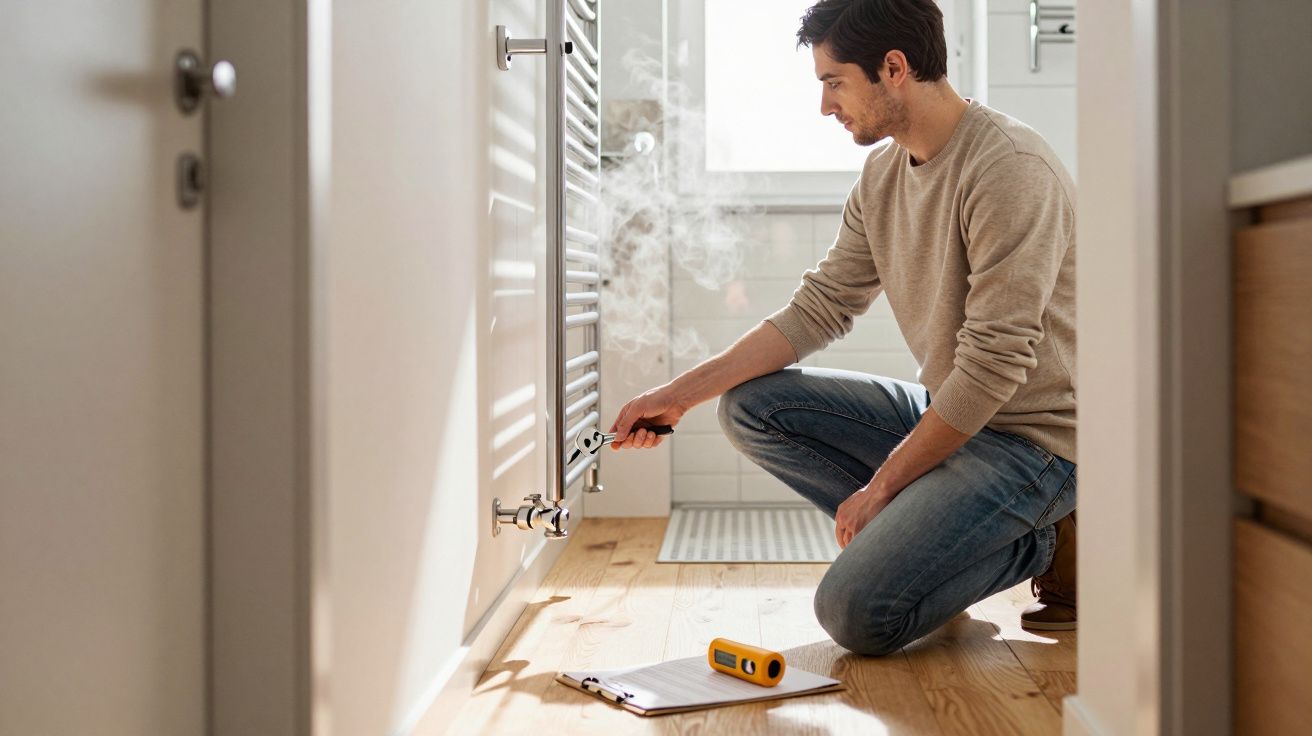
- Look for pipe contact points. Under-sink cupboards, behind toilets, at radiator tails, under floorboards if accessible. Pipes touching timber can amplify a mild pressure wave into a loud knock.
None of this fixes the issue, but it tells you whether you’re dealing with flow shock, thermal expansion, or a mix of both.
The fixes engineers reach for first (and why)
There’s a reason pros don’t start by ripping up floors. They start by reducing the “shock” and stopping the pipe from acting like a percussion instrument.
Slow the closing event
- Fit or adjust anti-hammer devices (water hammer arrestors) on fast-closing appliances.
- Choose slower-closing valves where possible, or adjust actuation on some motorised valves.
- Reduce pump speed if the system allows and heat delivery remains adequate. Less velocity means less momentum to turn into a pressure wave.
Control the wave
- Check and set the expansion vessel (sealed systems). A failed or undercharged vessel can make pressure swings feel harsher, and it’s a common, fixable fault.
- Confirm bypass arrangements (automatic bypass valve). Poor bypass setup can lead to sudden flow changes when TRVs close.
Stop the noise from being “broadcast”
- Secure and cushion pipes with proper clips and isolators, especially at bends and through joists.
- Create clearance where pipes pass through timber or masonry. A millimetre of room and a sleeve can turn a scary knock into silence.
A good engineer is listening for pipe stress signals as much as they’re listening for comfort. Quiet is not just pleasant; it’s evidence the system isn’t punching itself.
When “ignore it” becomes expensive
If the noise is rare and unchanged, you might live with it. But a change in frequency, location, or character is your cue to act. Repeated pressure shocks don’t usually cause an instant burst; they loosen, fatigue, and wear.
Watch for the companion signs people miss:
- Needing to top up boiler pressure more often
- New radiator valve weeping or corrosion at joints
- A pump that sounds rougher than last month
- Hot water taps that “kick” in the hand when shut
You’re not chasing perfection. You’re catching stress early, while the fix is a valve adjustment, a vessel recharge, or a few proper clips - not a ceiling stain and an emergency call-out.
The calm way to think about it
Most heating systems make noise. Houses move, pipes expand, and boilers cycle. The point isn’t to become paranoid; it’s to notice when the sound has a cause and a moment - especially the moment something closes or stops.
Because that’s when water hammer noise stops being “a quirk of an old house” and starts being a message. And pipe stress signals, like any warning signs, are easiest to deal with when they’re still quiet enough to doubt.





Comments (0)
No comments yet. Be the first to comment!
Leave a Comment