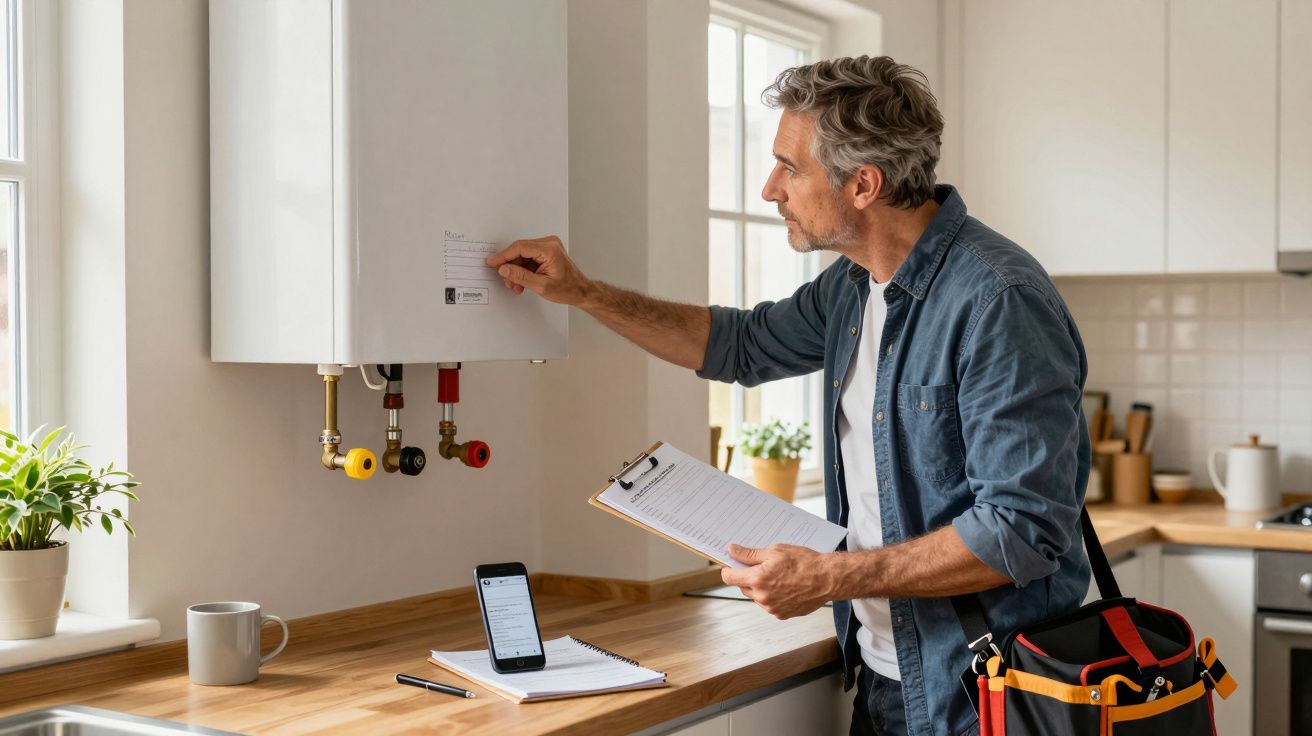
The thing about gas safety checks is that they feel like a moment in time: an engineer arrives, taps around the boiler, scribbles a few notes, then disappears down the path. But the real value is long-term risk prevention - the quiet, boring kind that keeps small faults from turning into carbon monoxide, leaks, or a winter breakdown when you least can cope.
Most people watch the visit like it’s a service appointment: “Is it working right now?” The overlooked detail is what happens on paper afterwards, and whether it’s specific enough to protect you months later.
No drama. No alarms. Just a certificate, a few readings, and a line or two that can either mean “safe today” or “safe, traceable, and managed”.
The detail most households skim: the numbers, not the tick boxes
A Gas Safety Record can look like a formality. There’s a lot of yes/no: ventilation OK, flue OK, appliance inspected. You sign, the engineer signs, and it goes in a drawer with old warranties and takeaway menus.
The protective part - the bit that keeps working after they’ve left - is the actual measurements and appliance-specific notes. Not “passed”. The values. The location. The recommendations.
Think of it like this: a “Pass” is a snapshot. A note that says why it passed is a story you can follow next year. And stories catch patterns.
Here’s what that “story” often includes when it’s done properly:
- Flue-gas analyser readings (where applicable): CO/CO₂ ratio or combustion performance figures, not just “satisfactory”.
- Working pressure at the appliance (mbar), especially if supply issues are suspected.
- Spillage and flue draft observations for open-flued appliances.
- Appliance identification that actually matches what’s installed: make, model, location, and (where visible) serial number.
- Specific defects or advisories, written in plain English (“seal perished”, “case screws missing”, “clearance tight to cupboard”), not vague hints.
If your record doesn’t have details like these, you haven’t got much to compare against next time. That’s where long-term risk prevention quietly unravels: not because the engineer was careless, but because the paper trail is too thin to be useful.
Why a detailed record stops problems from repeating (or being missed)
Gas faults are rarely cinematic. More often they’re gradual: a boiler running slightly rich, a flue joint that loosens with vibration, a vent that gets blocked when someone redecorates, a room-sealed appliance that stops being room-sealed after a “quick” kitchen refit.
A detailed Gas Safety Record makes these changes visible.
Imagine two households.
In the first, the record says: “Boiler checked - OK.” Next year, a different engineer arrives to a different company. They have no baseline, so they treat it like a fresh case. If something is borderline, it can remain borderline - and borderline is where many real risks live.
In the second, last year’s record says: “Boiler (model X) working pressure 20 mbar; combustion within manufacturer spec; advisory: cupboard clearances tight, monitor.” This year, if pressure drops to 17 mbar, you’re not arguing about feelings. You’ve got evidence. If the clearances are now worse because someone boxed it in, the risk isn’t theoretical - it’s documented drift.
The point isn’t to turn your home into a laboratory. It’s to make sure the next visit starts where the last one left off, instead of resetting to zero.
What to ask for, without sounding like you’re policing the engineer
People avoid questions because they don’t want to be awkward. Meanwhile, they’ll spend weeks arguing with a phone insurer about a cracked screen. Gas deserves at least the same energy.
You don’t need jargon. You need clarity. During or after the check, ask:
- “Can you write the actual readings on the record?” (Not just ‘OK’.)
- “If there’s an advisory, what would ‘worse’ look like next year?”
- “Can you confirm the appliance details match what’s installed?”
- “If anything is At Risk, can you show me exactly what that means in this case?”
A good engineer won’t bristle. They’ll usually be relieved you’re engaged, because it means you’re less likely to undo safety with an innocent DIY decision later.
And if you’re a landlord, this becomes even more important. A tenant can’t manage a risk they were never clearly told about.
The part that protects you later: traceable, shareable information
The best long-term risk prevention isn’t just “knowing you had a check”. It’s being able to show what was checked, what was found, and what you were told to do.
A surprisingly effective habit is to keep a simple “gas folder” that lives somewhere obvious (digital is fine):
- The latest Gas Safety Record (and at least one previous copy for comparison)
- Any boiler service reports
- Photos of the appliance and flue route (especially after renovations)
- Notes on any recurring issues (pressure drops, pilot outages, unusual smells)
It’s not about suspicion. It’s about continuity. Homes change hands, engineers change, appliances age. Paperwork is what stops knowledge from vanishing every twelve months.
Soyons honnêtes : nobody does this perfectly. The win is doing it once, then letting the system carry you.
A quick checklist for your next visit
When the engineer is packing up, do a thirty-second scan of the record. You’re not checking their competence. You’re checking whether future-you will understand what happened.
- Are the appliances listed correctly (and not missing the gas hob or fire)?
- Are there readings or specific test results, where relevant?
- Are any advisories written clearly, with a suggested next step?
- Does it say Immediately Dangerous / At Risk / Not to Current Standards anywhere, and have you been told what that means?
- Do you know where the emergency control valve is, if you needed it?
If you can’t answer those from the record and a brief chat, the check may still have been done properly - but the protection won’t last as long as it could.
The quiet payoff: fewer surprises, clearer decisions
Most gas incidents people talk about afterwards have the same thread: confusion. “We didn’t realise the vent mattered.” “We thought the smell was normal.” “We assumed the boiler was fine because it worked.”
A detailed Gas Safety Record doesn’t guarantee nothing will ever go wrong. What it does is make the home less guessy. It gives you early warning, a baseline, and the ability to act before a small risk becomes an urgent callout.
It’s a boring document with an unglamorous job. That’s exactly why it works.
FAQ:
- What’s the overlooked detail I should look for on a Gas Safety Record? The actual measurements and appliance-specific notes (readings, pressures, observations), not just ticks and “OK”.
- Do gas safety checks include servicing the boiler? Not necessarily. A safety check confirms basic safety; a service is maintenance (cleaning, parts checks) and may be separate.
- If my record only says “satisfactory”, is that a problem? It may still be compliant, but it’s less useful for long-term risk prevention because there’s little baseline for comparison next year.
- How long should I keep old records? Keep at least the latest two; longer is better if you have recurring issues or an older appliance.
- What should I do if the engineer marks something “At Risk”? Ask what caused that classification, what immediate steps are needed, and what must change before the appliance can be used safely. If you’re unsure, arrange a second opinion from a qualified Gas Safe registered engineer.




Comments (0)
No comments yet. Be the first to comment!
Leave a Comment