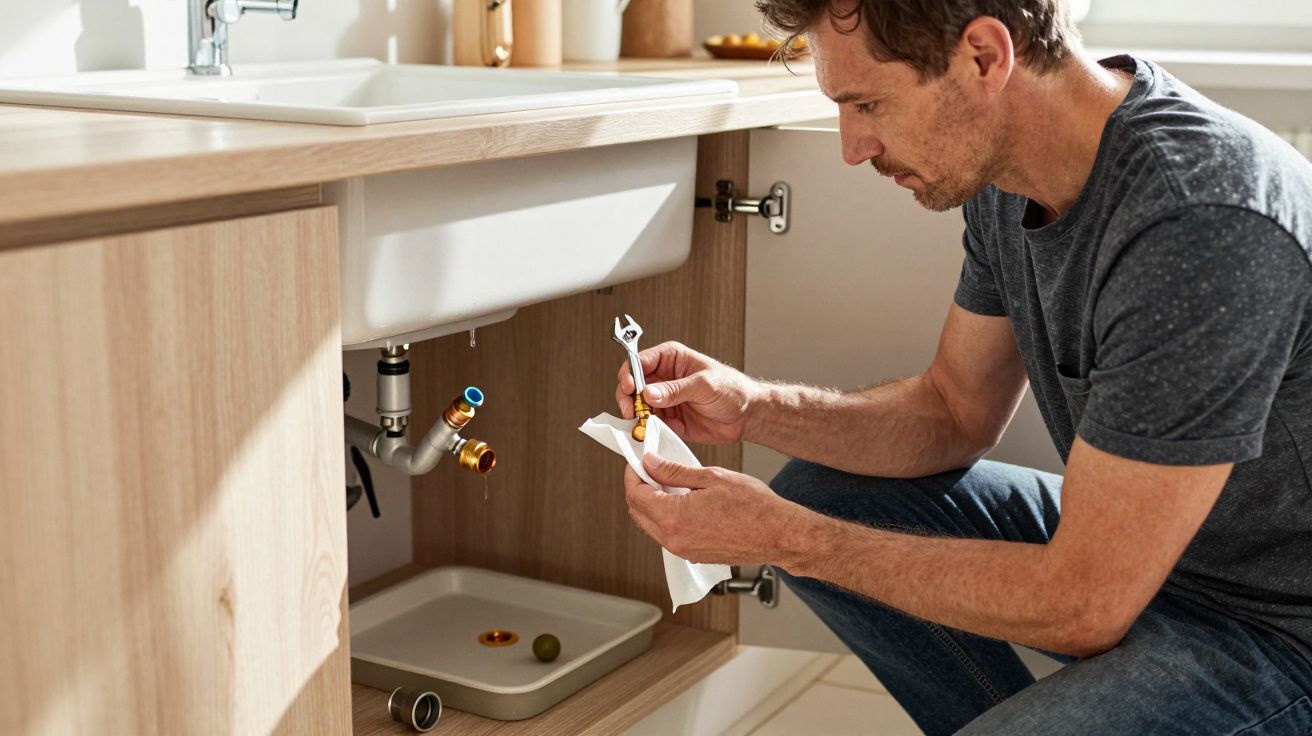
You notice it when you’re in a rush: a drip that “probably just needs tightening”, a join you could “make do” with, a small tweak that will save a trip to the merchant. Plumbing shortcuts feel harmless in the moment, especially under a sink or behind a toilet where no one’s looking. The problem is the hidden damage they can cause: slow leaks, pressure spikes, and damp that quietly spreads until the quick fix becomes a full strip-out.
Most of the time, it isn’t dramatic. It’s a faint smell in a cupboard, a floor that feels slightly springier than it used to, or a water bill that creeps up for no good reason. By the time you see a stain, the water’s often been at it for weeks.
The “minor” shortcut that starts it all
The classic one is simple: overtightening a compression fitting to stop a weep instead of remaking the joint properly. You give it “just a bit more” with the spanner, the drip stops, and you get on with your day.
What you’ve sometimes done, though, is distort the olive, score the pipe, or crack the fitting. It can hold for a while, right up until thermal expansion, vibration, or a pressure change turns that stressed joint into a slow, persistent leak.
Another common version is wrapping the problem in tape: PTFE on a compression joint, or a blob of sealant around a threaded connection that should really be cleaned, checked, and reseated. It looks neat. It buys time. It also makes the next person (often you) work twice as hard to undo it.
Why it fails later, not immediately
Water is patient, and plumbing is full of tiny cycles: hot to cold, pressure on and off, pipes nudged when you empty the cupboard. A joint that’s only nearly right can appear fixed, then gradually loosen as the materials move.
A good compression joint seals because the olive is compressed evenly onto clean, round pipe. When the pipe is scratched, the olive is chewed up, or the nut is cranked beyond sensible torque, the seal becomes unreliable. It might not drip today, but it can sweat a little, then a little more, and suddenly your “dry” cupboard baseboard is bowing.
Hidden damage thrives in the quiet places: behind washing machines, under baths, inside boxing around soil stacks. It’s not the volume of water that gets you; it’s the duration.
The rework you didn’t budget for
The painful part isn’t usually the fitting. It’s everything the leak touches.
- Swollen chipboard floors that never quite flatten again
- Mould blooming behind plinths and kickboards
- Blown plaster on the other side of the wall
- Rotten battens, loose tiles, and skirting that won’t take paint
- Electrical risk if water tracks towards sockets or downlight cut-outs
That’s how a “two-minute tighten” turns into carpentry, plastering, redecorating, and a plumber coming back to remake the joint you tried to avoid remaking.
A quick reality check: what’s a shortcut vs a proper fix?
A shortcut isn’t always laziness. Sometimes it’s panic, or not wanting to shut the water off, or trying to get through the week without a call-out fee. The line is simply whether the fix restores the joint to how it’s designed to seal.
Here are the swaps that prevent most repeat leaks:
- Instead of overtightening: isolate, undo, inspect the olive and pipe, and remake the joint (new olive if needed).
- Instead of PTFE on compression threads: use PTFE only on threaded taper joints where it’s intended, and remake compression joints dry and clean.
- Instead of “it’ll do” pipe ends: cut back to fresh, round pipe and deburr properly.
- Instead of mixing random parts: match fitting type and pipe material (copper, plastic, push-fit) with the right inserts and supports.
If that list feels annoyingly “by the book”, that’s the point. Plumbing is boring when it’s right.
The signs you should treat as a warning, not a nuisance
You don’t need to become paranoid, but you do need to notice patterns. A lot of homes give you small clues long before they give you a puddle.
- A musty smell that returns after cleaning
- Greenish staining on copper or white crust on fittings
- Cupboard bases that feel soft at the back corners
- Paint bubbling on the wall near a bathroom or kitchen run
- A boiler losing pressure with no obvious drip
If you spot one, don’t just dry it and hope. Dry it, then find the source.
If you’re going to DIY, do this one thing first
Turn the water off and depressurise the line. It sounds obvious, but it’s the step people skip when they’re “just tightening”.
Once it’s isolated, you can remake a joint calmly: clean pipe, square cut, deburred edge, correct insert for plastic, and a fitting tightened to firm-then checked-rather than bullied into place. You’re not trying to win a fight with the spanner. You’re trying to create an even seal.
If you undo a joint and the pipe is scored or oval, accept the bad news early and cut back. That small cut is often what saves you from the big rework later.
The quiet rule: if it’s hidden, it must be perfect
A slightly ugly repair in an accessible spot is irritating but manageable. A slightly wrong repair behind a tiled bath panel is how weekends disappear.
If the connection will be boxed in, tiled over, or buried behind an appliance, treat it like you’ll never see it again-because you probably won’t, until it’s expensive.
FAQ:
- Is it ever OK to “just tighten it a bit”? If it’s a brand-new joint that’s barely weeping, a small nip can be reasonable. If it’s been leaking for a while, has been tightened before, or the pipework moves when you touch it, remake the joint instead.
- Can PTFE tape stop a compression joint leaking? It might mask the problem temporarily, but it isn’t how compression joints are meant to seal. The correct fix is usually cleaning, recutting, and replacing the olive or fitting.
- What’s the fastest way to check for a slow leak? Dry the area completely, wrap a bit of dry tissue around the suspect joint, and check after 10–30 minutes of normal use. Tissue shows the tiniest seep long before you’ll see a drip.
- When should I call a plumber rather than DIY? If you can’t isolate the water properly, the leak is near electrics, there’s visible damp/mould, or the pipework is in a hard-to-access spot (behind tiles, under baths, in ceilings), get professional help before hidden damage spreads.




Comments (0)
No comments yet. Be the first to comment!
Leave a Comment