You don’t call emergency plumbing repairs because you’re bored; you call because water is doing something it absolutely shouldn’t. In that panic, temporary solutions feel like relief: a wrap of tape, a tightened nut, a bunged-up stopgap that buys you the night. The problem is that the “quick win” often shifts pressure, hides leaks, and turns a small fault into a bigger, wetter, more expensive one.
Most household plumbing failures don’t punish you instantly. They punish you later, quietly-behind cabinets, under floors, inside walls-where the damage grows while you’re congratulating yourself for stopping the drip.
The fix that feels clever (and why it backfires)
There’s a certain satisfaction to stopping a leak with whatever is to hand. A towel under the sink, a cable tie on a hose, a bit of self-amalgamating tape around a weeping joint. You go to bed thinking you’ve beaten the problem.
What you’ve often done is change the system without understanding it. Domestic plumbing is a pressure-and-temperature game: hot water expands, pipes flex, fittings creep, and seals rely on the right compression-not “as tight as humanly possible”. A bodge can hold long enough to lull you, then fail harder because the underlying issue is still there and now stressed in a new way.
Think of it like a cracked phone cable you keep bending until it “finds the sweet spot”. It works-until the copper finally snaps. Plumbing does the same, just with water that can soak a ceiling.
What’s actually happening when you “just tighten it”
Over-tightening is a classic emergency move, especially on compression fittings and isolation valves under sinks. The drip slows, your shoulders drop, and you move on.
But fittings aren’t designed for brute force. Tightening can:
- crush an olive (compression ring) so it no longer seals evenly
- distort plastic threads so they never align properly again
- crack cheap valves or push-fit bodies with hairline splits
- mask a failing washer or O-ring that’s already perished
The real sting is delayed. A joint that’s been over-tightened may hold at low flow, then start weeping when the dishwasher kicks in, the hot tap runs, or the heating comes up to temperature. A “fixed” drip that returns in a week is often one you’ve mechanically worsened.
Temporary solutions that create long-term damage
Some stopgaps are reasonable if you understand the goal: reduce risk until proper repair. Others are trouble in disguise, because they trap moisture, hide movement, or make later repairs harder.
Tape, paste, and the false seal
Tape around a leaking joint can look reassuring, especially if it stops visible dripping. The issue is that many leaks aren’t coming from a neat pinhole-they’re coming from a seal face, a cracked fitting, or corrosion. Tape can channel water sideways into cabinetry, insulation, or plasterboard where you won’t see it.
Leak-seal pastes and “instant fix” compounds can also contaminate threads and sealing faces. When a plumber arrives later, the job becomes: clean, cut back, replace more parts, and sometimes open up finishes to find the real path of the leak.
If your fix makes the leak invisible rather than solved, you’ve traded urgency for uncertainty.
Clamping flexible hoses (and quietly wrecking them)
A common under-sink panic move is to clamp or kink a braided flexi hose to slow a leak. It can work briefly. It also damages the hose’s internal lining, creating a weak spot that may balloon or split under pressure later.
If a flexi hose is leaking, it’s usually telling you it’s at end-of-life, incorrectly installed, or under strain from a poor alignment. A kinked hose is no longer “temporarily safer”; it’s a future burst waiting for a convenient time, like 3am.
“It’s only a small drip” and the rot that follows
Small leaks are dangerous because they create ideal conditions for long, slow damage:
- swollen chipboard and delaminated kitchen units
- mould behind kickboards and in wall voids
- corrosion on nearby fittings, turning one problem into three
- softened subfloors that start to sag or squeak
A steady drip can also be deceptively costly on the water bill, but the bigger cost is usually the repair to what the water touches.
The better way to “buy time” without making it worse
There’s a difference between a bodge and a controlled temporary measure. The aim is simple: stop or reduce water safely, keep visibility, and avoid stressing components.
Do this first: isolate and depressurise
If you can do only one thing, do this. Turn off the water supply, then open a cold tap (and a hot tap if you have a combi) to relieve pressure. Many “mystery leaks” calm down dramatically once the system isn’t pressurised.
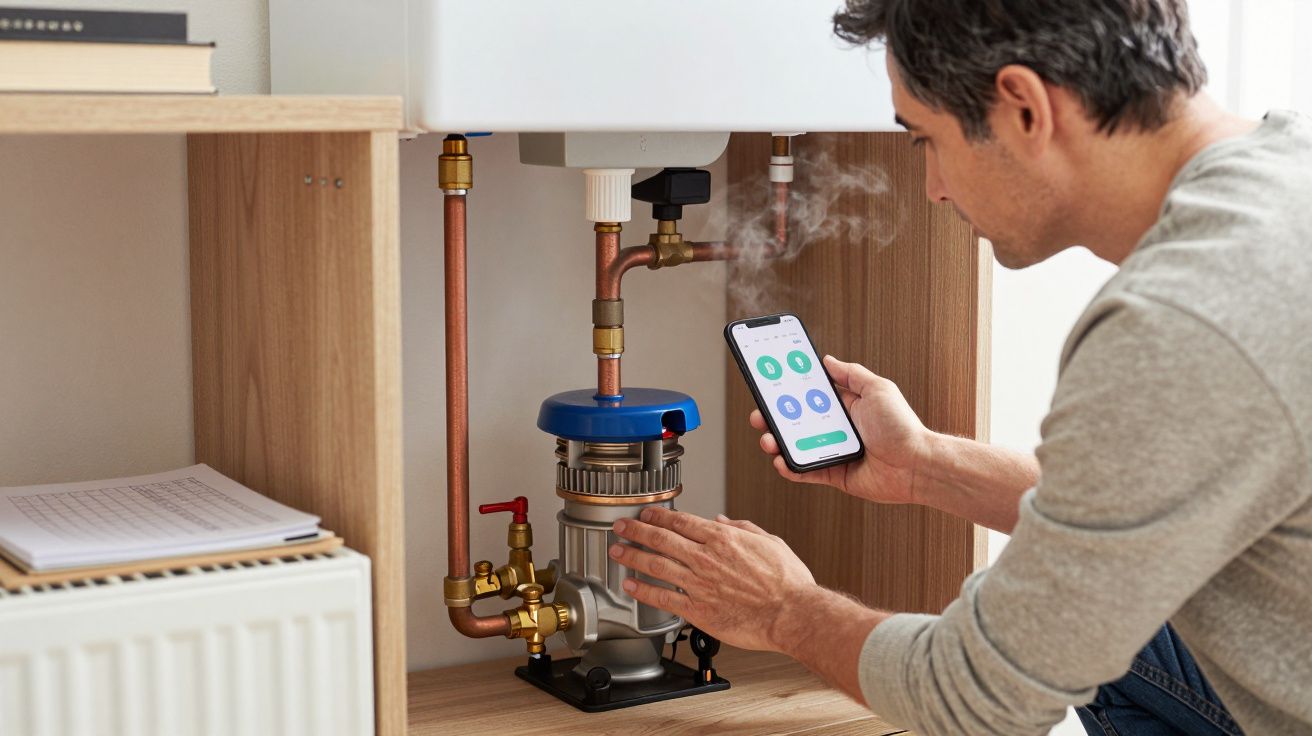
If you’re dealing with heating pipework, isolating and lowering pressure can prevent a minor weep turning into a spray when the system cycles.
Contain, don’t conceal
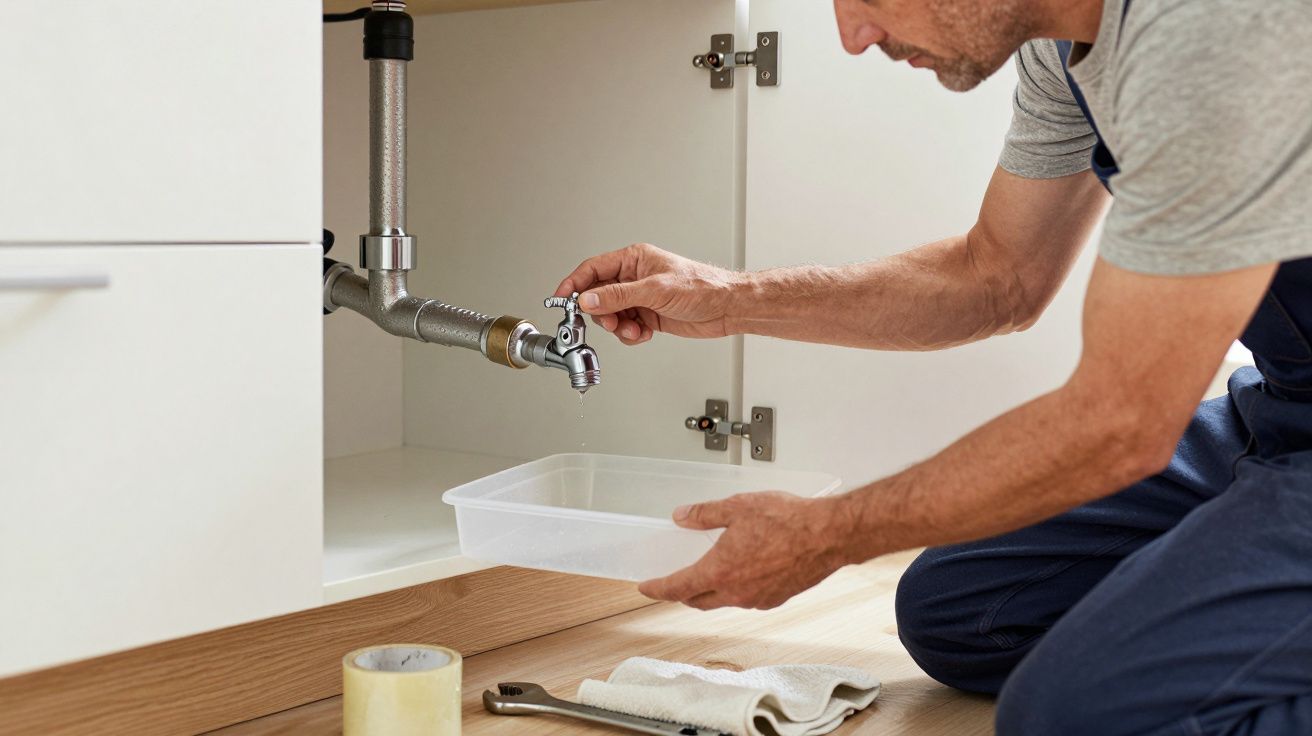
Use a bucket, tray, or towels to catch water where you can see it. If you must wrap something, do it to guide water into a container-not to pretend it’s sealed.
A simple trick is to tie a strip of cloth around the leak point so it “wicks” water into a bucket. It’s not glamorous, but it keeps the leak readable and reduces spread.
Know when it’s beyond DIY
Call for help when any of these are true:
- water is coming through a ceiling or light fitting
- you can’t locate an isolation point or it doesn’t fully shut off
- the leak is on a mains-fed pipe (high pressure)
- there’s any sign of electrical risk, swelling flooring, or persistent damp smells
In those cases, speed matters-but so does not making the situation harder to fix.
A quick read on common emergencies (and the least-worst response)
| Problem | Least-worst temporary step | What to avoid |
|---|---|---|
| Under-sink compression joint weeping | Isolate, depressurise, dry and monitor | Over-tightening until it “stops” |
| Flexi hose leak | Isolate supply to that tap/appliance | Kinking, clamping, or taping the hose |
| Toilet overflow/continuous fill | Turn off the isolation valve, lift cistern lid to check float | Pouring drain unblocker into the pan |
What a proper repair does that a temporary one can’t
A proper repair isn’t just “stop water”. It restores the system’s sealing surfaces and mechanical integrity: the right washer, the right olive, correctly aligned pipework, fittings tightened to spec, and damaged sections replaced rather than disguised.
It also restores your ability to trust the space. A hidden, ongoing leak is stressful in a way people underestimate. You listen for drips. You sniff for damp. You avoid opening the cupboard because you don’t want to see what you’ll find.
Emergency plumbing repairs are about regaining control. Temporary solutions are only useful if they’re honest-visible, low-stress, and clearly marked as short-lived.
FAQ:
- Is it ever okay to use tape on a pipe leak? Only as a very short-term measure after isolating and depressurising, and only to direct residual water into a container. Tape that “seals” a pressurised leak often fails and can hide where the water is travelling.
- Why did my leak get worse after I tightened the nut? You may have crushed the compression olive, distorted threads, or cracked a plastic fitting. It can also force a compromised seal to fail more abruptly.
- Can I leave a small drip overnight? It’s safer to isolate the supply feeding it if you can. Overnight drips can soak cabinets and floors, and a small weep can turn into a steady leak when pressure changes.
- What’s the first thing to do if water is coming through the ceiling? Turn off the main stopcock if possible, then switch off electrics to the affected area at the consumer unit if there’s any risk near light fittings, and call an emergency plumber.





Comments (0)
No comments yet. Be the first to comment!
Leave a Comment