
I first noticed the winter comfort myth on a draughty January evening, standing in the hallway with my coat still on while the radiators hissed like they were working overtime. Heating comfort is meant to be the quiet background of home life, but user expectations turn it into a daily performance: “make it warm, fast, everywhere”. The trouble is that this story sounds sensible, feels comforting, and keeps landing on the direct debit.
Most homes don’t lack heat as much as they leak it, misread it, or deliver it unevenly. Yet we keep repeating the same line - if the house feels cold, turn the thermostat up and leave it there - and then act surprised when the bill arrives like a second winter.
The myth we repeat without noticing
The myth isn’t that heating is expensive. It’s that comfort is a single number.
Somewhere along the line, “21°C” became a moral standard. If the house isn’t that temperature all day, we tell ourselves we’re failing at adulthood, or that the boiler is failing us. So we chase a steady reading rather than the thing we actually want: a home that feels comfortable where we’re living in it.
That’s how you end up heating empty rooms to meet an idea. The house becomes a spreadsheet you’re trying to balance with gas.
What your body calls “comfortable” is not what your thermostat measures
Thermostats measure air temperature. Your body judges comfort using a messy bundle of signals: radiant warmth, draughts, humidity, cold floors, wet hair, whether you’ve been sitting still for an hour, whether the sofa is next to an outside wall.
That’s why two rooms at the same temperature can feel completely different. One has a cold window you can almost feel pulling heat out of you. The other has a rug, a thick curtain, and no breeze sneaking under the door like a small, persistent animal.
If you’ve ever turned the heating up and still felt chilly, you weren’t imagining it. You were responding to everything the boiler can’t fix on its own.
The “leave it on all day” half-truth
There’s a popular bit of advice that does the rounds every winter: it’s cheaper to leave the heating on low all day than to heat the house up from cold. Sometimes that’s true in specific homes with specific heating systems and very stable occupancy. In a lot of real UK houses, it becomes an expensive misunderstanding.
Here’s the plain version: the longer your home is warmer than outside, the more heat it loses through walls, windows, floors and ventilation. Holding a higher temperature for longer generally means more energy used. The question isn’t “is it cheaper to leave it on?” but “how quickly does my home lose heat, and do I need it warm right now?”
User expectations make this tricky. If you expect every room to feel gently toasty from breakfast to bedtime, you’ll pay to maintain that. If you only need comfort in the living room between 7 and 10, you can design for that instead.
When the myth feels true
It tends to feel true when:
- your house takes ages to warm up, so switching it on feels like pushing a boulder uphill;
- your radiators are undersized or poorly balanced, so the coldest rooms never catch up;
- your controls are crude, so you overshoot, open windows, then repeat the cycle.
In those homes, leaving it “always on” can look like the only path to comfort. It’s not really comfort - it’s damage limitation.
The real culprit: uneven delivery, not inadequate heat
Many households are already generating enough heat. They’re just not getting it to the right place at the right time.
A typical pattern looks like this: the thermostat sits in the warmest part of the house (often a hallway that traps rising heat), reaches target quickly, and shuts the boiler down. The living room might feel fine. The back bedroom stays mean and clammy. Someone nudges the thermostat up “just a bit”, and now you’re overheating the easy rooms to drag the hard rooms along behind.
That’s how a small comfort problem becomes a big spending problem.
The quiet fixes that beat the big number
Instead of chasing comfort by raising the setpoint, check the boring bits that change how heat behaves:
- Balance and bleed radiators so heat reaches the rooms that lag.
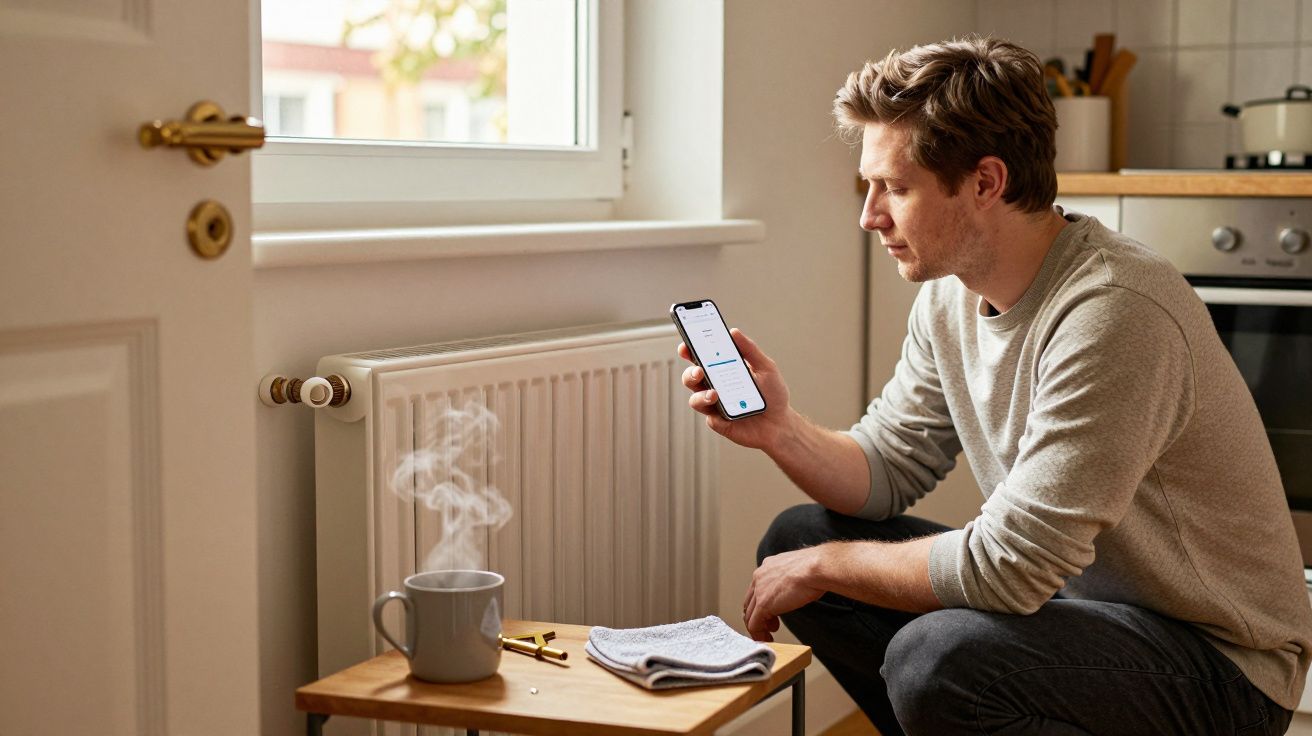
- Use thermostatic radiator valves (TRVs) properly: don’t crank everything to 5; prioritise occupied rooms.
- Stop draughts at floor level (doors, letterboxes, unused chimneys). Cold air at your ankles can ruin a “warm” room.
- Work with curtains and blinds: close at dusk, leave radiators clear, avoid tucking curtains behind them.
- Put a rug where you stand still (kitchen sink, sofa area). Comfort is often a feet problem pretending to be a boiler problem.
None of this is glamorous. It is, however, the difference between paying for heat you feel and paying for heat you donate to the street.
Winter comfort is a system, not a setting
The references we use to judge warmth are emotional as much as physical. We want the house to feel like refuge. We also want it to behave consistently, regardless of wind, rain, and that sharp drop in temperature at 4pm when the light goes.
But homes aren’t constant systems. UK winter weather is basically a stress test: damp air, gusts that find gaps you didn’t know existed, cold rain that pulls heat from brickwork and makes rooms feel clammy even when the thermostat says they’re “fine”. The building responds; your comfort responds; your boiler responds. The myth is pretending one dial can override all that.
Once you see comfort as a system, you start making smaller, smarter moves. You stop asking “what number should I set?” and start asking “what is making this room feel cold?”
A better story to tell yourself at 7pm
When the house feels cold, it’s tempting to reach for the simplest narrative: more heat equals more comfort. A cheaper, truer narrative is this: comfort is targeted warmth, stable surfaces, and fewer draughts - and it’s allowed to vary by room and by hour.
Try this on a normal winter evening:
- Warm the room you’re actually using, not the whole house by default.
- Set the main thermostat to a sensible baseline, then use TRVs to shape where the heat goes.
- If you still feel cold, look for radiant loss (windows, outside walls) and air movement (gaps, vents, doors) before you raise the number.
You’re not depriving yourself. You’re aligning heating comfort with real life, rather than with a rigid, expensive idea of what “warm” is supposed to mean.
What this reveals about user expectations - and why we keep paying
The winter comfort myth persists because it sounds like care. Turn it up, keep it steady, don’t let the house get cold. In practice, it often means paying to maintain temperatures in places you aren’t, to fix sensations caused by draughts and cold surfaces, and to meet a standard that was never designed for your particular home.
Comfort is still the goal. The shift is dropping the fantasy that comfort comes from a single, higher setpoint. Once you let that go, the house stops feeling like a needy machine you must constantly feed. It becomes a space you can tune - calmly, deliberately - without buying the same warmth twice.


Comments (0)
No comments yet. Be the first to comment!
Leave a Comment