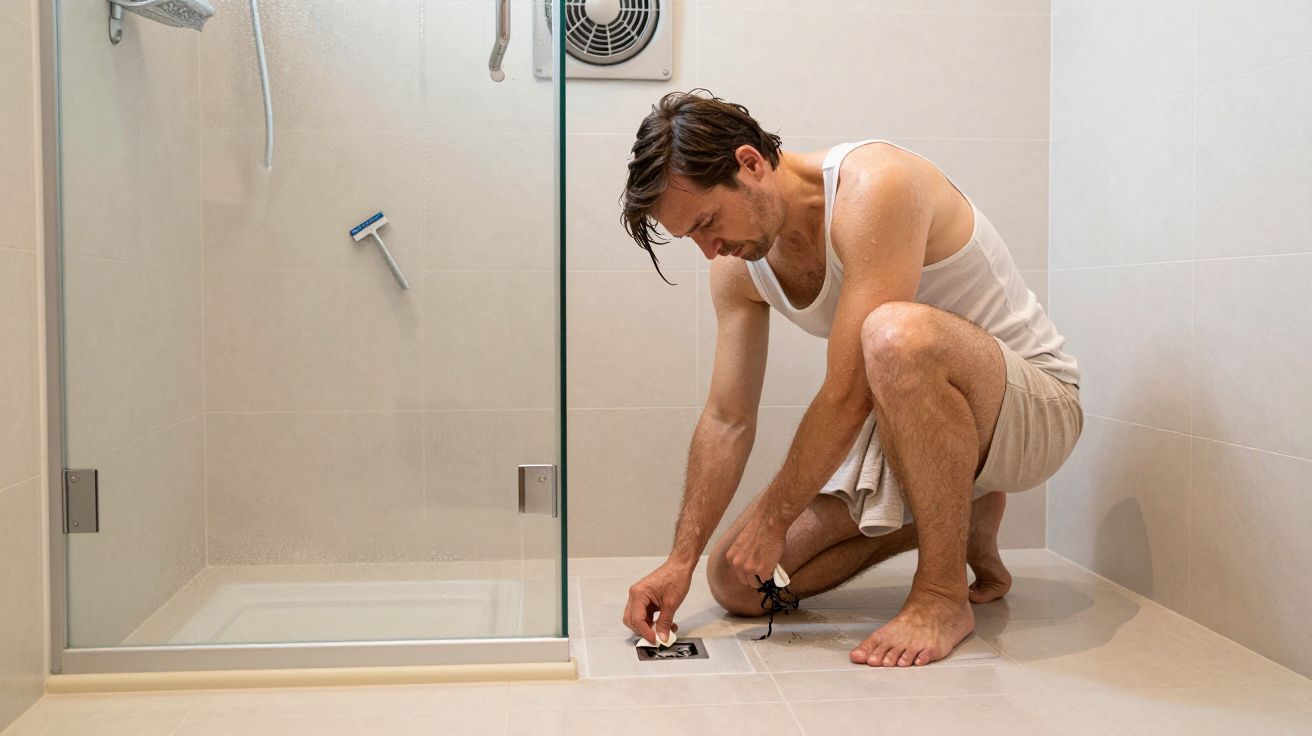
A showroom can sell you a dream in five minutes: seamless tiles, no tray, no step, just water gliding towards a neat little grate. Wet rooms look like the grown‑up answer to awkward bathrooms, and in the right home they genuinely are. But the maintenance reality is the part most mood boards don’t show, and it matters because it decides whether your “hotel finish” stays calm-or starts quietly costing you time and money.
You don’t need to fear them. You just need to build and live with them like the whole room is the shower, because it is.
The myth: “A wet room is easier to look after”
The myth isn’t that wet rooms leak. When designed and installed properly, they can be watertight for years. The myth is that removing the tray removes the work.
A wet room spreads water across more surfaces, more often. That’s the point-accessible, open, flush. It also means soap film, limescale and humidity settle on more grout lines, more corners, more junctions between materials. The room looks simpler; the cleaning map gets bigger.
I’ve seen the same pattern play out: the first month feels effortless, the first winter is fine, and then one morning you notice the drain cover’s gone dull, the silicone has a faint shadow, and the grout on the “dry side” isn’t as dry as you assumed.
Where the maintenance reality actually lives
Start with three zones: water, air, and edges. Water is obvious; air is the one people forget; edges are where time does its quiet work.
The hardest‑working parts of a wet room are rarely the tiles you photograph. They’re the bits you step over without thinking: the drain, the fall (the slope), the sealant lines, and the ventilation routine that nobody keeps perfectly. Let’s be honest: nobody deep-cleans a drain every week.
“If you can’t describe where the water goes, you’re not done designing it.” - a fitter who has ripped out too many “perfect” wet rooms
- Drain and trap: hair, soap and conditioner build quickly; slow drainage is the first warning, not the last.
- Falls (gradient): if the slope is marginal, water sits; if water sits, it leaves marks and feeds mould.
- Silicone and junctions: wall-to-floor lines, niches, glass channels-these age before tiles do.
- Ventilation: steam that lingers keeps everything damp long after the shower ends.
A simple test: does your wet room actually “finish drying”?
Here’s the check most designers don’t do because it doesn’t look good on Instagram: after a normal shower, how long until the room is dry to the touch?
If it’s still dewy on the mirror and cool on the grout an hour later, that’s not just “cosy humidity”. That’s a maintenance multiplier. It means you’ll be fighting mould, blackened silicone, and that persistent musty note that no candle truly covers.
Pay attention to the “dry zone” too. In many wet rooms, the toilet area becomes a surprise splash zone because there’s no physical break. Water doesn’t need drama; it just needs a path.
Designing for low upkeep (without giving up the look)
Small choices decide whether the room stays easy or becomes a weekly project. Not fancy choices-boringly specific ones.
Pick surfaces that don’t punish you for living. Large-format tiles reduce grout; matte finishes hide water spots better than high-gloss; and a niche is beautiful until you realise it’s four extra corners to clean, forever. The goal is not “minimal”, it’s “forgiving”.
Build decisions that scale with your energy, not your best intentions.
- Go bigger on tile size where safe (less grout to scrub).
- Use epoxy grout or high-performance grout where water hits most.
- Keep niches minimal; consider a shelf with gentle slopes instead.
- Choose a drain cover you can lift easily and clean without tools.
- Specify an extractor fan that’s sized properly and runs on a timer/humidity sensor.
The unglamorous routine that keeps it glamorous
The lowest-effort wet rooms are the ones with a rhythm. Not perfection-rhythm.
Squeegee the glass and the main splash wall. Run the fan long enough that the room feels neutral again, not “bathroom warm”. Clean the drain before it slows, not after. And treat silicone like a consumable: if it starts to discolour or lift, redoing it early is cheaper than pretending it’s fine.
A quick rule that saves real time: if you can smell damp, you’re already behind.
| Pressure point | What it turns into | Simple habit that helps |
|---|---|---|
| Slow drain | Standing water, staining, odours | Lift cover weekly; clear hair/soap |
| Persistent humidity | Mould, peeling sealant | Fan on timer; door ajar after shower |
| Too much grout/niches | Scrubbing fatigue | Larger tiles; fewer corners |
A wet room can be brilliant-if you stop believing the brochure
Wet rooms aren’t a scam. They’re just honest: they give you accessibility, space and a clean look, and in return they ask you to manage water like a whole-room system. Once you accept the maintenance reality, the decisions get clearer and the room stays beautiful for longer.
The myth designers won’t mention isn’t “they’re hard”. It’s that they’re effortless. The best wet room is the one that still looks calm when you’re busy, tired, and living your life.
FAQ:
- Do wet rooms always get mouldy? No. Mould is usually a ventilation and drying-time issue. A correctly sized extractor with a timer or humidity sensor, plus wiping down wet areas, prevents most problems.
- Is grout the main problem? Grout is a common stress point because it holds moisture and soap film. Fewer grout lines (larger tiles) and better grout (epoxy or high-performance) reduce upkeep significantly.
- What’s the first sign a wet room is heading for trouble? A drain that empties slowly, water that doesn’t run cleanly to the outlet, or a room that stays damp for ages after showering. These show up before visible leaks.
- Are niches worth it? They can be, but they add corners and shelves that collect residue. If you want one, keep it simple, slope the base slightly, and use easy-clean finishes.
- How often should silicone be replaced? There’s no single schedule, but inspect it regularly. If it discolours, lifts, or shows mould that won’t clean off, replace sooner rather than later to protect the waterproofing and finishes.




Comments (0)
No comments yet. Be the first to comment!
Leave a Comment