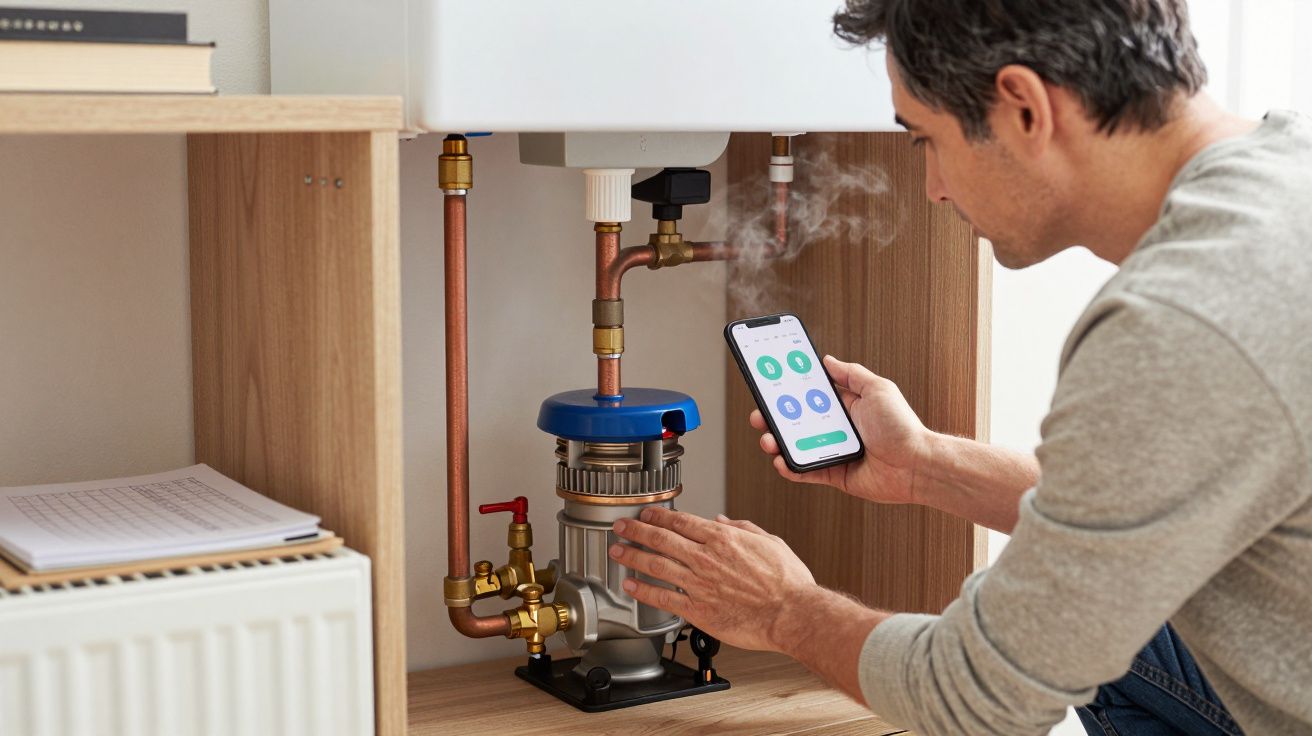
Central heating pumps sit quietly inside your heating system, pushing hot water from the boiler through radiators and back again. Yet a huge number of call-outs come down to misdiagnosed failures where the boiler gets the blame, the parts get replaced, and the real culprit is a tired, stuck or poorly set pump. Getting this right matters because it’s often the difference between a quick fix and an expensive, disruptive repair.
Most “boiler problems” start with a simple question: is heat being made, and is it being moved. The pump is the mover, and when it hesitates, everything downstream looks broken.
Why the pump gets blamed on the boiler
A boiler is visible, noisy, and familiar-so it becomes the suspect by default. A pump failure, by contrast, can be subtle: the boiler fires, the pipes get hot for a moment, and then the system seems to “give up”.
A second reason is that symptoms overlap. Low pressure, air in radiators, sludge, faulty controls and pump issues can all produce lukewarm rads and short cycling. Without a quick, structured check, it’s easy to chase the wrong fault.
Look at the whole scene, not just the boiler display. Heat production and heat circulation are two different jobs.
What a struggling pump looks like in real homes
Radiators that never quite get there
You may get one or two radiators hot near the boiler, while the rest stay cold or warm only at the bottom. In a healthy system, temperatures even out room by room after a steady run.
If the boiler is heating water properly, pipework near it can feel hot, but the flow doesn’t reach the far radiators because circulation is weak.
A boiler that keeps cutting out
A boiler can shut down on overheat because hot water isn’t being carried away fast enough. That can look like a boiler defect, but it’s sometimes the pump failing to shift flow, a seized impeller, or a blocked/closed valve around the pump.
Listen for a pattern: the boiler fires, runs briefly, then stops; repeat. That “stop–start” rhythm often points to circulation issues.
Strange noises that aren’t in the boiler
Pumps can hum, buzz, rattle or “whine” when bearings wear or air is trapped. You might hear it at a cupboard, airing cupboard, or near the hot water cylinder rather than at the boiler casing.
Not all noise equals failure, but noise plus poor heating performance is a strong clue to investigate the pump before swapping boiler parts.
Quick checks that reduce misdiagnosed failures
These are observation-first steps that don’t require specialist kit. If you’re unsure or the system is sealed/pressurised and you’re not confident, stop and book a qualified heating engineer.
- Check the boiler is actually producing heat: does the flow pipe out of the boiler get hot when heating is on?
- Compare flow and return temperatures: if the flow is very hot but the return stays cool, circulation may be poor.
- Look for a stuck pump: on some pumps you can feel vibration; “silent and stone still” when heating is calling can be a warning sign.
- Confirm valves are open: isolation valves around the pump can be partially closed after previous work.
- Rule out the obvious controls issue: thermostat/programmer calling for heat, correct zone selected, TRVs not all shut.
If the system has multiple zones (e.g., upstairs/downstairs), a single zone failing can be a zone valve issue-but the pump is still worth checking, because weak flow shows up worst in the furthest or most restrictive circuit.
Common pump-related causes (and what they mimic)
| What’s happening | What you notice | Often mistaken for |
|---|---|---|
| Pump seized after summer | No circulation, boiler may overheat | “Boiler’s dead” |
| Pump speed set too low | Far rads cool, slow warm-up | Airlock / balancing |
| Air in pump housing | Gurgling/whining, erratic heat | Kettling / boiler noise |
| Sludge/debris in system | Intermittent flow, cold spots | Faulty boiler heat exchanger |
A pump can also appear “fine” but be underperforming. Worn bearings, a weakened motor, or a partially blocked impeller may allow some flow-just not enough when the weather turns colder.
What to do immediately (without making it worse)
Start with safe, low-risk actions. Avoid repeatedly power-cycling the boiler in frustration; it doesn’t fix circulation and can mask the true symptoms when an engineer arrives.
- Bleed radiators if they’re noisy or cold at the top, then recheck system pressure (sealed systems often need topping up afterwards).
- Make sure at least a couple of radiators are fully open, so the system has a clear path for flow.
- Note what’s hot and what’s not: which radiators, which pipes, how quickly it changes. A short timeline helps diagnosis.
- Check the system pressure is within the boiler’s normal range (often around 1.0–1.5 bar when cold, but follow your boiler manual).
If you suspect electrical issues (burning smell, tripping fuse/RCBO, visible damage), stop and call an engineer.
When it’s not the pump (but looks like it)
Some faults mimic pump trouble closely, which is why misdiagnosed failures are so common.
Sludge and restricted pipework
A pump can’t circulate through a heavily sludged system effectively. You may “fix” the pump and still have cold radiators because the underlying restriction remains.
A giveaway is repeated cold spots, dirty bleed water, or radiators that heat only after aggressive balancing-then drift back to poor performance.
Incorrectly balanced radiators
If radiators near the boiler steal most of the flow, distant ones stay cool. This can look exactly like a weak pump, especially in larger homes.
Balancing is slow but straightforward: it’s about restricting the easy routes so flow reaches the harder ones. Do it once properly and note valve positions for next season.
Zone valves and controls
If one zone works and another doesn’t, a stuck motorised valve can block flow regardless of pump health. You’ll still hear the pump running, but the circuit stays cold.
An engineer will usually test demand, valve movement, and pump operation together, rather than guessing from a single symptom.
Preventing repeat call-outs
A little seasonal attention reduces the chance the pump sticks or struggles right when you need heating most.
- Run the heating briefly every few weeks over summer to keep the pump moving.
- Keep inhibitor levels topped up after draining/refilling; it helps prevent sludge that loads the pump.
- If you’re in a hard-water area and have ongoing issues, ask about system cleaning and filtration (magnetic filters can protect both pump and boiler components).
- After any work, confirm pump speed/settings are appropriate for the property and radiator count.
The best money-saver is a correct diagnosis: prove circulation before condemning the boiler.
When to call a professional (and what to ask)
Call an engineer if you have boiler overheat lockouts, repeated pressure loss, any leaks, or you suspect electrical faults. Also call if the pump is hot to the touch but not moving water-overheating motors can fail suddenly.
Useful questions to ask (or notes to offer):
- Have you tested temperature difference across flow/return under load?
- Have you checked pump operation, speed setting, and isolation valves?
- Is there evidence of sludge, air ingress, or a stuck zone valve causing restricted circulation?
A good engineer won’t just replace parts-they’ll confirm whether heat is being produced and whether it’s being moved, then fix the weak link. That’s how you stop “boiler problems” from coming back next week.





Comments (0)
No comments yet. Be the first to comment!
Leave a Comment