You notice it on a cold morning: the radiators are lukewarm, the hot water is fickle, and the controller is behaving like it’s had a mood swing. Heat pumps can throw up misleading symptoms that look exactly like boiler failure, especially in UK homes where we’re used to “on means hot, now”. The good news is that one common pump fault is often simpler (and cheaper) than a dead unit.
It feels dramatic because the house cools quickly and the system sounds “wrong”. But before you assume the compressor’s gone, it’s worth checking the one component that quietly does most of the day‑to‑day graft: the circulation pump.
Why a pump problem looks like the whole system has died
A heat pump doesn’t just “make heat”. It has to move that heat through your pipes, radiators, or underfloor loops, and back again. If the circulation pump isn’t shifting water properly, the system can’t deliver warmth, no matter how hard the outdoor unit tries.
That’s why the symptoms can be so convincing. You’ll see low flow, rapid cycling, strange noises, and sometimes a shutdown with a fault code that reads like a major failure. In reality, the unit may be protecting itself because it can’t get rid of the heat it’s producing.
A heat pump with poor circulation often isn’t broken; it’s stuck in self‑defence.
The tell-tale pump issue: airlocked, stuck, or under-speed circulation
In many homes, the “boiler-like” failure is actually one of these:
- Air in the system (airlock or microbubbles) so the pump can’t push water properly.
- A stuck pump after a period of inactivity (common after summer hot‑water-only running).
- A failing pump capacitor or bearings, so it runs weakly, intermittently, or noisily.
- Incorrect pump speed / control setting, especially after a service or power cut.
- Sludge or debris restricting the pump or strainer, starving the system of flow.
Each one creates the same outcome: the heat pump can’t circulate enough water, flow temperature rises too fast, and the system either delivers tepid heat or trips out.
Misleading symptoms that scream “boiler failure” (but aren’t)
Most people don’t notice “flow rate”. They notice comfort. These are the common red flags that send you straight to panic:
- Radiators warm at the top near the first few, then go cool across the house.
- The outdoor unit runs, then stops, then runs again, without the home ever really heating.
- Hot water takes ages, goes warm not hot, or swings temperature mid‑shower.
- You hear gurgling, rushing, or a rattly hum near the cylinder, buffer, or plant area.
- The system throws a fault after 10–30 minutes of trying, then behaves again later.
If you’re thinking, “That’s exactly what my old boiler did when it was dying,” you’re not wrong. It’s the same experience, but often a different cause.
A quick, calm check you can do before you call anyone
Keep it simple. You’re not dismantling anything; you’re looking for clues that point to circulation.
1) Listen and feel for flow, not heat
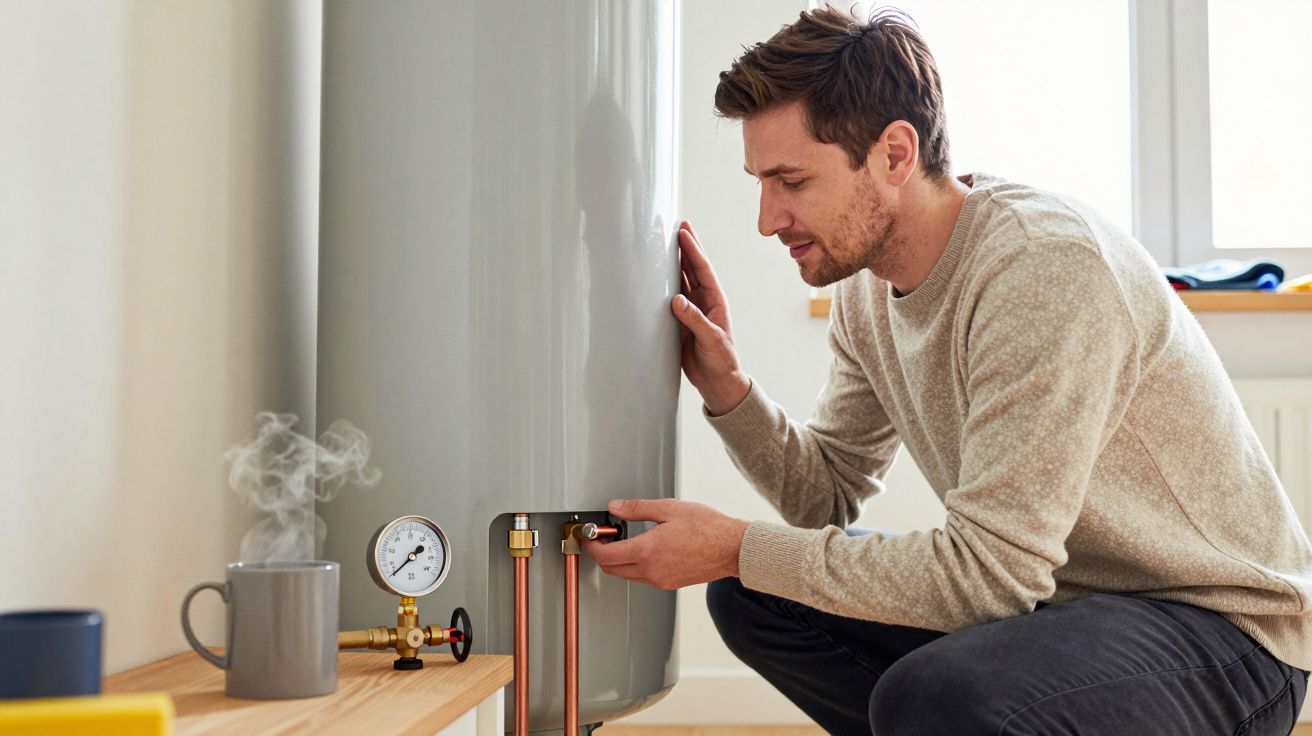
Put a hand on the primary pipework near the cylinder / hydraulic module (carefully-pipes can get hot). When the system is calling for heat, you should feel one pipe heating and the return warming gradually. If the flow gets hot quickly and the return stays stubbornly cool, that’s a circulation hint.
If you hear gurgling or a “waterfall” sound, air is likely in the system. If you hear a buzzing or grinding from the pump area, it may be struggling mechanically.
2) Check pressure (if your system has a gauge)
Many UK installs have a pressure gauge on the heating circuit. If it’s very low, circulation can be poor and air can get dragged in. Don’t blindly top up if you’re unsure-just note the reading for your engineer.
3) Check obvious valves haven’t been knocked
It sounds basic because it is. After decorating, boxing-in, or “a quick tidy”, isolation valves can be left partially closed. A half‑shut valve can mimic a dying heat pump beautifully.
- Look for valves near the cylinder / indoor unit.
- Ensure they’re fully open (usually handle in line with the pipe).
- If you’re not confident, stop here and don’t force anything.
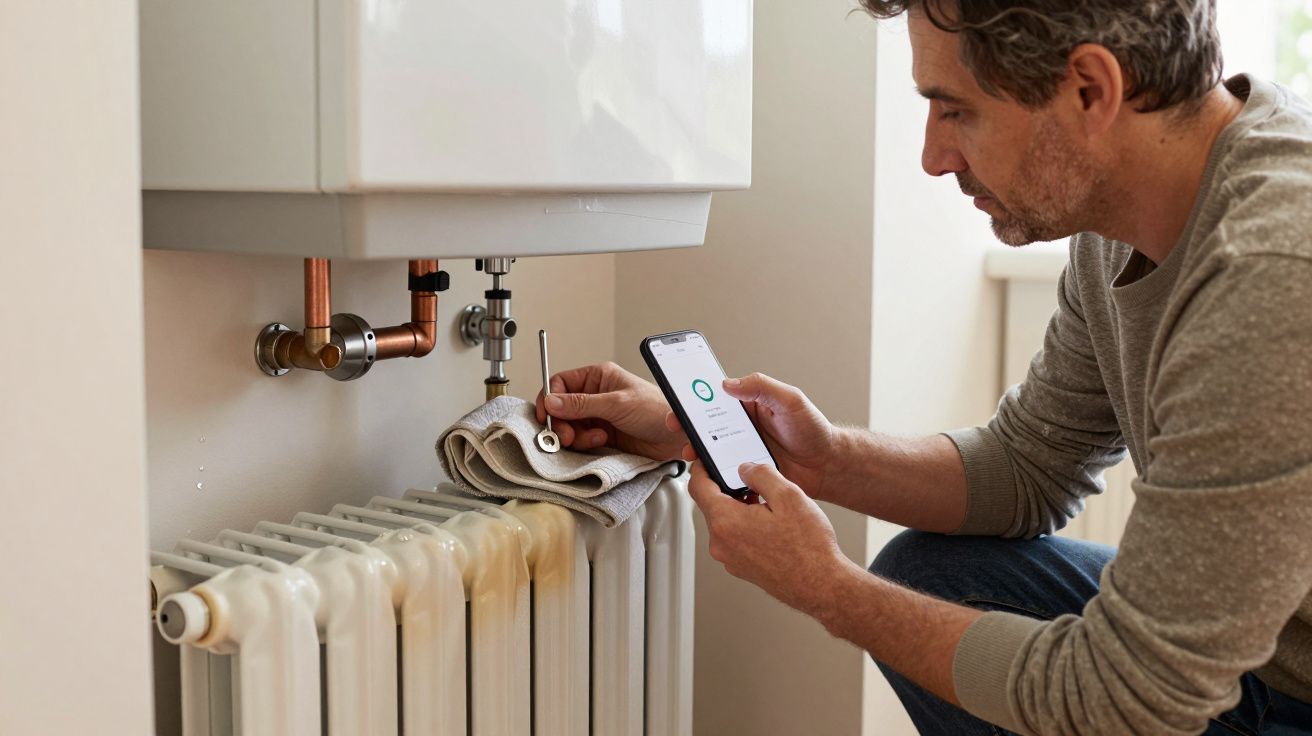
4) Bleed radiators only if you know your system is designed for it
Some heat pump systems have auto‑air vents and don’t want constant manual bleeding and topping-up. If you regularly get air back, that’s a sign of a deeper issue (filling loop habits, leaks, poor commissioning), not “just a bit of air”.
What’s really happening inside: the system can’t dump heat fast enough
When circulation drops, the heat exchanger gets hot, fast. Controls detect abnormal temperatures or low flow and either throttle back or shut down to prevent damage. The homeowner experiences that as: it tries, then gives up.
It’s similar to a sink that won’t drain. You can keep running the tap, but if the water can’t move away, you don’t get a working sink-just a rising problem. Heat pumps are the same: generation is only half the story; distribution is the other half.
When to stop troubleshooting and call a pro (the “don’t push your luck” list)
A pump issue can be minor, but the boundary matters. Call your installer or a heat pump engineer if:
- You get repeat fault codes or lockouts.
- The pump is loud, hot to the touch, or smells electrical.
- Pressure keeps dropping or you’re topping up often.
- Multiple zones stop heating at once with no obvious control reason.
- You have underfloor heating and suspect a manifold/pump problem (easy to misdiagnose).
Mention the symptoms in circulation language: “Flow pipe gets hot, return stays cold” or “rapid cycling with poor heat output”. That helps the engineer avoid chasing the wrong thing.
A small habit that prevents the drama next winter
Heat pumps like steady, clean circulation. A quick annual check (filters/strainers cleaned, air properly purged, pump settings verified, system water quality tested) prevents the kind of morning where you’re convinced the whole unit has failed.
And if your home ever feels “boiler-broken” again, remember: the loudest story isn’t always the true one. Sometimes it’s just the pump quietly not doing its job.
FAQ:
- Is this the same as a faulty diverter valve on a boiler? Not exactly. Heat pumps don’t usually have a boiler-style diverter valve, but a circulation problem can create a similar “no heat where I want it” outcome.
- Can I fix a stuck circulation pump myself? Some pumps have a de-blocking routine or accessible bleed/centre screw, but don’t open anything unless you’re confident and isolated safely. If in doubt, book an engineer-water and electrics are an unhelpful mix.
- Why does it work sometimes and fail other times? Intermittent pump faults, air moving around the system, or debris shifting can make performance come and go, which is why it feels so misleading.
- Will bleeding radiators solve it? It might help if trapped air is the issue, but frequent air points to an underlying problem that needs proper attention (leaks, filling practices, poor commissioning).
- Is low heat always a pump problem? No-controls, weather compensation settings, sensor faults, and undersized emitters can also cause low heat. The “hot flow, cold return” pattern is the clue that points more strongly to circulation.



Comments (0)
No comments yet. Be the first to comment!
Leave a Comment