Emergency response is the set of actions you take in the first minutes of a home incident-water leak, fire, gas smell, break-in-before it becomes a full-scale loss. In that moment, homeowners fall into the same trap: delay vs action, where pausing “just to check” feels sensible but quietly multiplies damage. The regret rarely comes from caring too much; it comes from choosing the wrong first move under pressure.
You can’t think your way out of panic once it’s started. What helps is a tiny script you can run even when your hands shake, and a few decisions made in advance while the house is calm.
The split-second choice that sets the bill
Most costly home emergencies don’t begin with drama. They start with a drip behind a dishwasher, a faint burning smell, a carbon monoxide alarm that “might be low battery”, or a damp patch you plan to look at later. The house stays standing, so the brain assumes the risk is also standing still.
But many incidents are time-sensitive in a boring way. Water wicks into plaster, electrics arc behind a wall, smoke travels, mould begins its quiet work. Delay vs action is not about being heroic; it’s about preventing a small, solvable issue becoming an insurance claim with weeks of disruption.
The most common regret is waiting for certainty instead of acting on probability.
Why “I’ll just see what happens” feels reasonable (and isn’t)
In homes, uncertainty looks like safety. You don’t want to overreact, you don’t want to call someone out unnecessarily, and you don’t want to be the person who shut off the mains for “nothing”.
A few forces stack the odds against you:
- Normalcy bias: if nothing terrible has happened yet, you assume it won’t.
- Task friction: finding the stopcock, the fuse board, or the right number adds minutes you don’t have.
- Social hesitation: nobody wants to ring a neighbour or a contractor at night and feel silly.
- False economy: you delay to avoid cost, then pay for restoration instead of repair.
Emergency response works when it turns “thinking time” into “doing time” with simple, reversible steps.
The three actions that prevent most regrets
These aren’t glamorous, but they’re the difference between a minor call-out and a major rebuild. The order varies by incident; the point is to act early and document later.
1) Make the situation safe first
If there is any immediate risk to life-smoke, gas smell, suspected carbon monoxide, structural instability-leave the property and call 999. Don’t hunt for the source, don’t open loft hatches into smoke, and don’t try to “air it out” if you suspect gas.
For lower-grade situations, safety still comes first: isolate what you can without putting yourself in danger. That means not touching wet electrics, not standing in water near sockets, and not investigating a fuse board with burning smells.
2) Isolate the system that’s feeding the damage
Most home losses are “fed” by a system you can stop.
- Water: turn off the internal stop tap/stopcock; if it won’t move, turn off at the external boundary stop tap if accessible.
- Electric: switch off at the consumer unit if there’s sparking, burning smell, or water near electrics.
- Gas: if you smell gas, do not use switches; open doors/windows if safe, leave, and call the National Gas Emergency Service on 0800 111 999.
This is where delay vs action bites hardest. People wait for a plumber while the leak continues, or keep power on because “it’s probably the appliance”.
3) Start a simple evidence trail while help is en route
Once safe and isolated, take quick photos and a short video. Note the time, what you did (e.g., “mains water off 19:12”), and any obvious source. This is not about being a claims expert; it’s about remembering clearly when you’re tired and stressed.
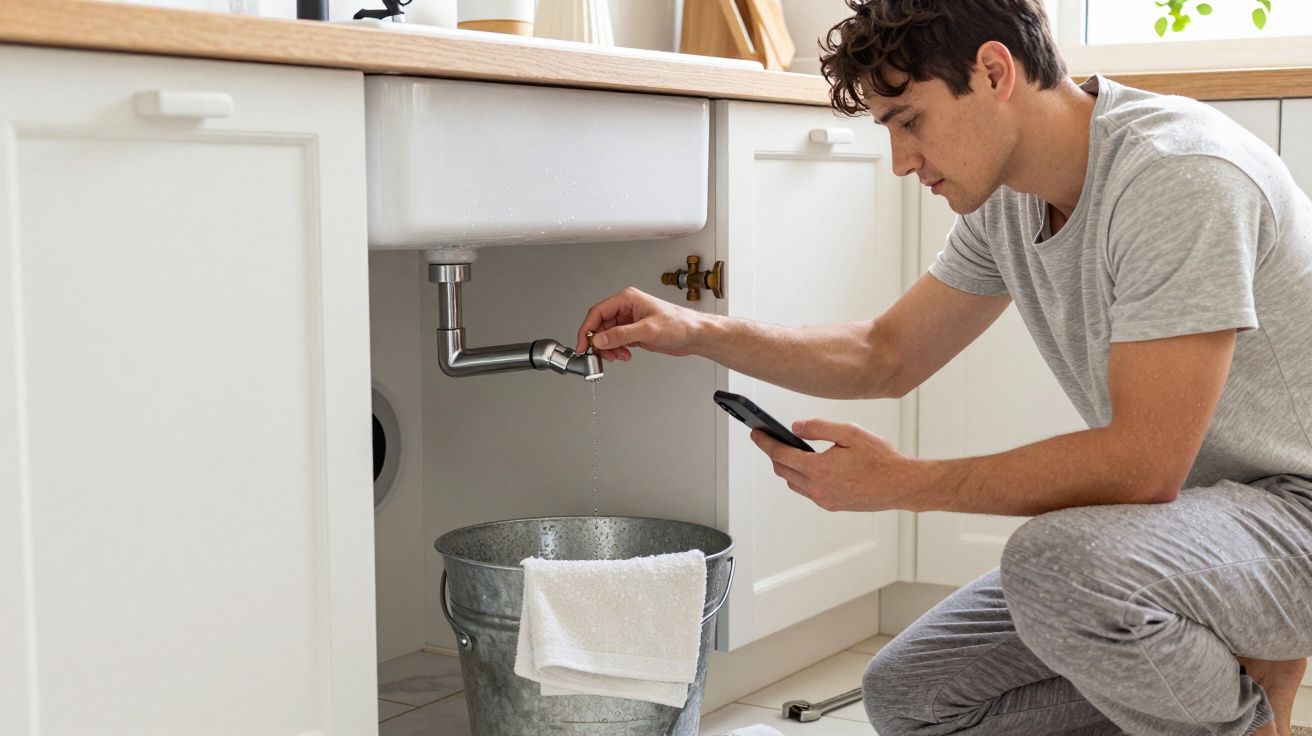
If you can safely do so, reduce spread: move towels, put a bucket under a drip, lift rugs, open windows for ventilation. Avoid ripping out materials unless a professional tells you to-many insurers want evidence of the original condition.
The pre-decision that saves you at 2am
The emergency decision homeowners regret is often made months earlier: not learning where things are, not maintaining the bits that fail, and not agreeing who does what.
A calm, ten-minute “house briefing” pays back for years. You only need four items nailed down:
- Stopcock location (and whether it turns easily)
- Consumer unit location (and which breaker is which)
- Gas shut-off awareness (and the emergency number saved)
- Trusted contacts (local plumber, electrician, locksmith-saved in phones)
Write these on a card inside a kitchen cupboard and share them with everyone in the household. Panic makes people forget what they already know.
A quick incident guide (so you don’t improvise)
Use this as a basic script. It’s intentionally boring.
- Water leak (visible): isolate water → protect electrics → contain drips → call plumber/insurer if significant.
- Water stain (unclear source): check upstairs bathrooms/appliances → take photos → reduce use of suspect fixture → book inspection within 24–48 hours.
- Burning smell: switch off electrics if safe → avoid using circuits/appliances → call an electrician urgently.
- Smoke/fire: leave → close doors behind you → call 999.
- Gas smell/CO alarm: do not use switches → ventilate if safe → leave → call 0800 111 999.
When in doubt, treat uncertainty as risk. Emergency response is designed for imperfect information.
The small kit that makes action easier
You don’t need a disaster cupboard. You need friction removed.
- Torch (and spare batteries)
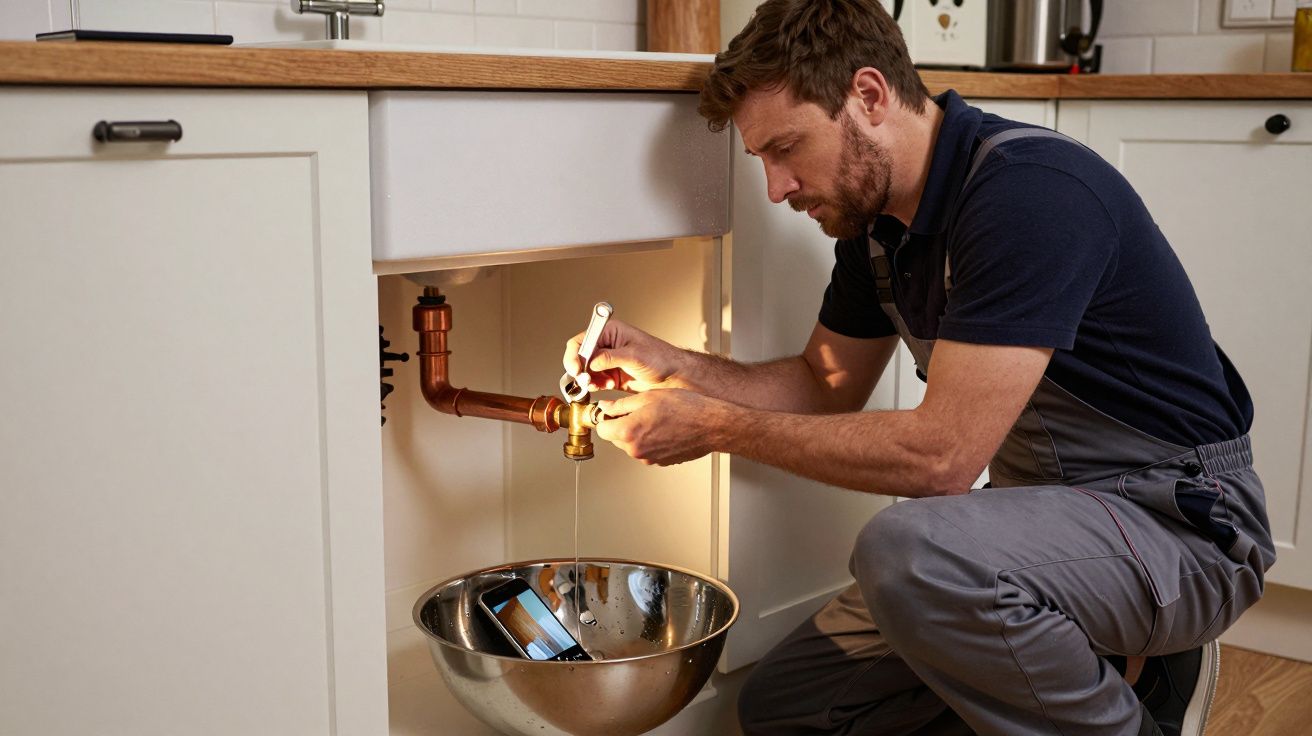
- Adjustable spanner for stubborn stop taps
- Bucket, old towels, and a plastic sheet
- Gaffer tape and cable ties (temporary containment only)
- Printed card with key shut-offs and numbers
Keep it in one known place. The “where is it?” hunt is pure delay vs action.
What good looks like after the event
The goal isn’t to be calm; it’s to be effective. A good outcome usually has these signs: the system feeding the damage was isolated quickly, hazards were avoided, and the incident was documented enough for repairs and insurance to move smoothly.
If you take only one lesson, take this: you can always turn things back on later. You can’t un-soak a ceiling, un-burn a cable, or un-inhale carbon monoxide.
FAQ:
- What if I’m not sure it’s an emergency? Treat it as time-sensitive until proven otherwise: make safe, isolate the likely source (water/electric where appropriate), and get professional advice. It’s easier to reverse a cautious step than to reverse damage.
- Should I call my insurer straight away? If there’s significant damage, risk of further loss, or you may need alternative accommodation, call early. If it’s minor and clearly repair-only, you can often arrange a trade first-just keep photos and receipts.
- What’s the biggest mistake with leaks? Waiting for certainty while water continues. Turn off the supply first; you can investigate the exact source once the situation is stable.
- Do I need to label my consumer unit? Yes. Clear labels cut decision time when you smell burning or water reaches electrics, and they reduce the chance you switch off the wrong circuit.



Comments (0)
No comments yet. Be the first to comment!
Leave a Comment