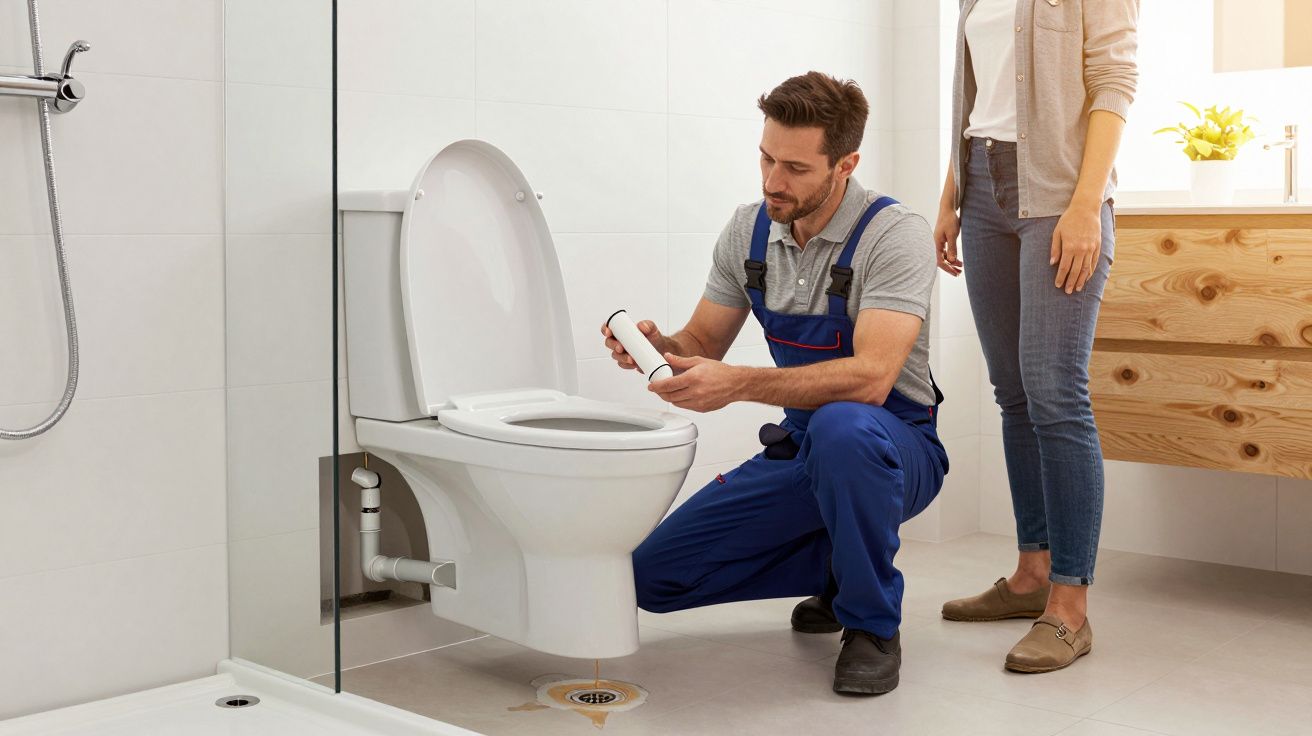
Bathroom design is supposed to make the everyday stuff feel effortless: the shower drains, the basin empties, the loo flushes and you move on with your morning. But certain layouts bake in flow restrictions from day one, so the water can only leave the room as fast as the weakest section of pipe allows. The result isn’t just “a bit slow” - it’s smells, gurgling, standing water, and that grim feeling that your bathroom is quietly losing a fight with gravity.
The first time I clocked it properly was in a smart-looking new-build where everything was Instagram-perfect: a wall-hung WC, a slim vanity, a big rainfall shower. Then the shower tray started to pool by the end of a normal rinse, like it was thinking about it. No dramatic blockage, no hair monster hauled out of the trap - just a layout that asked water to do too much, too far, too flat.
The layout that causes the most drainage headaches
It’s the “all-in-one wet zone” (or bathroom-on-a-podium) where the shower, WC, and basin all connect to a single soil stack via long horizontal runs - often boxed-in - with minimal fall. You see it in loft conversions, rear extensions, and refurbishments where the designer is trying to keep the room sleek, the ceiling below untouched, and the fixtures lined up like a showroom.
On paper it’s tidy: everything sits on one wall, everything looks symmetrical, and the pipework disappears. In real life, long, shallow waste pipes are where slow drains are born, because a small mistake in gradient or a couple of tight bends turns “normal use” into “recurring problem”.
Why it fails (it’s not bad luck - it’s physics)
Water wants a clear route and a decent slope. When the shower waste has to travel metres before it drops into the stack, it’s depending on a thin film of water to carry soap scum, hair, and limescale along for the ride. If the pipe is too flat, the water outruns the solids; if it’s too busy with bends, the solids park up and start building a little dam.
Common culprits that create flow restrictions in these layouts:
- Long horizontal runs from shower or basin to the soil stack (especially 40mm wastes pushed to their limits).
- Too many elbows (90° bends are a favourite inside boxing where no one wants to open it up later).
- Insufficient fall because the floor build-up was kept minimal, or the ceiling below couldn’t be dropped.
- Multiple fixtures sharing a tight section so one discharge affects another (hello, gurgling basin when the loo flushes).
- Poor venting / negative pressure in the branch, pulling water out of traps and letting smells creep in.
None of this needs a “blockage” to show up. It can be a brand-new bathroom that drains like it’s permanently in a sulk.
The warning signs you’ll feel before you see a disaster
Most people wait for a full stop - the shower backing up dramatically - but the room usually gives quieter hints first. They’re easy to ignore because they come and go, like the bathroom is having a moody day.
Watch for:
- The shower draining fine at first, then slowing mid-shower
- A basin that “glugs” and releases a bubble after you pull the plug
- A faint drain smell that comes back even after cleaning
- Water level in the WC shifting slightly when another fixture runs
- A recurring need for chemical drain cleaner (the false friend of plumbing)
If you’ve got these and your bathroom is newly renovated, don’t let anyone fob you off with “it’ll settle”. Pipes don’t “settle” into better gradients.
The three layout moves that fix it (without ruining the look)
You don’t need to give up on a beautiful bathroom. You need to stop asking one skinny, flat pipe to do an impossible job.
1) Put the shower closer to the stack (or give it its own route)
If you can, locate the shower so the waste run is short and direct. When that’s not possible, consider a dedicated route with fewer bends, even if it means a slightly different vanity position or a boxed section that’s honest rather than labyrinthine.
2) Build in fall with the floor, not wishful thinking
A common mistake is trying to keep the floor height identical to the adjacent room while also hiding pipework. That’s how you end up with a waste that’s basically level.
Options that actually work: - A small podium/raised zone with access (planned, not accidental) - A dropped ceiling below in a corridor or cupboard (strategic, not everywhere) - Rerouting to reduce distance rather than flattening the run
3) Respect pipe sizes and air
Showers in particular are fussy: high-flow heads plus small wastes plus long runs is a predictable mess. Upsizing where appropriate and ensuring proper venting (or an AAV where permitted and correctly positioned) reduces the “everything fights everything” effect when multiple fixtures run.
If your installer starts talking about “it’ll be fine in 32mm”, ask them to explain how they’re avoiding slow solids build-up over time. Let’s be honest: nobody wants to reopen tiled boxing because the maths was optimistic.
A quick “layout audit” before you sign off a refurb
Do this before tiles go on and choices become expensive.
- Stand where the shower will be and ask: Where does this pipe go, exactly?
- Count bends: more than a couple between shower and stack is a red flag.
- Ask for the fall: What gradient are you achieving across the full run?
- Confirm access: If this blocks, how do we reach the problem section?
- Consider simultaneous use: flushing while showering shouldn’t make the basin burp.
A neat bathroom is lovely. A neat bathroom that drains properly is peace.
| Check | What “good” looks like | Why it matters |
|---|---|---|
| Distance to stack | Short, direct run | Less chance of build-up and slow flow |
| Number of bends | Minimal, swept where possible | Fewer snag points for hair/soap |
| Access | Removable panel or service point | Future fixes don’t mean smashed tiles |
If you’re already stuck with this layout
Start with the non-destructive truths: clear the trap, check the waste cover, and use a proper hair catcher. But if the problem is structural - long flat run, too many bends, poor venting - no amount of weekend plunging will turn it into a good design.
The most effective “already built” fixes are usually: - Adding or correcting venting/AAV (where appropriate) - Replacing tight elbows with swept fittings where accessible - Re-running a section to increase fall (often the only real cure) - Providing proper rodding access so maintenance is possible
If the bathroom works only when you treat it gently, it doesn’t work. It’s just behaving.
FAQ:
- What bathroom layout most often causes slow shower drainage? A layout with a long, shallow horizontal run from the shower to the soil stack, especially when multiple fixtures share that run and there are several tight bends.
- Is it just hair in the drain? Sometimes, but persistent slow draining in a newly fitted bathroom often points to insufficient fall, too many bends, or undersized/overloaded pipework - design issues rather than maintenance.
- Do wall-hung WCs make drainage worse? Not inherently, but they’re often installed in layouts with boxed-in pipework and constrained routes. If the design forces awkward pipe runs, the risk of poor performance increases.
- Can a plumber fix it without ripping out tiles? Occasionally - venting improvements or accessible fitting swaps can help. If the main issue is a long flat run with no fall, the proper fix usually involves re-routing pipework.
- How do I prevent this in a renovation? Keep wastes short and direct, build in adequate fall, limit bends, ensure venting, and insist on access points before anything gets tiled or boxed in.





Comments (0)
No comments yet. Be the first to comment!
Leave a Comment