
It usually starts with a familiar winter complaint: radiators get hot, then drift lukewarm, room by room, day by day. Radiator sludge is the gritty, black-brown build-up that forms inside wet central-heating systems when metals corrode and debris circulates; it thrives in contaminated system water. It matters because the “fading heat” you feel is often the first visible sign of a system quietly losing efficiency, stressing the pump and boiler, and costing you more for less comfort.
You bleed a radiator, the air hisses out, and for a while it seems better. Then the pattern returns: the bottom stays cold, the far bedroom never quite warms, and the boiler sounds a little more strained than it used to. People call it “an old house” problem, when it’s often a chemistry-and-flow problem hiding in plain sight.
When the heat fades, it’s usually a circulation story
A radiator doesn’t heat evenly by luck. Hot water has to enter, travel through the panels, and leave without hitting a traffic jam of debris.
Sludge creates that jam in slow motion. It settles in low points (radiator bottoms, bends, the pump area), narrows internal waterways, and turns what should be a steady loop into a system that heats fast at the start and then stalls as flow meets resistance.
The giveaway isn’t just a cold spot. It’s the way the system feels “tired”: longer warm-up times, uneven rooms, and a boiler that cycles more often to chase a temperature it can’t deliver.
Common symptoms that fit the sludge cycle:
- Radiator hot at the top, cool at the bottom even after bleeding.
- One or two radiators always underperforming (often the furthest from the boiler).
- Frequent need to top up pressure, followed by more noise and more air.
- Kettling, gurgling, or a pump that sounds rough when the heating kicks in.
- Dirty water when you crack open a bleed valve (staining cloths dark).
The sludge cycle nobody explains: why it keeps coming back
Most people imagine sludge as a one-off blockage you “clear” once. In practice, it’s a loop: corrosion creates particles, particles worsen flow, poor flow accelerates corrosion, and every top-up adds fresh oxygen to fuel the process.
Here’s the cycle in plain terms:
- Oxygen enters the system (through topping up, small leaks, or imperfect sealing).
- Metals react (radiators, steel components) and form iron oxide particles.
- Contaminated system water carries those particles until they settle in slow-flow areas.
- Flow reduces, heat distribution worsens, and cold zones inside radiators become corrosion-friendly pockets.
- More debris forms, and the system becomes noisier, slower, and less efficient.
Bleeding can remove trapped air, but it doesn’t remove the fine magnetic muck collecting in the base of the radiator. Worse, repeated bleeding and topping up can add more oxygenated water, nudging the cycle along.
Where radiator sludge likes to hide (and why the “worst” radiator isn’t the problem)
Sludge doesn’t distribute politely. It follows gravity, low velocity, and bottlenecks.
- Radiator bottoms: sediment settles where water slows and cools.
- Microbore pipework and tight bends: small internal diameters clog sooner.
- Pumps and valves: debris can score surfaces and reduce performance.
- Heat exchangers (in boilers): restricted flow can trigger noise and inefficiency.
That’s why “the one cold radiator” is often the messenger, not the culprit. The system-wide water quality is the actual story; the cold panel is simply where the system admits it.
What actually fixes it: clean the water, then keep it clean
There are two jobs here: remove what’s already circulating, and prevent new debris from building.
The clean-up options (what they’re for, not the sales pitch)
- Targeted radiator flush: useful when one or two radiators are clearly silted, but it won’t necessarily clean the whole circuit.
- System flush with chemicals: loosens deposits and helps carry them out; results depend on how thoroughly it’s drained and refilled.
- Powerflush: high-flow, agitated flushing that can shift heavy build-up; most appropriate when multiple radiators are affected and the water is visibly foul.
- Magnetic filter install: catches ongoing magnetic particles (the classic black sludge component) before they settle elsewhere.
A good clean without protection is a reset button you press once. A clean with protection is a change in the system’s behaviour.
The “keep it clean” basics most homes miss
- Add a corrosion inhibitor after any drain-down or major work.
- Fit a magnetic filter and have it cleaned during servicing.
- Avoid frequent topping up; if pressure keeps dropping, find and fix the cause.
- Check system balance so each radiator gets its share of flow (especially after changes).
- Use the right fill water practices where applicable (your engineer will advise based on system type).
Clear water isn’t automatically healthy water. The goal is stable, treated water that stays that way.
A quick self-check before you book a call-out
You don’t need to dismantle anything to gather useful clues. A few small checks can make the engineer’s visit faster, and help you avoid paying for the wrong “fix”.
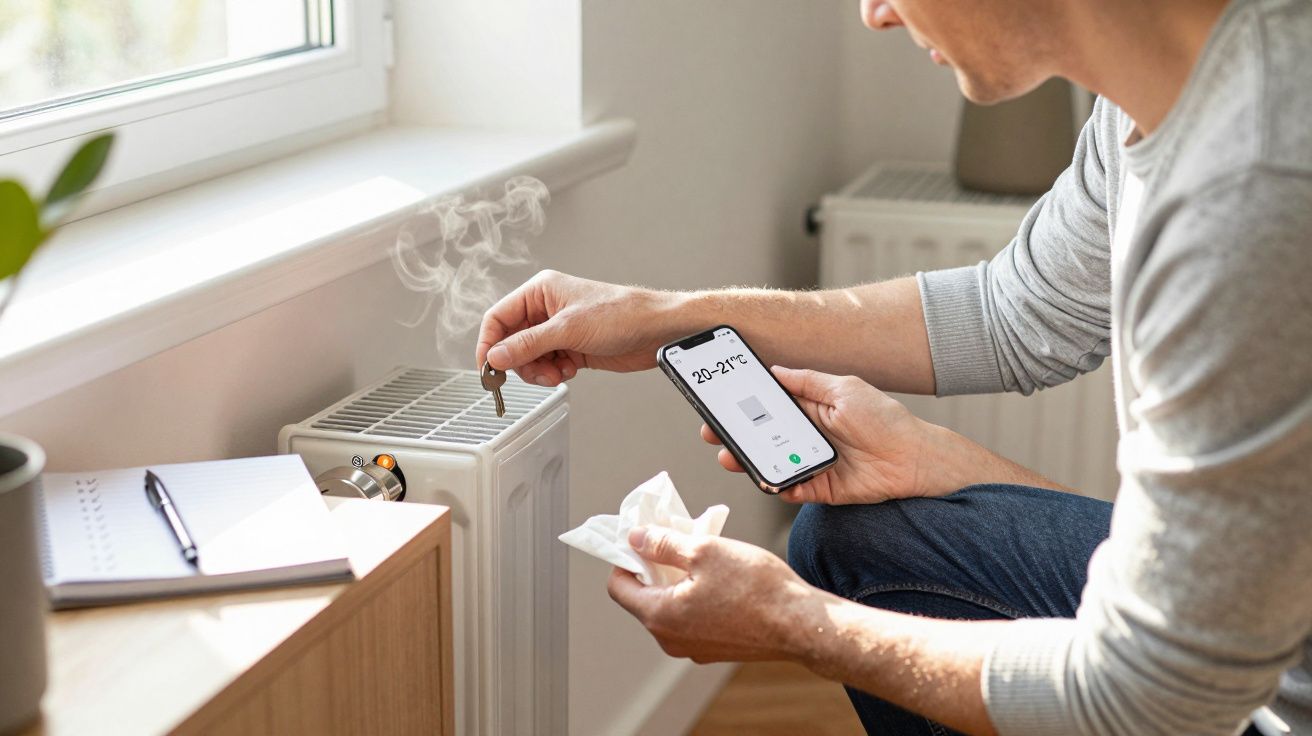
- Feel radiators top to bottom after 20–30 minutes of heating: note which are cold at the base.
- Listen near the boiler and pump area when it fires: note kettling or grinding.
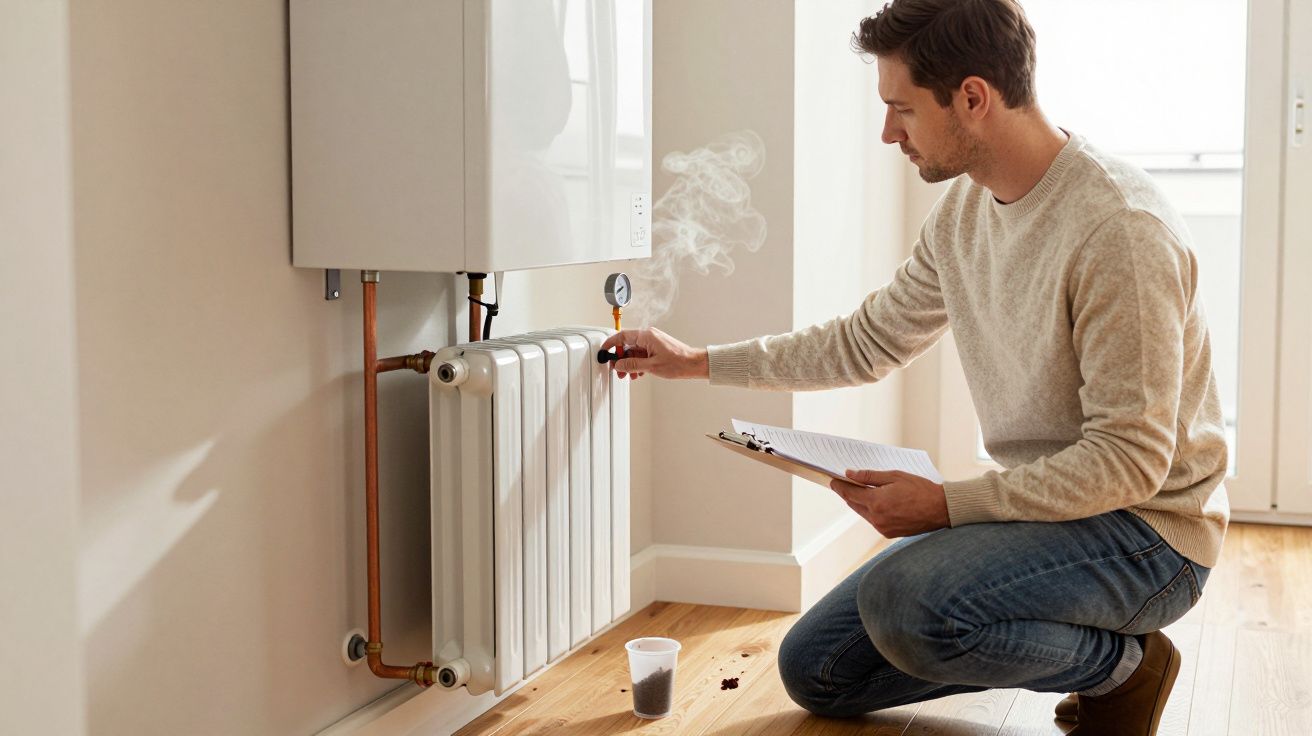
- Bleed one radiator into a white cloth: note if water is clear, grey, or dark.
- Check how often you’re topping up pressure: “rarely” and “weekly” are different worlds.
If you have a modern boiler that’s been serviced but the house still heats unevenly, it’s often not the boiler failing at its job. It’s the system water preventing it from doing the job efficiently.
The quiet win: even heat and a calmer system
When sludge is removed and prevention is in place, the change is rarely dramatic in one instant. It’s more like the house stops arguing with the thermostat. Rooms reach temperature without overshooting, radiators feel consistent across their surface, and the boiler runs with less stop-start strain.
And that’s the real point. You’re not just chasing hotter metal; you’re restoring steady circulation - the one thing radiator sludge disrupts first, and the one thing contaminated system water keeps sabotaging until you deal with it properly.
FAQ:
- Can bleeding radiators fix the problem on its own? Bleeding removes trapped air, which can help short-term. It won’t remove sludge settled inside radiators or debris circulating in the system.
- Why does topping up the boiler pressure make things worse over time? Fresh water brings dissolved oxygen, which can accelerate corrosion inside a sealed heating system if done frequently or if inhibitor levels are low.
- Do I always need a powerflush? Not always. Mild issues may improve with a chemical flush, filter, inhibitor, and correct balancing. Heavy, widespread cold-bottom radiators and very dirty water often justify a powerflush.
- What’s the point of a magnetic filter if I’ve already flushed? Flushing removes existing deposits; a magnetic filter helps catch new particles as they form, slowing the return of sludge.
- How can I tell if sludge is likely without draining the system? Persistent cold spots at the bottom of radiators, dirty bleed water, noisy circulation, and repeated imbalance across rooms are common clues.




Comments (0)
No comments yet. Be the first to comment!
Leave a Comment