You don’t notice it when the dust sheets go down and the kettle lives on the floor, but renovation projects have a habit of triggering system disruption in the one thing you expect to keep working: the heating. It’s usually not dramatic on day one; it’s a radiator that “sounds a bit odd”, a thermostat that suddenly lies, a room that won’t warm up no matter how long you wait. And because the builders have left and the paint is dry, you’re left staring at a cold spot like it appeared out of nowhere.
This is the bit nobody explains properly. Heating faults after work isn’t “bad luck” or “an old boiler finally giving up” as a neat coincidence. It’s often cause-and-effect, just hidden under plasterboard, new pipe runs, and the simple fact that homes are systems, not separate jobs.
The heating didn’t “break”. It got interrupted.
Most renovation changes aren’t aimed at the heating, but they jostle it anyway. A new kitchen means radiators come off walls. A rewire means floors lift and go back down. A wall gets moved, a door gets added, a cupboard gets boxed in, and the air in the house starts behaving differently.
The result is heating that technically turns on, but no longer performs the way it used to. The boiler fires, the pump hums, the thermostat says 20°C, and you still find yourself in socks and a jumper at 7pm wondering what you paid for.
Heating engineers often describe it as “disturbance faults”: nothing is catastrophically broken, but several small changes stack up until the system can’t settle.
The four renovation moves that most commonly trigger faults
1) Taking radiators off (and putting them back on too quickly)
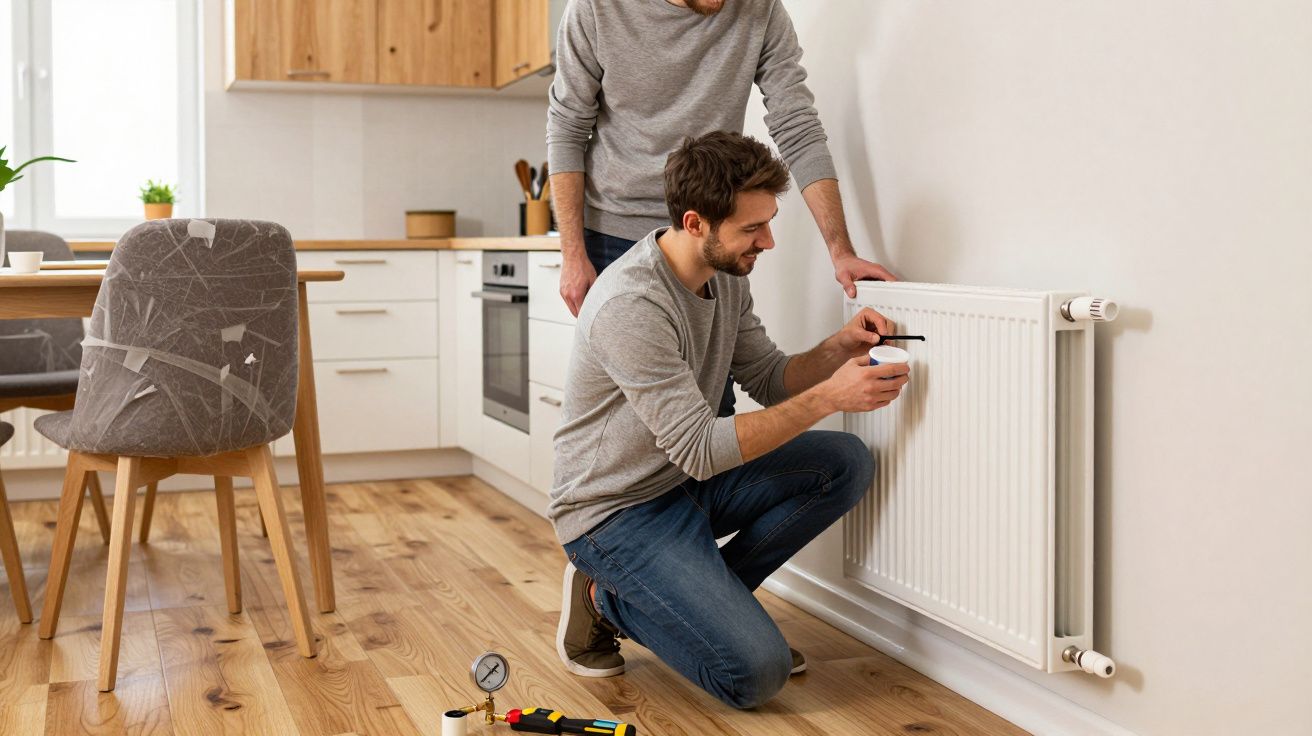
Radiators nearly always come off during plastering, decorating, or kitchen fitting. The common issue isn’t the radiator itself; it’s what gets introduced when it’s drained and refilled: air, sludge disturbance, and sometimes a slightly mis-set valve when everything is rushed at the end of the day.
A radiator can go back on and look perfect, yet be half full of air. It’ll heat at the bottom, stay cold at the top, and make you think the boiler is struggling when the real problem is trapped air and unbalanced flow.
If more than one radiator was removed, you can also end up with the system effectively “reconfigured” without meaning to. One room suddenly gets all the heat, another never quite catches up.
2) Changing pipe routes under floors and behind units
Kitchens and bathrooms are the big offenders here. Fitters move services to make new layouts work, and pipework gets rerouted under floors, through joists, or behind cabinetry. That can introduce:
- tighter bends and longer runs that reduce flow
- accidental pinches where pipes pass through new noggins or brackets
- pipes pressed against timber, which then expand and creak when heated
- sections left uninsulated, bleeding heat into voids instead of rooms
None of this looks like a “fault” during the build. It only shows up when you try to heat the place evenly again.
3) Dust and debris getting into the system’s weak points
Renovation dust gets everywhere, and heating controls aren’t immune. Thermostat sensors, TRVs (thermostatic radiator valves), and boiler air intakes can all be affected by fine dust, paint mist, or simply having their covers removed and put back badly.
A TRV pin can stick after months of being knocked, painted around, or left fully closed. You turn the dial and nothing happens, so the radiator stays cold and the room never comes online.
It’s mundane, which is why it’s missed. Everyone expects a “proper” failure, not a valve that’s become slightly lazy after a fortnight of trades leaning ladders against it.
4) Airtightness changes that alter how your home holds heat
This one confuses people the most. New windows, fresh seals, blocked chimneys, closed-up vents, draft-proofed doors: all of these can make a house feel different even if the heating hardware is unchanged.
Sometimes the house gets warmer (great). Sometimes it gets stuffier, more humid, and you start seeing condensation and cold patches where airflow used to be. And sometimes, counter-intuitively, certain rooms get colder because air no longer circulates the same way around stairwells, hallways, and open doors.
You haven’t just renovated; you’ve altered the pressure and movement of air in the building. Heating is forced to work in a new environment.
The “it was fine before” checklist engineers run through
When someone says, “Ever since the work, it won’t heat properly,” most good engineers don’t start by blaming the boiler. They start by looking for what got changed.
Here’s the short, practical sequence that often finds the culprit in minutes:
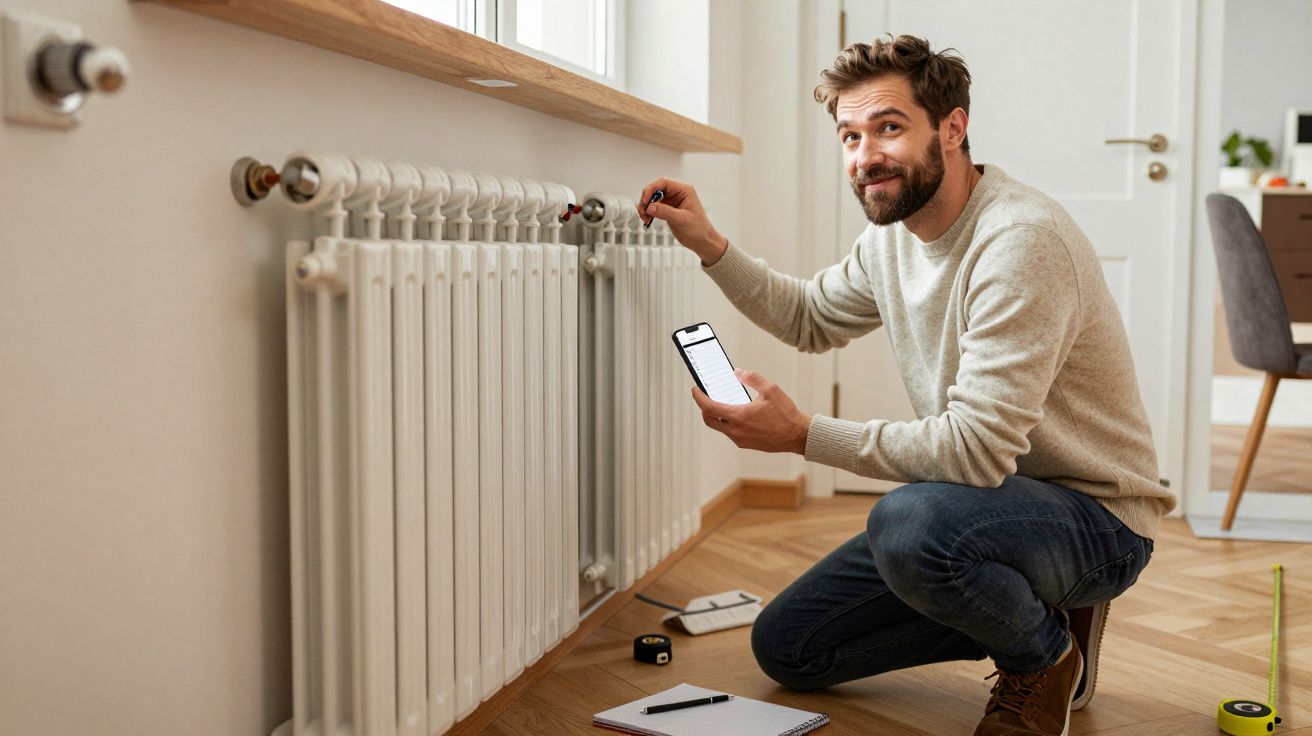
- Did any radiators come off the wall? If yes, assume air in the system until proven otherwise. Bleed, then recheck pressure and performance.
- Were floors lifted or pipework rerouted? Look for kinks, crushed sections, or long uninsulated runs in cold voids.
- Were TRVs painted, knocked, or boxed in? Free the valve pin and make sure the head can actually sense room temperature (boxing a TRV behind furniture can make it “think” the room is warmer than it is).
- Did controls move? A thermostat relocated near a sunny window, new appliance, or draughty door will behave like it’s in a different house, because it is.
- Was the system drained and refilled without inhibitor? Fresh water plus disturbed sludge is a classic post-renovation slow-burn problem.
None of these checks require drama. They require someone to treat the heating like a system that’s been disturbed, not a machine that randomly failed.
The small fixes that stop post-renovation heating weirdness
Most households don’t need to rip anything out. They need to “reset” the heating after the disruption of the works, the same way you’d recalibrate something after it’s been moved.
Do a post-works reset week
Pick a quiet week when you’re not juggling snagging lists and deliveries. Then:
- Bleed radiators twice (once, then again after a day of running) and top up pressure as needed.
- Check every radiator valve position (TRVs and lockshields). If one room is hogging heat, you may need balancing.
- Run the heating in short, controlled bursts to listen for gurgling, banging, or pump strain before you go back to “normal life”.
- Confirm the thermostat is in a sensible place: not above a radiator, not in direct sun, not in a newly draft-proofed dead zone.
If you’ve had significant pipework changes, add one more boring-but-effective step: ask whether the system was refilled with inhibitor, and if not, get it added. Renovation often refreshes the water; you don’t want fresh corrosion starting quietly in the background.
The one question to ask before you pay for a “new boiler”
If the heating fault appeared right after building work, ask this:
“What changed in the system or the building that could affect flow, air, pressure, or controls?”
It shifts the conversation from panic to diagnosis. It reminds everyone-homeowner, fitter, engineer-that the timing is meaningful.
Renovation projects are not just aesthetic events. They are interventions in a home’s physics: water pathways, air movement, sensor placement, and the tiny tolerances that make heating feel effortless. Once you see that, the “mystery faults” become a lot more solvable.
FAQ:
- Why did my radiator stop heating after the builders removed it? Air often gets trapped when radiators are taken off and refitted. Bleed it, then re-pressurise the system and check again after the heating has run.
- Can a new kitchen cause heating problems even if the boiler wasn’t touched? Yes. Rerouted pipework, boxed-in valves, and altered airflow can all reduce heat output or make rooms heat unevenly.
- My thermostat was moved during the renovation. Does it matter? Very much. A thermostat in sun, near a heat source, or in a draughty spot will control the whole house based on misleading readings.
- What’s the simplest thing to check first? Bleed radiators and confirm system pressure, then make sure radiator valves are open and not stuck.
- When should I call a heating engineer rather than the builder? If pressure keeps dropping, you can’t get consistent heat across radiators after bleeding, or you suspect pipework changes have affected flow or caused leaks.




Comments (0)
No comments yet. Be the first to comment!
Leave a Comment