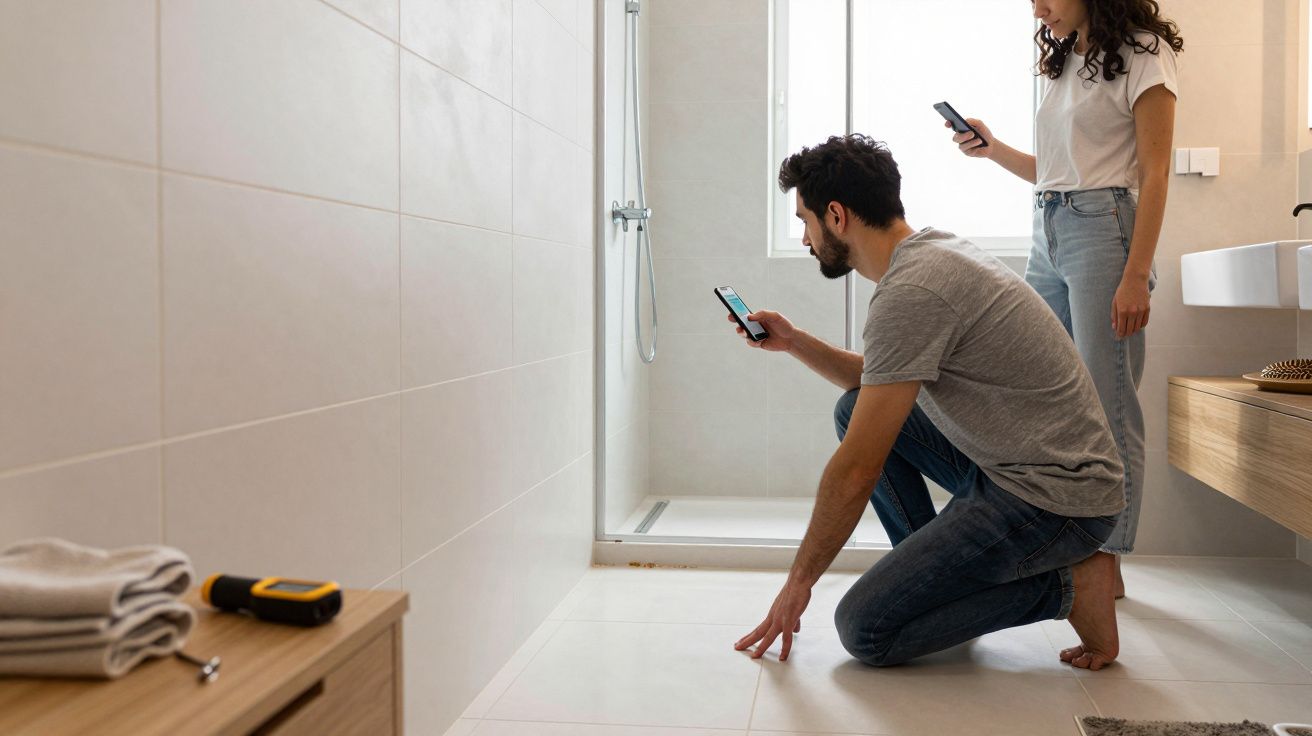
Bathroom refurbishments rarely fail with a bang. They fail quietly, when hidden pipe routes were guessed instead of traced, and a brand-new wall becomes a sponge behind the tiles. It matters because a leak that starts as a slow weep can turn into a sudden flood weeks later - long after the builder’s van has gone.
The room looked finished. The grout was clean, the silicone lines were sharp, and the shower ran hot and proud. Then one evening the floor felt oddly soft underfoot, and the ceiling below bloomed with a damp patch that spread like ink.
The mistake that waits until you relax
Most renovation errors announce themselves on day one: a wonky tile line, a dripping tap, a door that catches. The pipework mistake is different. It hides in the dark and uses time as cover.
The classic version goes like this: a new shower valve, a moved basin, or a relocated radiator is tied into “where the pipes should be”. A screw goes in, or a chasing tool bites into plaster, and nothing obvious happens. The nick is small, the pressure isn’t constant, and the water has plenty of places to travel.
A bathroom can tolerate a lot of cosmetic imperfection. It cannot tolerate uncertainty behind a tiled wall.
Why it floods weeks later, not straight away
Water doesn’t always burst out. Often it seeps, follows gravity, and pools somewhere you don’t see.
- A pinhole in a copper pipe can mist only when a tap is opened, wetting studs a little at a time.
- A lightly crushed plastic pipe can split slowly as it warms and cools with use.
- A fitting that wasn’t fully seated can hold until vibration, pressure changes, or a slight knock finishes the job.
By the time you notice the symptom, the problem has been “working” for days.
The hidden pipe routes problem: guessing is not a method
Hidden pipe routes aren’t always logical, especially in older UK homes where previous owners have rerouted supplies around doorways, joists, and old chimney breasts. Even in newer builds, pipes can deviate to avoid structural members, and boxing-in can disguise a surprising amount.
In bathroom refurbishments, the risk spikes when layouts change. Moving a shower to the opposite wall or swapping a bath for a walk-in enclosure often means drilling, chasing, and fixing into areas that were previously untouched. If you don’t confirm the route, you’re relying on hope and habits.
Three places the “surely not” pipe often runs
- Behind the mirror wall: basins get moved, but the feed may still take the shortest path.
- Along the edge of the floor: pipes tucked tight to skirting lines are easy to catch with fixings.
- Through the studwork: dot-and-dab and timber frames can hide vertical runs that don’t show on the surface.
A short story you can recognise
A couple refitted their upstairs bathroom: new enclosure, new valve, niche shelves, the lot. The installer fixed a batten for a shower screen, hit resistance, backed off, and chose a shorter screw. The screen felt rock-solid. Everyone moved on.
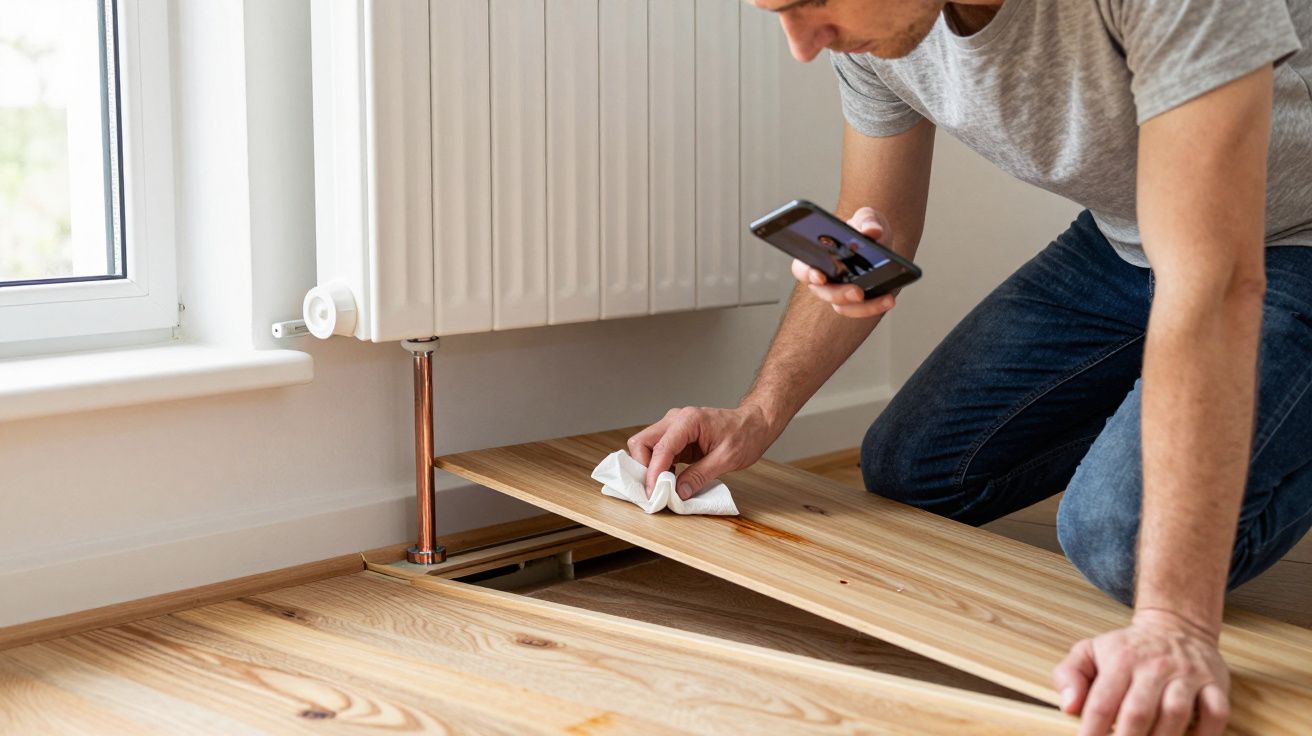
Two weeks later, the downstairs smoke alarm chirped from humidity. Another week and the laminate near the bathroom door started to lift. Then, after a longer shower, water suddenly appeared at the edge of the tiles - not from the tray, but from the wall.
The screw hole had grazed a pipe just enough to create a slow leak. The wall cavity filled, insulation held the moisture like a towel, and the first visible sign arrived only when the cavity couldn’t hold any more.
What to check before you call it “done”
Finishing a bathroom isn’t just wiping down tiles and fitting the last towel hook. A proper sign-off includes a few unglamorous checks that catch hidden failures early.
A practical end-of-job checklist
- Pressure test any new pipework before boxing-in or tiling (your plumber should do this as standard).
- Run every outlet (hot and cold) for a full five minutes, then check adjacent walls and ceilings.
- Inspect silicone and tray falls the next day, not just immediately after installation.
- Look for moisture patterns: swelling MDF, lifting vinyl edges, dark grout lines that don’t dry out.
If something feels “a bit off”, treat that as data, not anxiety.
How to avoid the mistake on your next refurbishment
You don’t need to become a plumbing expert. You do need a process that doesn’t rely on assumptions.
- Ask for a pipe route plan before walls are closed. Even a quick sketch, updated on site, is better than memory.
- Use a pipe and cable detector, but don’t treat it as gospel; confirm with access where possible.
- When fixing screens, cabinets, or battens, insist on safe fixing zones and appropriate fixings for wet areas.
- If you’re moving fixtures, factor in access panels where they won’t ruin the look but will save the room later.
The goal isn’t perfection. It’s verification.
Early warning signs people ignore (until they can’t)
The weeks-later flood usually sends smaller signals first. They’re easy to rationalise - especially when you’ve just spent money and you want the project to be over.
- A “musty” smell that returns after airing out
- Grout that stays darker in one corner
- A floor that feels slightly springy near the shower
- Paint bubbling or a faint shadow line on the ceiling below
- Unexplained drops in boiler pressure (in sealed systems)
One sign can be nothing. Two signs is a pattern.
If it’s already happened: what to do in the first hour
Speed matters, but so does calm.
- Turn off the water at the stopcock (and isolate the boiler if needed).
- Stop using electrics in affected areas if water is near fittings or lights.
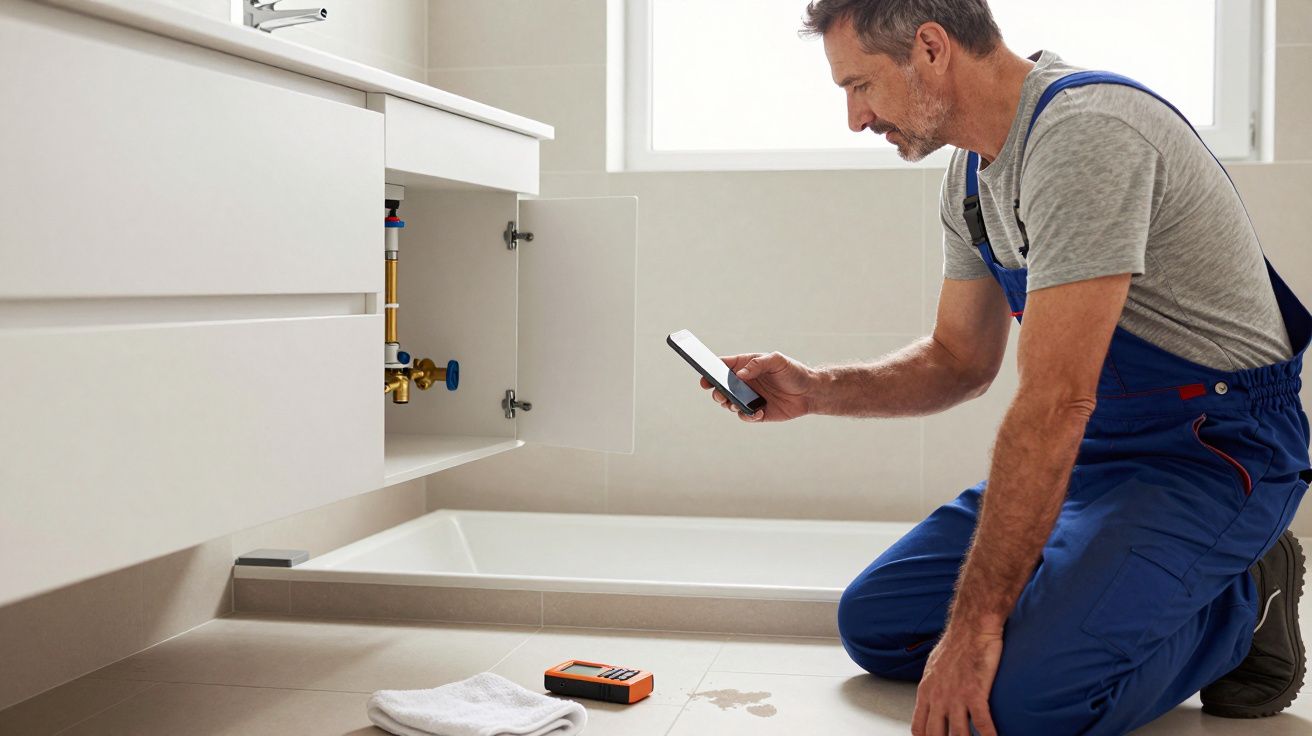
- Photograph everything before you start pulling panels or ripping out plaster.
- Ventilate and extract water: towels, wet vac, dehumidifier if you have one.
- Call a qualified plumber to locate and isolate the leak properly, not just “seal it up”.
Drying out a bathroom cavity can take days. Closing it too soon is how mould becomes the next surprise.
A small takeaway that saves big money
Bathrooms are compact, but they combine pressure, heat, movement, and constant moisture - the perfect conditions for small faults to become expensive. Treat hidden pipe routes as a design constraint, not a trivia detail, and your “finished” room is far more likely to stay finished.
FAQ:
- How do I find hidden pipe routes without ripping walls open? Start with a pipe/cable detector and thermal camera if available, then confirm via existing access points (under floors, behind service panels, around boxing). If you’re changing layouts, plan for at least one discreet access hatch.
- Is a slow leak really worse than a burst pipe? It can be. A slow leak often runs longer unnoticed, soaking joists, plasterboard, and insulation, which increases drying time, mould risk, and repair scope.
- Should I re-silicone if I see water on the floor? Not immediately. First rule out plumbing and concealed leaks. Re-siliconing can mask symptoms and delay proper diagnosis.

Comments (0)
No comments yet. Be the first to comment!
Leave a Comment