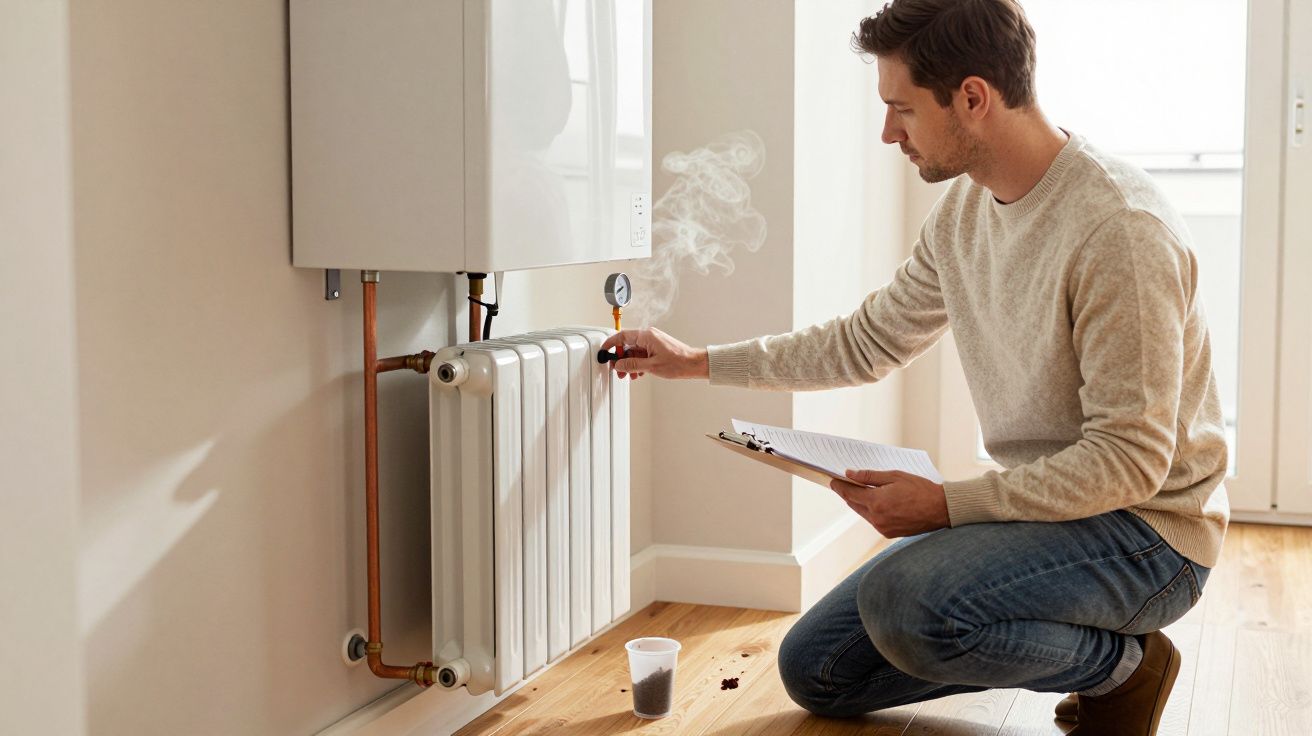
A heating upgrade can look like pure progress, yet heating systems often lose reliability in the weeks that follow because transitional faults creep in during the handover between old and new kit. These are the awkward in‑between problems: settings that don’t match the property, sensors that disagree, pipework that now flows differently, and controls that were never meant to “talk” to each other. If you rely on your home being warm on schedule-and not just “eventually”-this matters more than the shiny new boiler or heat pump brochure ever admits.
You don’t usually notice it on day one. You notice it on the first cold evening when a room stays stubbornly cool, the hot water timing drifts, or the system starts cycling like it’s anxious.
Where reliability actually gets lost
Upgrades rarely fail because a component is “bad”. They fail because the system is now a different organism, and the weak points have moved.
A new heat source changes temperatures, pressures, flow rates and control logic. That exposes old assumptions: the radiator circuit that tolerated sludge, the bypass that was “fine”, the wiring that worked when everything was dumb and on/off.
The biggest reliability hit tends to come from mismatch: new equipment installed correctly in isolation, but not commissioned as a whole system in a real house with real habits.
The hidden trade: efficiency for sensitivity
Modern controls are clever, but cleverness is picky. Weather compensation, modulating pumps, load compensation, zoning and smart TRVs can save energy, yet they also narrow the margin for sloppy balancing and poor sensor placement.
Older set‑ups often “brute forced” comfort: higher flow temperatures, fewer control points, more tolerance for air, sludge and oversizing. Upgrades reduce waste by being precise-and precision punishes small errors.
Transitional faults: the usual suspects
Think of transitional faults as “integration bugs” in plumbing and control. They’re common, usually fixable, and often missed because they don’t always show up during a short commissioning visit.
- Air and debris mobilisation: draining down and refilling shifts sludge, releases microbubbles, and blocks strainers, plate heat exchangers or pump impellers days later.
- Hydraulic imbalance: changes to pump head, bypass settings, radiator valves or added zones can starve the farthest emitters and overload the nearest ones.
- Sensor and control misreads: poorly placed room stats, clipped-on pipe sensors, or incorrect flow/return assumptions cause short cycling, overshoot, or “never quite reaches setpoint”.
- Hot water priority quirks: cylinders reheat at the wrong times, or the system “robs” space heating to chase hot water, especially when schedules and priority settings are left at defaults.
- Condensate and flue edge cases: minor routing issues freeze, gurgle, or trip a modern boiler precisely when the weather turns.
- Electrical legacy issues: inherited wiring centres, zone valves, or incompatible smart controls create intermittent faults-the worst kind, because they vanish when the engineer arrives.
The upgrade moments that trigger problems
1) Changing the heat source without changing the system’s “shape”
A common pattern: new boiler or heat pump, same old pipework, same radiators, same controls “for now”. The system can still run, but its operating envelope is now wrong.
For boilers, oversizing and poor modulation leads to cycling. For heat pumps, under‑emitting radiators and poor flow rates lead to lukewarm rooms, constant running, or aggressive defrost behaviour that feels like unreliability.
2) Adding zones and smart controls too fast
Zoning is attractive: heat the office, not the spare room. But every new zone is a new path for flow to get it wrong.
If multiple zones shut at once and the bypass isn’t correctly set (or there is no proper bypass), you can get pump noise, valve chatter, error codes, and wear that looks like “the new system is temperamental”.
3) Commissioning done on paper, not in the house
A commissioning sheet can be ticked while comfort is still off. Flow temperatures can be set without verifying emitter output, and balancing can be skipped because “it heats up”.
The problem is that “it heats up” is not the same as “it heats up evenly, quietly, efficiently, and predictably across a week of weather”.
What “good” looks like after an upgrade
A reliable upgraded system has boring behaviour. No drama. No guessing.
- Rooms reach setpoint without repeated on/off cycling.
- The farthest radiators warm up sensibly, not as an afterthought.
- Hot water reheats predictably, and doesn’t hijack heating at random.
- Error codes are rare, and when they occur they correlate to a real, repeatable cause.
If you can’t describe your system that way within a fortnight, you’re probably living with transitional faults-not “just how modern systems are”.
A short stabilisation plan (that actually prevents call‑backs)
You don’t need to become a heating engineer. You do need a method and a small window of attention after the install, because that’s when the system tells the truth.
- Run a full hot-water cycle and a full heating cycle in the first 48 hours. Note any odd noises, delays, or rooms that lag.
- Check pressure and filter/strainer condition after the first week (your installer can do this quickly). Debris shows up late.
- Get balancing confirmed, not implied. Ask what was balanced, how it was verified, and whether pump settings were changed.
- Lock down control logic: zones, priority, weather compensation curves, setback temperatures. Defaults are rarely right for your home.
- Book a “snagging” visit after 2–4 weeks, ideally after a cold spell. Transitional faults need real operating conditions to reveal themselves.
Quick diagnostic map: symptom → likely cause
| What you notice | Most likely transitional fault | First practical check |
|---|---|---|
| System cycles on/off every few minutes | Control/sensor mismatch, oversizing, poor modulation | Thermostat location + flow temp/curve |
| Some rooms never quite warm | Imbalance, stuck valves, air/debris | Bleed/check TRVs, confirm balancing |
| Hot water timing feels random | Priority/schedule defaults, wiring logic | Cylinder stats + controller settings |
The blunt lesson upgrades teach
Reliability isn’t a feature you buy; it’s a state you commission and maintain. Upgrades change the rules your house has been living by, and transitional faults are the price of that change when the details aren’t pinned down.
Treat the first month like a bedding‑in period with a checklist, not a leap of faith. You’ll get the efficiency and the comfort-without the “new system, new problems” feeling.
FAQ:
- Why did my old system feel more reliable than the new one? Older set-ups often ran hotter and simpler, which hides imbalance and control errors. Modern upgrades are more precise, so small commissioning gaps show up as noticeable behaviour.
- How long do transitional faults usually last? Many appear in the first 1–4 weeks as debris shifts and settings meet real weather. With a snagging visit and proper balancing, most are resolved quickly.
- Is it normal to need a follow-up visit after an upgrade? Yes. A planned snagging visit is a sign of a professional job, not a failing one, because many integration issues only emerge under normal living conditions.
- What’s the one question to ask my installer to protect reliability? “How did you verify balancing and flow rates across the whole system, not just at the boiler/heat pump?”





Comments (0)
No comments yet. Be the first to comment!
Leave a Comment