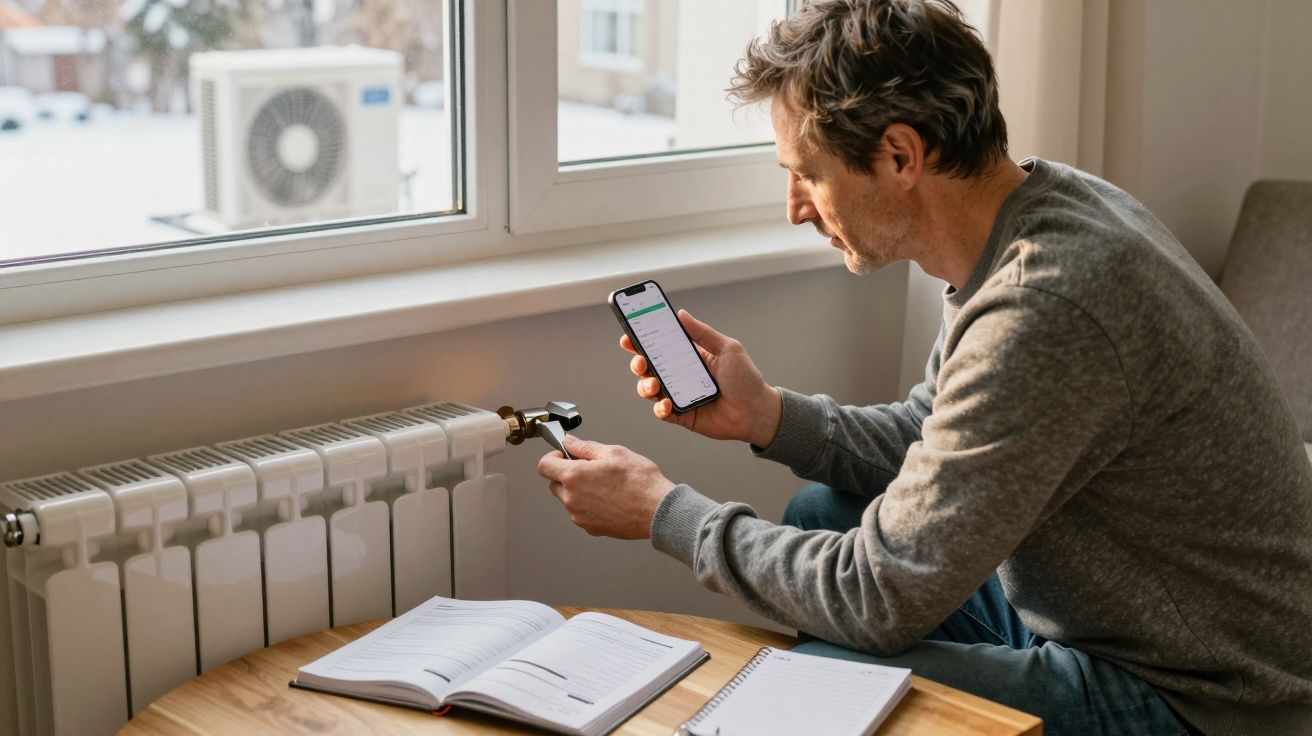
A heat pump installation can look immaculate on day one - tidy trunking, shiny outdoor unit, a controller that lights up like a new phone - and still leave you with cold rooms and big bills. The mistake is often invisible: the system hasn’t been set up for low-temperature design, so it’s running like a boiler replacement in fancy packaging. That matters because a heat pump only feels “easy” when it can make enough heat at low flow temperatures, most of the time.
You notice it in small ways first. The bedrooms never quite catch up on frosty nights. The hot water is fine, yet the living room feels strangely flat unless you crank the thermostat. The installer says, “It’s just how heat pumps are,” and you start learning the worst sentence in home energy: you’ll get used to it.
When “neat” hides the real problem
A clean install is nice. It’s also the bit everyone can see.
The actual quality lives in boring numbers: heat loss, emitter output at 35–45°C, flow rates, defrost strategy, and whether the controls are set up to avoid high temperatures rather than chase them. If those bits are wrong, the system can still run, still heat water, still pass a quick handover - yet it will behave like it’s always slightly out of breath.
A lot of disappointing systems share the same pattern: they look right because they match what we expect from a boiler job. Pipes go where pipes usually go. Radiators stay where radiators usually stay. The homeowner keeps using the thermostat the way they always have. And the heat pump ends up being pushed into the very thing it’s worst at: high-temperature rescue missions.
The “boiler brain” install: it works, but it’s always struggling
Here’s the common trap. A house that was comfortable with 70°C boiler flow is swapped to a heat pump, but the emitters (radiators/underfloor) are never proven to deliver enough heat at 40°C. Nobody wants to start ripping out radiators, so the system gets set to 50–55°C “just to be safe”.
It heats the house. It also drags down efficiency, increases compressor stress, and can turn winter running costs into a nasty surprise. You end up paying for electricity like it’s gas, which defeats the point.
A simple tell is how often it needs that top-end temperature. In a properly designed home, higher flow temps are the exception, not the daily routine.
Radiators that look fine - but can’t carry low-temperature heat
Radiators are not “radiators”. They’re heat emitters with a rating that depends on temperature.
Old systems were sized around hotter water and shorter heating periods. Heat pumps do better with long, steady operation and cooler water. If the radiators can’t emit enough at low temperatures, the controller either ramps the flow temperature up or the rooms lag behind - and you compensate by fiddling.
Watch out for these clues:
- Rooms only feel warm when flow temperatures are pushed above ~45–50°C
- The system cycles on and off (short runs, frequent starts), even in cold weather
- “One cold room” becomes the house’s permanent problem child
- The installer talks about “bigger radiators later if you want”, as if it’s optional finishing trim
Sometimes you don’t need every radiator replaced. Often you need the right radiators changed, in the right rooms, based on heat loss - and that’s a design task, not guesswork.
Low-temperature design isn’t a vibe - it’s maths and evidence
Low-temperature design means proving, room by room, that the building can maintain comfort at sensible flow temperatures. It’s not about chasing a magic number like 35°C everywhere. It’s about designing so the system rarely needs to exceed its efficient range.
That typically includes:
- A heat loss calculation for each room (not just a whole-house estimate)
- Emitter outputs checked at the intended flow temperature
- Pipework sized for the required flow rates (especially on retrofits)
- Controls set to weather compensation, not “thermostat panic”
- Commissioning data that shows it can hit target temperatures without constant boosting
If you weren’t shown any of this - not a printout, not a spreadsheet, not even a clear explanation - you’re relying on hope. Hope is expensive.
The quiet control mistake: running it like a combi boiler
Heat pumps don’t love “on at 6–8, off all day, on at 5–10” in the same way boilers cope with it. That pattern can force higher flow temperatures to recover quickly, which dents efficiency and comfort.
A system that’s been set up properly will usually run gently, track outdoor conditions, and keep indoor temperature steady. It can feel almost boring - which is exactly what you want.
Red flags on the controller side include:
- Fixed high flow temperatures “because that’s what people like”
- No weather compensation curve set (or it’s set but never explained)
- A room stat that constantly overrides the heat pump logic
- Hot water “boost” schedules that clash with space heating at peak times
None of this is dramatic. It just quietly turns a good machine into a mediocre system.
The plumbing detail that bites later: flow, not just pipes
A heat pump needs adequate flow. That sounds obvious until you see the installs where the pipework is technically correct, yet the system can’t move enough water through the emitters at low temperatures.
Undersized pipework, poorly balanced circuits, or a hydraulic layout that forces unnecessary mixing can all lead to higher delta-T, noisy radiators, cold ends of circuits, and a heat pump that ramps harder than it should. You might also see people adding buffer tanks “to fix cycling” when the real cause is design or control.
A quick reality check: if the installer can’t tell you your design flow temperature and target flow rates, you’re probably not looking at a low-temperature-led job.
The homeowner test: three questions that cut through the shine
You shouldn’t need to become an engineer, but you can ask questions that reveal whether the install is substance or theatre. Try these:
- What flow temperature was the heating designed to run at, and at what outdoor temperature?
- Can you show me the room-by-room heat loss and radiator outputs at that temperature?
- What’s set up for weather compensation, and what curve did you choose for this house?
If the answers are vague, defensive, or “don’t worry about that”, don’t assume you’re being reassured. Assume you’re being managed.
Small fixes that sometimes rescue an “almost right” install
Not every disappointing system needs a full rework. Often it needs a proper commissioning pass with a low-temperature mindset.
Practical improvements that can make a real difference:
- Turn on and tune weather compensation (and stop fighting it with constant thermostat changes)
- Balance radiators properly so flow goes where the heat loss is
- Reduce unnecessary high-temperature hot water boosts
- Swap a handful of undersized radiators in key rooms, rather than “all of them”
- Check heat pump pump speeds/flow settings and verify design delta-T
The point isn’t to chase perfect spreadsheets. The point is to stop the system needing heroics to do ordinary heating.
| What looks “right” | What’s actually wrong | What to ask for |
|---|---|---|
| Existing radiators left in place | Emitters can’t heat rooms at low flow temps | Room heat loss + outputs at 40–45°C |
| Simple thermostat schedule | Forces high-temp recovery and cycling | Weather compensation set and explained |
| Buffer tank added “for stability” | Masking flow/control/design issues | Evidence of required flow rates and commissioning data |
FAQ:
- Will a heat pump always feel cooler than a boiler? The radiators often feel cooler because the water temperature is lower, but the house should still reach the same comfort level if the heat pump installation is designed for it.
- Do I need to replace every radiator for low-temperature heating? Not always. You need enough emitter output in each room at the design flow temperature; sometimes that’s a few key radiators, sometimes more, depending on heat loss.
- Is running at 50–55°C automatically “bad”? It’s not automatically wrong, but if the system needs those temperatures frequently for space heating, it usually signals missing low-temperature design or undersized emitters.
- What’s the single biggest sign of a poor setup? A system that only feels comfortable when you keep raising temperatures or using constant boosts. Properly designed heat pumps tend to run steadily with minimal intervention.




Comments (0)
No comments yet. Be the first to comment!
Leave a Comment