You don’t usually notice hard water damage when you’re making a cuppa or putting the heating on; it’s happening in the background, in pipes, valves and heating elements, while you’re busy living. The real problem is component degradation: the slow narrowing, roughening and stiffening that makes a system work harder for the same result. It matters because by the time the symptoms feel “sudden”, you’ve often been paying for it for months in energy, call-outs and shortened appliance life.
The first sign is rarely dramatic. It’s a kettle that furs up faster than you remember, a shower that loses its punch, a boiler that starts to sound a bit more… effortful. You chalk it up to age, or British plumbing being British plumbing, and move on.
That’s exactly how hard water wins. Not by smashing things, but by quietly taking tolerance out of the system one thin layer at a time.
The quiet chemistry that turns into a loud bill
Hard water is simply water with a high level of dissolved minerals, mainly calcium and magnesium. When it’s heated or pressure changes, those minerals fall out of solution and cling to surfaces as limescale - a pale crust with a talent for getting into the worst places.
It’s easy to treat limescale as cosmetic, like the chalky line in the toilet bowl. In reality, it behaves more like plaque in an artery: narrowing flow paths, insulating heat transfer, and forcing pumps and heaters to push harder to do the same job.
The unfair part is that it can look “fine” from the outside. A boiler casing doesn’t tell you what the heat exchanger is doing. A mixer tap doesn’t advertise that its cartridge is grinding against grit and scale.
Where systems actually weaken (and why it’s rarely one failure)
Heating systems: the slow choke
In hot water cylinders, combi boilers and electric showers, limescale loves heat. It lines heating elements and heat exchangers, acting like a blanket that keeps heat in the metal instead of transferring it to water. That means longer heat-up times and higher energy use, and it nudges components towards early fatigue.
You might notice this as:
- Hot water that takes longer to arrive
- A boiler that cycles on and off more often
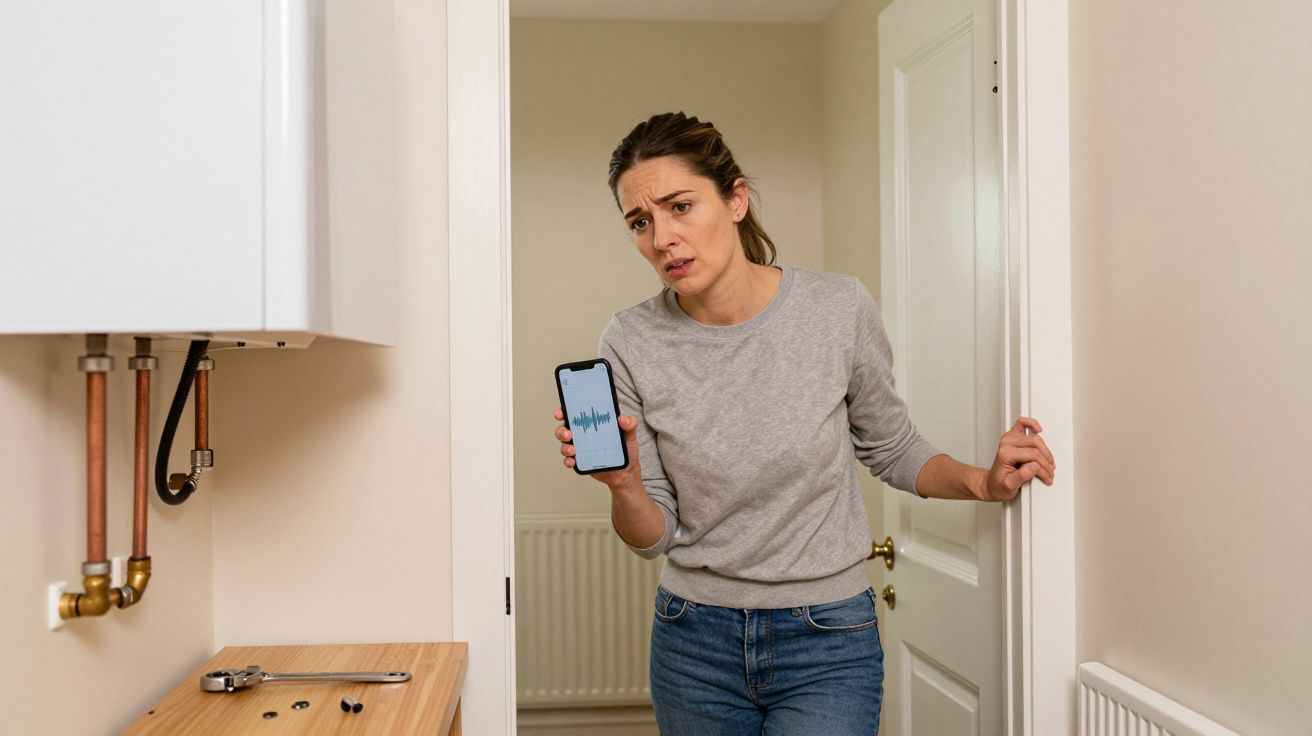
- New noises - kettling, rumbling, a “busy” sound when demand spikes
The system isn’t being dramatic; it’s compensating. Compensation is what turns into wear.
Taps and valves: tiny parts, big consequences
Valves, thermostatic mixer cartridges and solenoids fail in boring ways. Scale builds, seals deform, springs stick, and suddenly temperature control becomes moody or flow becomes inconsistent. It’s not always a complete breakdown; it’s a loss of precision.
That loss is what people describe as “it’s never quite right anymore”. And in water systems, “never quite right” often precedes “now it’s leaking”.
Appliances: efficiency first, then lifespan
Washing machines and dishwashers can cope with a lot, until they can’t. Scale on heaters raises energy use; scale in spray arms reduces performance; scale and grit around seals create slow leaks that only show up when the floorboards start complaining.
Kettles are the obvious one, but they’re also the least financially painful. A furred kettle is annoying. A furred heat exchanger is expensive.
Why it feels sudden when it isn’t
There’s a common story: everything works, then one day it doesn’t. But “one day” is usually just the day the remaining margin ran out.
Scale doesn’t need to be thick to be effective. A thin layer can reduce heat transfer noticeably. A small narrowing in a pipe can change flow patterns, creating turbulence that encourages more deposition, and the process feeds itself.
You’ll also get a kind of household gaslighting: you adapt without realising. Slightly shorter showers. Turning the hot tap more. Running the dishwasher again. You pay the difference in time, comfort and energy long before you pay an engineer.
The places hard water hides best
If you want to understand hard water damage, stop looking at surfaces you can wipe and start thinking about parts that rarely see air.
- Heat exchangers and immersion elements: scale builds fast, then bakes on.
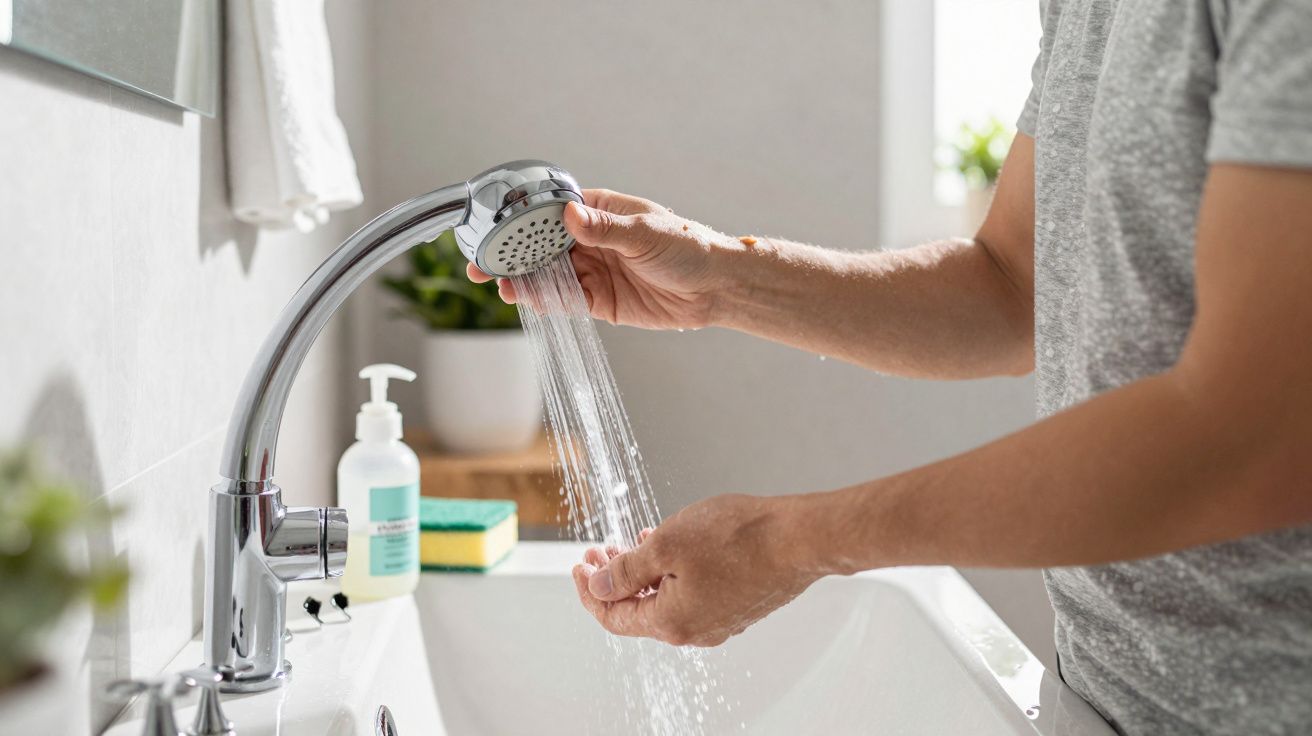
- Shower heads and hoses: scale narrows jets, then encourages uneven pressure.
- Toilet fill valves and float mechanisms: scale makes movement stiff and unreliable.
- Aerators and tap cartridges: grit and crystals wear seals and surfaces.
- Pipe elbows and dead legs: slow flow encourages deposition, which encourages slower flow.
The pattern is the same: deposits create resistance, resistance creates strain, strain accelerates component degradation.
What “prevention” actually looks like in a normal house
You don’t need a lifestyle change. You need a few boring habits that interrupt the slow build-up.
Small maintenance that pays back
- Descale kettles and shower heads regularly (frequency depends on your area).
- Clean tap aerators; they catch debris and scale before you notice the flow drop.
- Use the right dishwasher and washing machine salt settings if your appliances support them.
- If you have a hot water cylinder, ask during servicing whether scale build-up is likely in your system and what’s sensible for your setup.
None of this is glamorous. It’s the point.
When a water softener makes sense
If you’re in a hard water area and you’re constantly battling scale, a properly installed softener can reduce the mineral load that causes limescale in the first place. It won’t “fix” existing scale everywhere overnight, but it can stop the steady re-coating that makes everything age faster.
Not everyone needs one, and not every property is simple to fit. But if your boiler, shower and appliances are all quietly getting worse in the same year, it’s worth considering the root cause rather than treating each symptom as bad luck.
The emotional trick hard water plays
The most irritating thing about hard water is how domestic it feels. It’s chalky marks on glassware, a stiff towel, a bathroom that never quite looks clean. Those are the visible bits, and they distract you from the expensive bits you can’t see.
Hard water doesn’t arrive like a storm. It arrives like a habit. And by the time you’ve accepted the habit, the system has accepted the extra workload too - right up until it can’t.
A quick check: are you paying the “silent tax”?
If you’re not sure whether hard water is slowly undermining your place, look for clusters rather than single annoyances:
- You descale the kettle and it re-furs quickly.
- Shower pressure has dropped, but there’s no obvious plumbing fault.
- Hot water takes longer than it used to, or the boiler seems noisier under demand.
- Appliances feel less effective even after cleaning filters and doing normal maintenance.
- You’re replacing cartridges, valves or heating elements more often than seems reasonable.
Any one of these can happen for other reasons. Several together usually tell a clearer story.
The point isn’t panic - it’s noticing early
Hard water damage is mundane, which is why it’s so effective. Treat it early and it stays a cleaning problem. Ignore it long enough and it becomes a system problem, with component degradation doing the quiet work of turning efficiency into fragility.
You don’t have to obsess over every chalky mark. Just don’t let the house teach you to live with slow failure as if it’s normal.




Comments (0)
No comments yet. Be the first to comment!
Leave a Comment