
The first time you notice better heating performance, it feels like a win you can measure in minutes: radiators warm faster, the room stops feeling “behind”, and mornings are less grim. But that same speed can bring hidden load issues to the surface - not because the system is worse, but because it’s finally being asked to deliver harder, sooner, and more often. If your home has uneven insulation, ageing pipework, or a boiler that’s been quietly coping, faster heat-up can be the thing that stops it coping.
Most of us judge a heating system by the first 20 minutes. Engineers worry about the next six hours.
Why “fast warm-up” can be a false comfort
A heating system doesn’t just create heat; it moves it, balances it, and keeps it stable. When you make it ramp up aggressively - higher flow temperatures, longer burn periods, bigger bursts on a smart schedule - you’re changing the stress pattern across the whole loop.
That’s why some upgrades feel brilliant for a week, then turn into: radiators hissing, hot-and-cold rooms, a boiler cycling like it’s panicking, and energy use that doesn’t match the cosy feeling.
The core problem is usually not the idea of faster heat-up. It’s that the system was never tuned, cleaned, or sized for that style of demand.
Faster comfort is often just faster disclosure.
The load you didn’t know you were putting on the system
“Load” isn’t only about a bigger house or colder weather. It’s the combination of flow rate, temperature lift, and how evenly the system can deliver heat to each emitter (radiators or underfloor loops) without starving others.
Hidden load issues tend to show up in predictable places:
- At the boiler: short-cycling, lockouts, louder operation, bigger temperature swings.
- In the pipework: rushing noise, vibration, frequent bleeding, stubborn cold patches.
- Across rooms: one room roasts while another never quite gets there, despite “good” boiler output.
- On bills: higher gas/electric spend without a proportional improvement in comfort.
In older UK homes, the most common trap is thinking the boiler is the “engine” and radiators are “just the output”. In reality, the pipe network is the drivetrain. If it’s restricted, sludged, poorly balanced, or full of air, a harder push doesn’t fix it - it amplifies it.
What’s happening mechanically when you chase speed
When you crank the system to heat quickly, a few things change at once.
1) You raise the flow temperature (and reduce efficiency)
On condensing boilers, lower return temperatures help the boiler condense and run efficiently. Faster warm-up often comes from pushing hotter water through the system, which can lift return temps and reduce condensing time.
The room warms sooner. The boiler may run less efficiently while doing it.
2) You expose imbalance
If the system isn’t balanced, the easiest circuits (nearest radiators, bigger pipes, less restriction) grab the heat first. Those rooms hit temperature quickly, the thermostat is satisfied, and the rest of the house is left lagging.
That’s not “bad insulation” alone. It’s a distribution problem that speed makes obvious.
3) You turn small restrictions into big problems
Sludge, partially closed lockshields, clogged filters, sticky zone valves, tired pumps - they can all sit in a “good enough” state when demand is gentle. Rapid heat-up demands higher flow and faster response. The weak link starts limiting, sticking, or triggering safety behaviour.
The early signs your fast heat-up is stressing the system
Some symptoms look like “normal heating quirks”, until you line them up:
- Boiler fires, shuts off, fires again within short periods (cycling)
- Radiators heat at the top but stay cooler at the bottom (or vice versa)
- You keep bleeding radiators, but air returns
- One zone (upstairs/downstairs) dominates, the other feels delayed
- The system gets noisy only when it’s trying to heat quickly
- You need a higher thermostat setting than you used to for the same comfort
If you see two or three of these together, it’s usually not a single fault. It’s a system under load showing its weakest points.
How to keep the “fast” feeling without breaking the rhythm
The goal isn’t slow heating for its own sake. It’s controlled ramp-up: smooth delivery, stable temperatures, and efficiency that holds up across the day.
Start with the lowest-friction checks
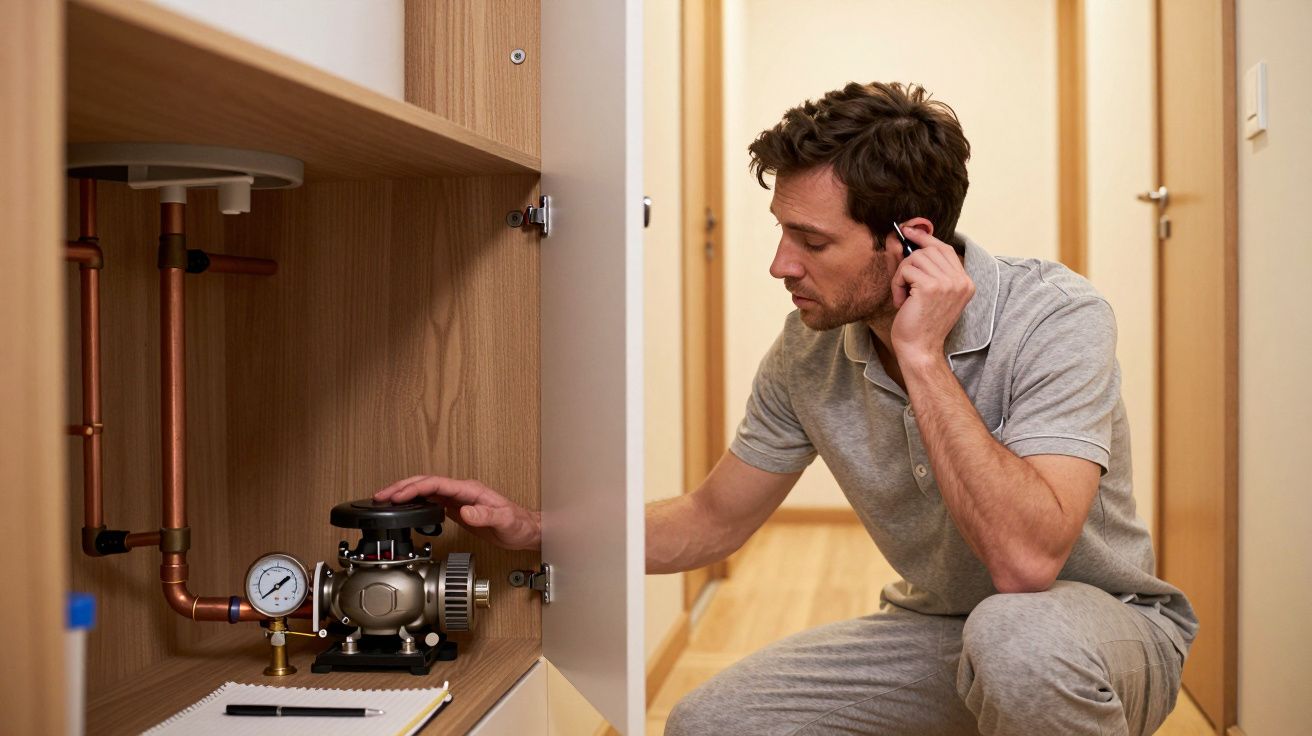
- Confirm pressure (sealed systems): low pressure can reduce circulation; repeated drops suggest leaks or expansion vessel issues.
- Check radiator valves and lockshields: stuck TRVs and half-closed lockshields can mimic bigger faults.
- Clean the magnetic filter (if fitted): a full filter can throttle flow right when you’re demanding more.
Then do the thing most homes never do: balancing
Balancing isn’t glamorous, but it’s often the difference between “fast in one room” and “fast everywhere”. It evens out flow so near radiators don’t steal all the heat and far radiators aren’t always last.
If you’ve just changed schedules, installed smart TRVs, or upgraded a boiler, balancing becomes more important - because control changes how load is applied.
Finally, align controls with the system you actually have
Weather compensation, load compensation, or simply lowering flow temperature and letting heat run longer can feel counterintuitive. Yet many homes get better comfort by avoiding harsh bursts and aiming for steadier delivery.
A good rule in winter: if your system only feels “good” when it’s running very hot, something else is usually missing (insulation, balancing, emitter sizing, or flow).
| What you notice | Likely cause | First action |
|---|---|---|
| Quick warm-up, then cold rooms later | Imbalance / thermostat placement | Balance radiators; review thermostat zone |
| Boiler short-cycling during heat-up | Flow too restricted or oversized output | Check filter/pump; consider engineer diagnosis |
| Noisy pipes when heating ramps | High velocity / air / restrictions | Bleed, check pressure, inspect valves |
A practical way to test for hidden load issues this week
Pick a cold-ish morning and run a simple observation. Don’t change five things at once - just watch.
- Set the heating to come on for 45–60 minutes.
- After 10 minutes, walk the house and note which radiators are warm first.
- At 30 minutes, check the “last” radiators again and see if they’re properly heating, not just lukewarm at one corner.
- Listen for noise at the boiler, pump area, and main pipes as the system ramps.
- Note whether the boiler cycles on/off repeatedly during the hour.
If the pattern is “fast near, slow far, noisy when pushing”, that’s classic hidden load behaviour. It’s not a reason to panic, but it is a reason to stop treating speed as the only marker of success.
The calmer truth about comfort
A well-set system doesn’t feel dramatic. It feels boring: gentle warmth, fewer spikes, less fuss, and a house that stays even when the weather changes. Fast heat-up can still be part of that, but only if the underlying distribution and control are healthy.
Otherwise, the speed you loved at first is just the moment your heating performance stopped hiding the stress you were always paying for.
FAQ:
- Is faster heat-up always less efficient? Not always, but it often pushes higher flow temperatures and more cycling, which can reduce efficiency. Many homes do better with slightly slower, steadier heat and a lower flow temperature.
- Do smart thermostats and smart TRVs cause these problems? They don’t create sludge or poor pipework, but they can expose imbalance by changing when and where demand appears. After installing smart controls, balancing and filter checks matter more.
- What’s the single best first fix if rooms heat unevenly? Radiator balancing is the best value starting point, especially if the boiler is otherwise healthy and the system has been serviced.
- When should I call an engineer? If you see boiler lockouts, repeated pressure drops, persistent short-cycling, or you suspect pump/valve faults. Those are safety-and-reliability issues, not just comfort tweaks.



Comments (0)
No comments yet. Be the first to comment!
Leave a Comment