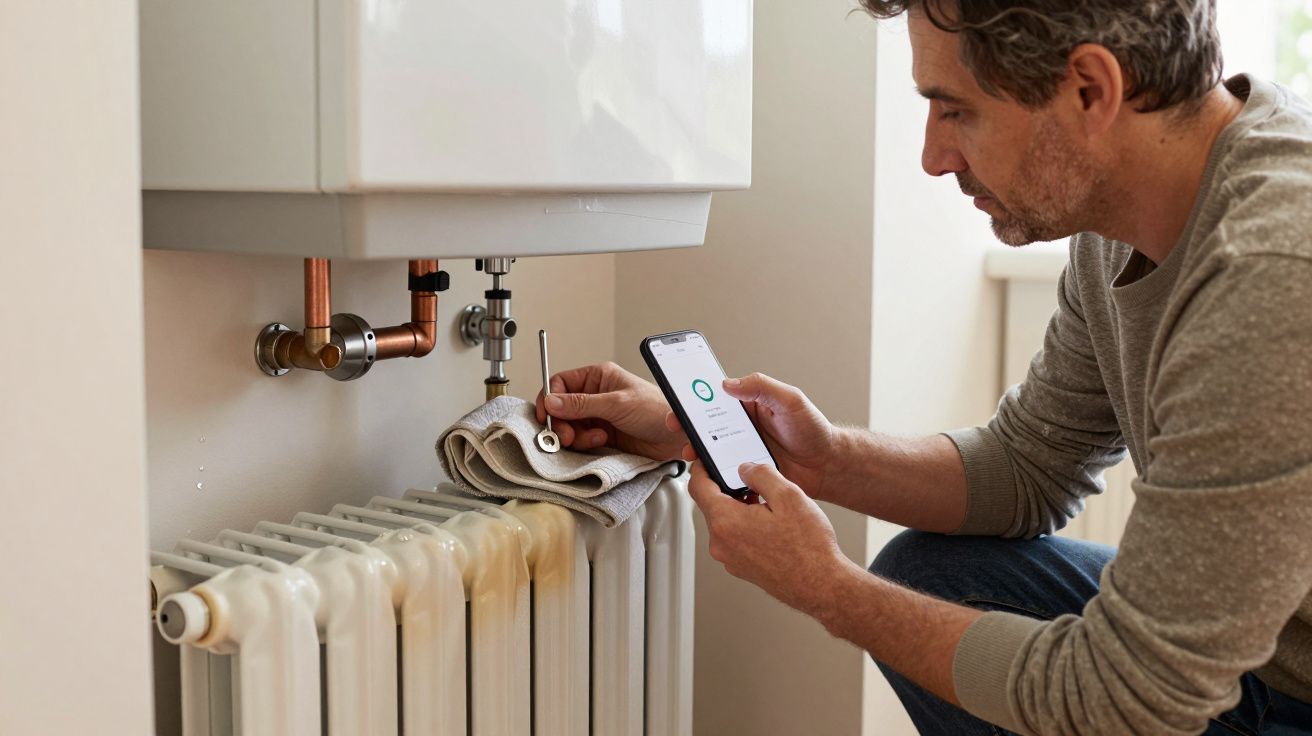
There’s a particular kind of panic that hits when the radiators go cold: you glance at the thermostat, you tap it like it owes you money, and your brain jumps straight to “boiler’s packed in”. But central heating pumps are often the quiet culprit, and a lot of incorrectly diagnosed heating faults start with everyone assuming the boiler is the only moving part that matters. In most UK homes, the pump is the little workhorse that pushes hot water around the system, and when it sulks, the boiler can look guilty even when it’s doing its job.
You can hear it in the language people use on the phone: “It’s firing up, but nothing’s happening.” “The boiler sounds fine, but the rads are freezing.” That “but” is usually where the pump story begins.
The failure that looks like a boiler problem
A boiler can ignite, reach temperature, and still leave you with stone-cold radiators if the water isn’t circulating. The pump’s whole job is to move heated water from the boiler through the pipework, round the radiators, and back again. If it’s stuck, weak, or airlocked, the heat stays in one place like a party nobody told the radiators about.
This is why a breakdown can feel so confusing. You may have hot water at the taps (especially with a combi), you may hear the boiler run, and you may even see the flow temperature climb. Yet upstairs it’s all shrugging towels and cold metal.
The usual pump issue: it’s not “broken”, it’s seized (or full of air)
The most common real-world pump problem isn’t dramatic failure with sparks and smoke. It’s a pump that’s stuck after months of sitting still, or a pump that’s trying to move water but can’t because there’s air in the wrong place, sludge in the system, or a closed valve that nobody remembers touching.
Here’s what that tends to look like at home:
- The boiler fires, then cycles off quickly because heat builds up in the boiler but doesn’t travel away.
- Some radiators get warm near the boiler, while the rest stay cold.
- You can hear gurgling, rushing, or a faint whining/humming near the pump.
- The system pressure may be normal, which makes it even easier to blame “electronics”.
A key detail: modern systems often protect themselves. If circulation is poor, the boiler may shut down with an overheat lockout. That’s not a “boiler failure” as much as the boiler putting its hands up and refusing to cook itself.
What you can check before you pay for the wrong repair
You don’t need to take the cover off anything or start poking at gas appliances. But you can do a few sensible checks that help you describe the problem accurately and avoid the classic misdiagnosis.
1) Listen and feel - carefully
With heating on, stand near the boiler and nearby pipework. Do you feel a hot flow pipe leaving the boiler but a cooler return pipe coming back? That mismatch can hint at poor circulation.
If you can hear a steady hum near where the pump sits (often close to the boiler or hot water cylinder), it may be powered but not moving water effectively. Silence doesn’t prove it’s dead, but it’s useful information.
2) Check radiator patterns, not just “on/off”
Walk the house and note what’s happening:
- Only one or two radiators warming?
- Downstairs warm, upstairs cold?
- Radiators hot at the top but cold at the bottom (often sludge)?
- Radiators cold but towel rail warm (common on certain layouts)?
Those patterns matter more than the single headline: “No heating.”
3) Bleed radiators (and then recheck pressure)
Air is one of the simplest reasons circulation becomes patchy. Bleed any radiators that are cold at the top, and then check the system pressure afterwards. If pressure drops too low, the boiler may refuse to run properly, which adds a second problem on top of the first.
If you’re repeatedly bleeding rads and the air keeps coming back, that’s not “normal air”. That’s a clue.
4) Look for the small human errors
A surprising number of call-outs are caused by something mundane:
- A thermostatic radiator valve (TRV) stuck shut after summer.
- An isolating valve near the pump partially closed.
- A programmer schedule overridden, then forgotten.
- A system valve (zone valve/diverter) not opening properly, making it look like “the pump’s gone”.
Incorrectly diagnosed heating faults love a simple toggle switch. It’s why good engineers ask boring questions first.
Why pumps seize in the first place (and why it’s seasonal)
Pumps hate inactivity. When a heating system sits idle through warmer months, debris can settle, components can stiffen, and the pump can stick at the start of the season. The first cold snap arrives, you demand instant cosy radiators, and the pump responds with the mechanical equivalent of “absolutely not”.
Sludge is the other slow-burn villain. Over time, magnetite (black iron oxide) builds up in older systems, narrowing passages and loading the pump. A pump can still spin, but it’s moving water like someone trying to drink a thick milkshake through a straw.
If your system is noisy, slow to heat, or constantly needing radiator bleeding, it’s worth thinking beyond “new boiler” and towards system health.
When it’s time to stop DIY and call someone
If you smell burning, see leaks near electrics, or the boiler keeps locking out, don’t keep resetting it and hoping for the best. A struggling pump can lead to overheating and stress on other components, turning a small repair into a bigger one.
Call a qualified heating engineer if:
- The boiler overheats or repeatedly shuts down when heating is on.
- You’ve bled radiators, pressure is correct, and circulation is still poor.
- The pump is excessively noisy, vibrating, or too hot to touch.
- You suspect sludge (cold radiator bottoms, dirty water when bleeding, recurring issues).
When you book the visit, say what you observed: “Boiler fires, flow pipe gets hot, return stays cool, most radiators remain cold.” That sentence can save time, and time is money.
The fix is often smaller than the fear
People jump to “new boiler” because it’s the biggest, scariest box in the cupboard. But central heating pumps, valves, airlocks, and sludge issues can mimic boiler failure so convincingly that even confident DIYers get led astray. The calmer move is to treat heating like a system, not a single appliance.
A pump that’s seized, airlocked, or fighting sludge isn’t glamorous, but it’s fixable. And if you catch it early, it usually stays a repair - not a winter-long saga.
FAQ:
- Why do I have hot water but no heating? Many combi boilers can still provide domestic hot water even when the heating circulation has a problem. A seized pump or a stuck valve can stop radiator flow while taps remain hot.
- Is a noisy pump always a failed pump? Not always. Noise can come from air in the system, cavitation, or sludge restricting flow. It’s a warning sign, though, especially if heating performance has dropped.
- Can bleeding radiators fix a pump issue? It can fix poor circulation if air is the main problem, but it won’t solve a seized pump or heavy sludge. If air keeps returning, the underlying cause needs investigating.
- How can I avoid this next winter? Run the heating briefly every few weeks in warmer months, keep inhibitor levels maintained, and consider a system clean and magnetic filter if sludge is an issue.
- Should I replace the boiler if the pump fails? Not automatically. Pumps can often be replaced or repaired without replacing the boiler, depending on age, availability of parts, and overall system condition.





Comments (0)
No comments yet. Be the first to comment!
Leave a Comment