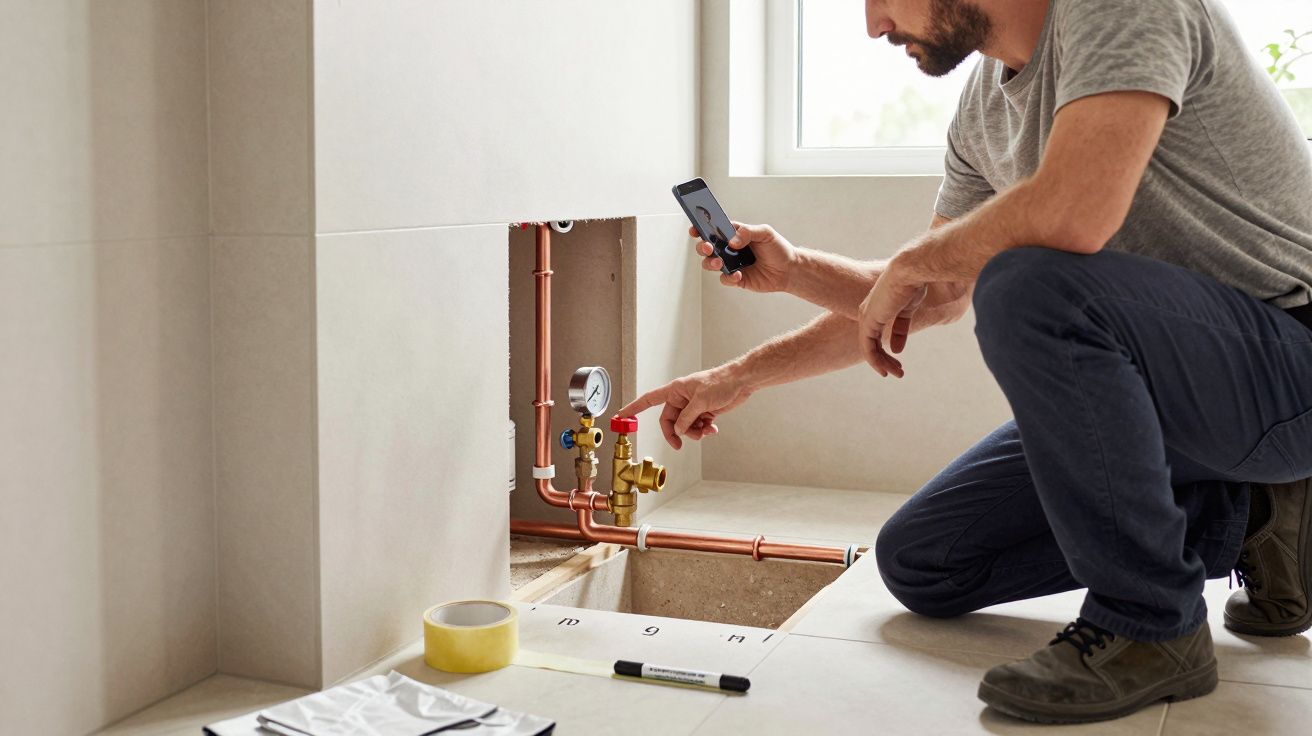
Most renovation disasters don’t start with a dramatic burst pipe; they start with an assumption. Plumbing surveys are the calm, methodical check you run before walls come down and new pipework goes in, and they sit right at the heart of risk prevention for leaks, delays, and budget creep. Used properly, they turn “we’ll make it fit” into “we know what’s there”.
The goal isn’t to overcomplicate your project. It’s to catch the few hidden issues-odd pipe routes, weak pressure, poor drainage, non-compliant work-that can derail the whole build once the dust sheets are already down.
The pre-start mindset: check what you can’t see
Renovation planning tends to focus on finishes: taps, tiles, radiators, the look of the bathroom. The smarter focus, before a plumber lifts a tool, is the condition and logic of the existing system. Where does the water come in, where does it go, and what happens under load?
A plumbing survey helps you map that reality. It’s not about blaming past work; it’s about understanding constraints before you design around them.
The cheapest fix is the one you make on paper, before anything is chased into a wall.
1) Confirm your incoming water supply (pressure, flow, and stopcock)
Before you add a rainfall shower, an extra bathroom, or a combi boiler upgrade, you need to know what the house can actually deliver. “Pressure is fine” at the kitchen tap doesn’t always mean it stays fine when two showers run and the washing machine fills.
Ask your plumber (or surveyor) to check:
- Static and dynamic pressure at suitable test points.
- Flow rate (litres per minute) under realistic conditions.
- Location and condition of the internal stopcock (and whether it fully closes).
- Any signs of old lead supply pipe or restrictive pipework near the entry.
If the supply is marginal, you want to know now-before you’ve bought fittings that will never perform properly.
2) Work out what you’re connecting to: pipe materials and age
A renovation often joins new pipework to old. That junction is where surprises hide: mixed materials, old soldered joints, micro-leaks, or pipes that have been “made to work” rather than installed well.
A good pre-start check identifies:
- Pipe materials (copper, plastic, galvanised steel, lead) and their condition.
- Signs of corrosion, weeping joints, or bodged transitions.
- Whether pipe sizes are appropriate for the planned demand.
- Any pipe runs that are vulnerable to freezing (lofts, external walls, uninsulated voids).
This is also where risk prevention becomes practical: if something is near end-of-life, replacing a short section now can prevent having to reopen new plaster later.
A quick tell-tale
If you see fresh paint patches on pipework, a random compression fitting in the middle of a run, or staining on joists below a bathroom, treat it as a prompt to investigate-not a detail to ignore.
3) Do a drainage reality check (falls, venting, and capacity)
Drainage is less forgiving than supply. Water can be pressurised into a new bathroom, but waste needs proper falls, correct pipe sizes, and venting that won’t glug, smell, or siphon traps dry.
Before plumbing starts, confirm:
- Where the new waste will connect, and whether the route allows proper fall.
- Whether soil stacks and branches are correctly sized and positioned.
- If an air admittance valve is proposed, that it’s sited correctly and accessible.
- Any history of slow drains, smells, or backups-especially after heavy rain.
If you’re adding an en-suite far from the stack, this is the moment to decide whether you need a new stack route, a pumped solution, or a design change that saves years of annoyance.
4) Locate what’s buried: isolation valves, junctions, and “no-go” zones
Renovation work is full of cutting, drilling, and fixing into walls and floors. The highest-risk moments are when someone hits a pipe they didn’t know existed-often because it was rerouted during a past job and never documented.
Before first fix, make time to:
- Identify existing isolation valves (and add them where they’re missing).
- Trace pipe routes, especially in stud walls and under floors.
- Mark “no-go” zones for other trades (kitchen fitters, electricians, joiners).
- Photograph everything before it’s boarded or tiled.
This isn’t paranoia. It’s a simple discipline that stops one trade’s progress becoming another trade’s emergency.
5) Check hot water and heating decisions against the actual layout
A new bathroom layout can quietly force big system choices: relocating a cylinder, running long hot-water branches, changing radiator positions, or adding underfloor heating. The best time to validate those decisions is before you commit to pipe routes.
Key checks to run:
- Hot water delivery time to new outlets (and whether secondary return is worth it).
- Compatibility of showers and taps with your system (combi, unvented cylinder, gravity).
- Heating zones, radiator sizing, and whether pipework routes are realistic without destructive chasing.
- Space for access panels, valves, and servicing clearances.
If you’re upgrading to an unvented cylinder or changing boilers, also confirm what will be required for compliance and commissioning-don’t leave it until the week you want to move back in.
6) Moisture and leak clues: read the building before you rebuild it
Some homes tell you their weak points if you look closely. A plumbing survey paired with basic building observation can flag risks that are easy to miss when you’re focused on the new design.
Look for:
- Staining around ceilings below bathrooms or near external walls.
- Swollen skirting boards, lifting vinyl, or mould at pipe chases.
- Rot or softness around shower trays, baths, and window reveals.
- Previous repair marks that don’t match the surrounding finish.
If anything looks “historically damp”, get clarity on the cause before you tile over it. Renovation covers problems beautifully-until they return.
A tight pre-plumbing checklist (print this)
- Confirm stopcock works and label it.
- Measure pressure and flow; match fittings to reality.
- Trace and photograph pipe routes and valves.
- Confirm waste routes and falls; agree venting approach.
- Decide what gets replaced now vs later (and why).
- Agree access points for servicing and isolation.
- Write down assumptions: pipe sizes, materials, connection points.
Common checks, common outcomes
| Check | What it prevents | Typical fix if it fails |
|---|---|---|
| Pressure/flow test | Poor showers, appliance issues | Upsize supply, adjust spec, booster (where suitable) |
| Drainage route & fall | Smells, slow drains, callbacks | Reroute waste, new stack, correct venting |
| Material/condition review | Leaks after finishes go in | Targeted renewal, better transitions, extra isolation |
FAQ:
- Do I need plumbing surveys for a small bathroom refresh? If you’re not moving fixtures and the plumbing has been reliable, you may only need basic checks. If you’re relocating a toilet/shower, changing to a high-demand shower, or opening floors/walls, a survey-style review is usually worthwhile.
- When should these checks happen in the programme? Before finalising layouts and before ordering key fittings. Ideally, you confirm supply and drainage feasibility while changes are still cheap to make.
- Is this the same as a full building survey? No. Plumbing surveys focus on water supply, pipework, heating interfaces, drainage, and practical serviceability. They complement, rather than replace, broader structural or damp surveys.
- What’s the biggest risk people miss? Waste and venting. It’s easy to plan a beautiful layout that cannot drain properly without compromises you only discover once floors are up.
The best renovation checks don’t slow your project; they stop it from stopping later. Do the quiet, slightly boring verification upfront, and you buy yourself something rare on a building site: predictable progress.






Comments (0)
No comments yet. Be the first to comment!
Leave a Comment