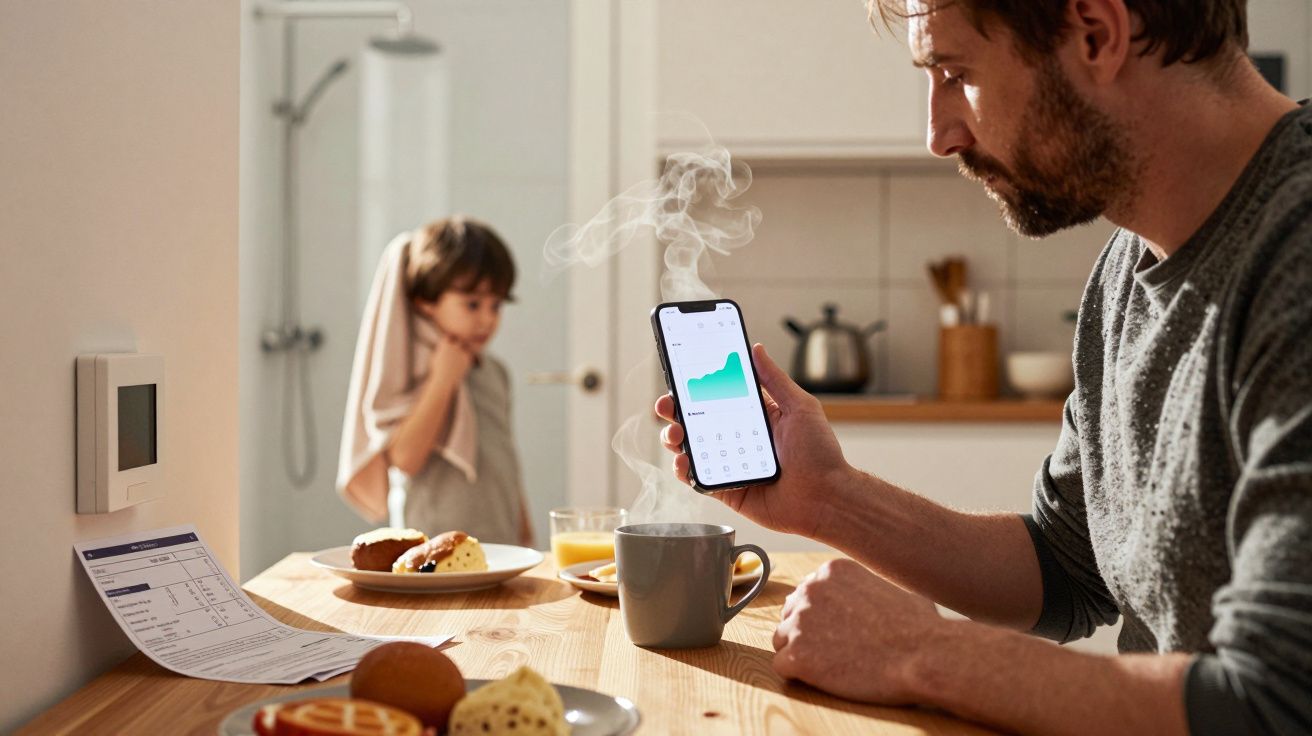
Heating pumps are brilliant when you want steady, efficient warmth without thinking about it, but busy homes rarely behave like that. The trouble starts during demand surges: school-run mornings, everyone showering, the oven on, laundry spinning, and the heating asked to “just cope” all at once. Upgrades aren’t about chasing perfection-they’re about smoothing the spikes so your house stays comfortable while your schedule stays chaotic.
Most people don’t need to replace the whole system. They need a handful of small, boring changes that stop the pump being yanked around by your day.
The upgrades that make the biggest difference (without taking over your life)
A good rule: prioritise anything that reduces cycling, widens the system’s “comfort buffer”, and makes heat delivery more even room-to-room. That’s what turns a heat pump from “temperamental” into “background”.
1) Smarter controls that stop panic-heating
A heat pump works best when it runs gently for longer, not when it sprints. Yet many homes still drive them like a gas boiler: big setpoint jumps, stop-start scheduling, and thermostats placed where the sun hits at 11am.
The upgrade isn’t “an app”. It’s controls that understand slow heat and keep changes small.
Look for:
- Weather compensation (flow temperature adjusts with outdoor temperature)
- Load compensation (output trims based on indoor demand rather than on/off)
- Room-by-room scheduling if your household actually uses rooms differently
- A controller that your installer knows well (ease beats features you’ll never use)
The win is behavioural: fewer big temperature swings means fewer demand spikes your system has to chase.
2) A hot water cylinder that’s sized for real mornings
If your home’s busiest time is “everyone needs hot water now”, the cylinder becomes your shock absorber. An undersized cylinder forces the heat pump to reheat at exactly the wrong moment-when the house is also asking for heat-creating those familiar demand surges and lukewarm showers.
Upgrading can mean a bigger cylinder, better coil sizing, or both. The point is to store enough heat when the system is calm, then spend it when the house gets loud.
Practical checks to ask your installer:
- Cylinder volume matched to occupancy (and your shower habits, not a brochure)
- Heat pump-compatible coil area (so it can reheat efficiently at lower temperatures)
- Insulation quality (standing losses matter more than people admit)
3) Higher-performing emitters: bigger radiators or low-temp fan convectors
Busy homes often fail on the same detail: not enough heat output at low flow temperatures. When radiators are too small, the system compensates by pushing temperatures up, which hurts efficiency and can increase cycling.
Two upgrade paths usually win:
- Larger radiators (or double-panel convectors) in key rooms
- Low-temperature fan convectors where space is tight or fast response matters (kitchens, open-plan living)
You don’t have to do every room. Start with the spaces that trigger complaints and thermostat battles.
4) A small buffer tank-only when it solves a real problem
Buffer tanks can be misunderstood. They’re not a magic efficiency upgrade; they’re a stability tool. In the right system they reduce short-cycling and help the heat pump run smoothly when demand is small or zone valves keep snapping shut.
They tend to help when you have:
- Multiple heating zones that open/close frequently
- A system that cycles even in mild weather
- Very low water volume in the heating circuit
But they can also add losses if oversized or poorly integrated. Ask for the “why” in plain English before agreeing.
5) Hydraulic balancing and proper commissioning (the unsexy upgrade that fixes everything)
You can spend thousands on hardware and still live in a house where one bedroom is boiling and the hallway is arctic. That’s almost always balancing and setup, not the heat pump itself.
Commissioning upgrades that busy households feel immediately:
- Correct flow rates through the system
- Radiators balanced so heat reaches the farthest runs
- Flow temperature set as low as comfort allows
- Hot water reheat schedule timed away from peak household use
Let’s be honest: nobody posts photos of “beautifully balanced pipework”. But it’s often the difference between constant tinkering and a system you forget exists.
How to choose upgrades based on your household’s “rush hour”
Before you buy anything, map the day. Not the perfect day-the messy one.
Common patterns and the upgrades that match them:
- 6–9am chaos (showers + breakfast + heating): bigger/better cylinder, hot water schedule, controls that avoid steep setpoint jumps
- Work-from-home in one room: room zoning done properly, larger emitter in the office, thermostat placement fix
- After-school spike (doors opening, quick warm-up requests): larger emitters in living areas, weather compensation, reduce “boost” behaviour
- Weekend laundry + cooking: cylinder insulation, smart timing for hot water reheat, avoid simultaneous DHW and heating peaks where possible
If your system always struggles at the same time, that’s a clue. Upgrades should target the repeating surge, not an imagined “average day”.
Quick comparison: what each upgrade actually buys you
| Upgrade | Best for | Typical payoff |
|---|---|---|
| Weather/load compensation controls | Stop-start comfort complaints | Smoother temperatures, less cycling |
| Cylinder/coil upgrade | Morning hot water demand surges | More usable hot water, less peak stress |
| Larger emitters / fan convectors | Cold rooms, high flow temps | Lower running temps, better comfort |
| Balancing & commissioning | Uneven heat, constant tweaking | Immediate stability and quieter operation |
Practical trade-offs before you commit
A few truths that save money and frustration:
- “Bigger” isn’t always better. Oversized buffers and cylinders can add losses; emitter upgrades must match your layout and insulation.
- Controls can’t fix hardware limits. If radiators can’t deliver heat at low temperatures, no schedule will make the room warm politely.
- Installer skill matters more than brand. A well-set-up mid-range system beats a premium unit left on default settings.
- Your habits are part of the system. Big thermostat jumps and “boost” routines create the very peaks you’re trying to eliminate.
The goal isn’t to micromanage. It’s to set the system up so your busiest hours don’t become a daily stress test.
FAQ:
- Do I need to replace my heating pump to get better performance? Not usually. Many comfort issues in busy homes come from controls, hot water storage, emitter sizing, and commissioning rather than the heat pump unit itself.
- What upgrade helps most with morning demand surges? A correctly sized hot water cylinder (with a suitable coil for heat pumps) plus smarter hot water scheduling. It lets you store heat off-peak and use it when everyone showers.
- Will a buffer tank reduce my bills? It can reduce cycling and improve stability, but it’s not automatically a cost-saver. It helps when it solves a specific hydraulic or zoning issue, and it should be sized and piped correctly.
- Are bigger radiators really necessary? Often, yes. If your home needs high flow temperatures to feel warm, larger emitters help you run cooler water, which is where heat pumps are most efficient.
- What’s the simplest upgrade with the fastest payoff? Proper balancing and commissioning. It’s less glamorous than new kit, but it’s frequently the difference between “fiddly” and “fit-and-forget”.





Comments (0)
No comments yet. Be the first to comment!
Leave a Comment