
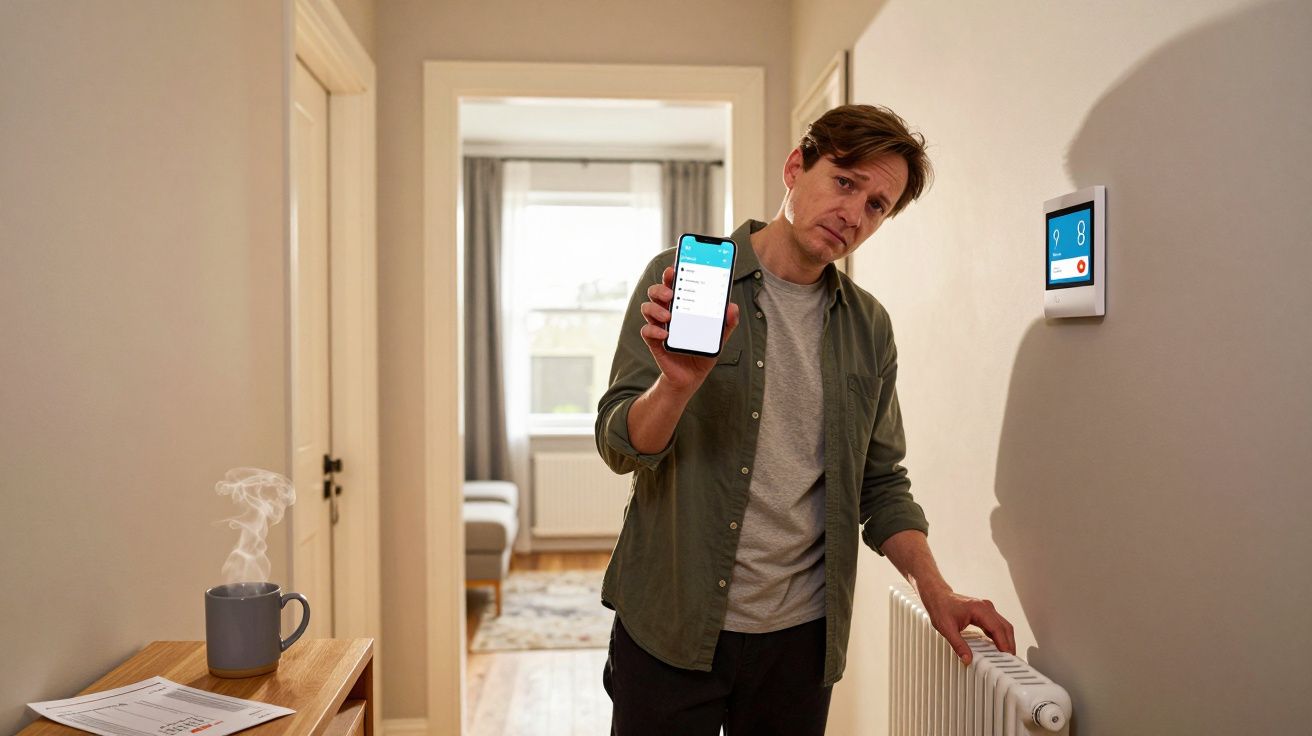
The van pulls away, the new controller lights up, and you finally stop boiling the kettle for hot water. Then the house does that familiar thing: one radiator hammers, another stays lukewarm, and the app insists everything is “optimised”. Modern heating installations are sold as quieter, cleaner, more efficient upgrades, but system complexity means the gap between “installed” and “working properly” is wider than most homeowners expect.
It isn’t that the technology is always bad. It’s that the system is now a chain of parts, settings, sensors and assumptions-and a weak link anywhere can feel like the whole thing is faulty.
The promise: efficiency, comfort, control
The brochure version is compelling. Lower bills through smarter modulation, steadier temperatures through better zoning, and fewer breakdowns because everything is monitored. In theory, a modern boiler or heat pump should gently match output to demand instead of roaring on and off like an old unit.
In real houses, comfort is personal and buildings are odd. Bay windows leak heat, extensions behave differently, and a toddler’s bedtime routine changes how rooms are used. The more “smart” the system, the more it needs your home’s messy reality to be translated into correct design and settings.
The kit can be excellent. The disappointment usually comes from the handover between design, installation, and day‑to‑day use.
The real culprit is rarely one component
Homeowners often describe it as a defective boiler, a “noisy heat pump”, or “radiators full of air again”. But most repeat problems are system problems: undersized pipework, poor balancing, wrong control strategy, or a commissioning process that ended the moment the system produced heat.
Think of it like a new kitchen with old habits baked in. If the cupboards are laid out badly, you blame the room every time you cook-not the hinge quality. Heating is similar: the layout and logic matters as much as the brand badge.
Where modern systems go wrong in ordinary homes
1) Controls are installed, not configured
Many systems arrive with a wall thermostat, TRVs, weather compensation, maybe an app, and sometimes load compensation. That’s a lot of decision-making layers. If they’re left fighting each other-thermostat calling for heat while TRVs choke flow, or an app schedule overriding a programmer-you get cycling, cold spots and noise.
Common signs the controls aren’t aligned:
- The system heats hard for 10 minutes, then stops, then starts again.
- Some rooms overshoot while others never catch up.
- You’re constantly “nudging” temperatures instead of leaving it alone.
- Hot water timings are unpredictable, especially after app updates or power cuts.
2) Hydraulics don’t match the new heat source
Older boilers tolerated a lot: high flow temperatures, inconsistent flow rates, and radiators sized for blast heating. Modern boilers and especially heat pumps reward the opposite-steady flow, lower temperatures, properly sized emitters.
If pipework is restrictive, or radiators are too small, the system compensates in ways you feel:
- Higher running temperatures (and higher bills) to make undersized radiators cope
- Pump noise, rushing water, or whistling valves
- Heat pump defrost cycles that feel like “it’s always stopping”
- Rooms that never quite reach setpoint in cold snaps
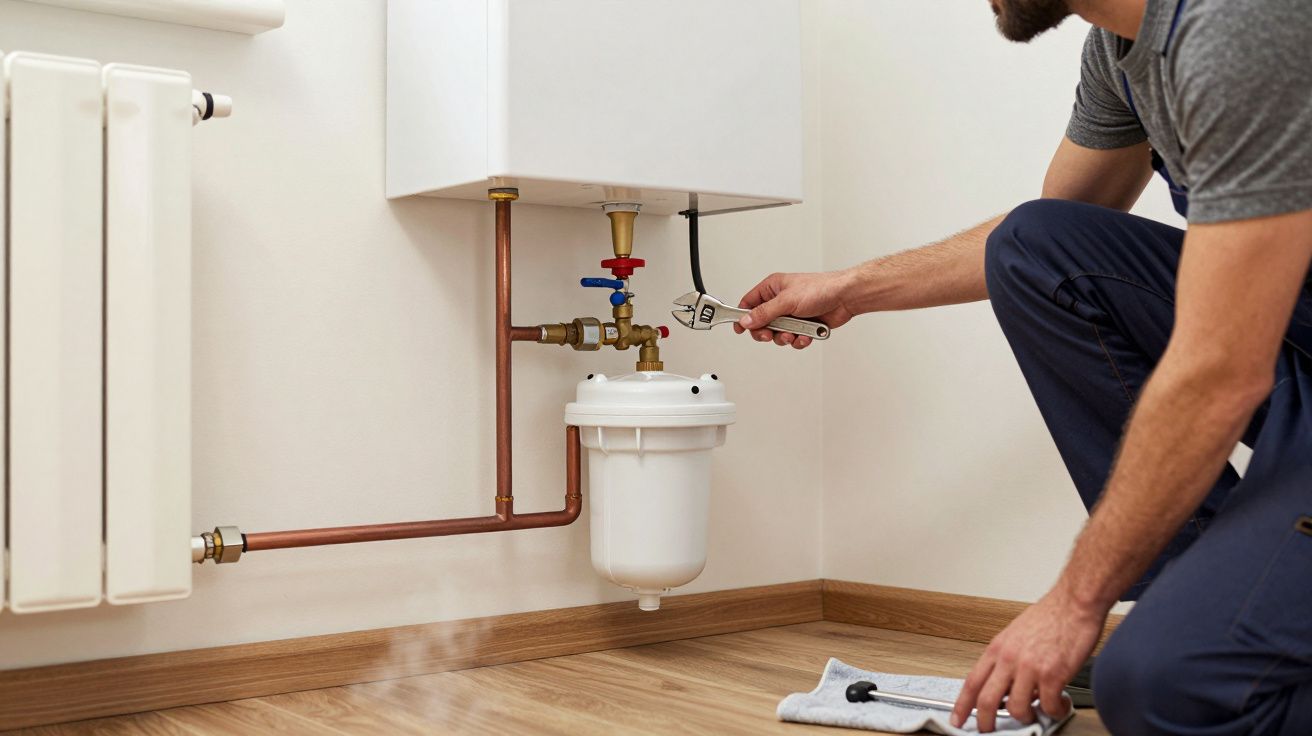
3) Commissioning gets treated like paperwork
Commissioning is where the system is balanced, controls are tuned, flow rates are checked, and the installer proves performance rather than just function. It takes time. It’s also the first thing squeezed when a job is over-running.
If commissioning is rushed, you inherit the “same old problems” with shinier hardware. The system technically works, but it never settles.
4) Zoning and “smart rooms” add friction
Zoning sounds like pure comfort: heat the office in the day, bedrooms at night, save money everywhere else. It can work brilliantly, but every extra zone adds decision points and failure points-more actuators, more sensors, more batteries, more settings.
A simple rule helps: zone because your house truly behaves differently, not because the app makes it easy to add rooms. Over-zoning can starve the system of flow, create short-cycling, and turn heating into constant micro-adjustments.
If you need to manage the system daily, it isn’t “smart”-it’s needy.
A quick reality check: what you can expect from a good install
A well-designed modern system is boring in the best way. You shouldn’t hear much, touch it much, or think about it much.
Here’s a practical “am I on track?” checklist:
- The house warms steadily without frequent on/off cycling.
- Radiators heat evenly top-to-bottom (or appropriately, depending on design).
- Flow temperatures aren’t set absurdly high “just to be safe”.
- One clear control method is in charge (weather compensation, load compensation, or a room stat strategy-not all wrestling at once).
- You were shown how to run it, and given simple defaults that work.
The homeowner trap: chasing comfort with constant tweaks
When comfort isn’t stable, people compensate. They boost hot water, raise target temperatures, override schedules, or crank TRVs to 5. It’s understandable-no one wants a chilly evening while a new system “learns”.
But constant changes stop the system finding a steady rhythm, especially with weather-compensated setups and heat pumps. The result is a loop: you tweak because it’s uncomfortable, and it stays uncomfortable because it’s always being tweaked.
Two habits that help without becoming a heating engineer:
- Change one thing at a time, then leave it for 48 hours.
- Treat your schedule like a routine, not a remote control.
What to ask for when problems keep returning
You don’t need to memorise jargon, but you do need the right questions-ones that force a system-level answer.
Ask your installer (or a second opinion) to show you:
- The control strategy in one sentence: “What is the system using to decide how hard to run?”
- Target flow temperatures for typical winter days, and why
- Evidence of balancing (radiator outputs, lockshield settings, flow rates where applicable)
- For heat pumps: designed flow rate, emitter sizing assumptions, and how defrost is handled
- What “normal” sounds like, and what noises indicate air, flow restriction, or valve issues
If the response is only brand-based (“that boiler is great”, “that heat pump is quiet”), you’re not discussing the real issue yet.
The fix is usually simpler than it feels
Most disappointment isn’t solved by replacing the shiny box. It’s solved by reducing conflict in the controls, improving flow through the system, and commissioning properly so the equipment can do what it was designed to do.
Modern heating should feel like a background service, not a hobby. When it doesn’t, the lesson is rarely “technology is rubbish”. It’s that system complexity demands a design-and-handover standard that the industry still too often treats as optional.
FAQ:
- Why did my old boiler “work fine” but the new one feels worse? Older systems often ran hotter and were more forgiving of poor balancing and control conflicts. Modern systems can be more efficient, but they expose weaknesses in pipework, radiator sizing, and configuration.
- Is an app-controlled system automatically more efficient? Not necessarily. Apps add convenience, but efficiency comes from correct flow temperatures, stable operation, and a coherent control strategy. More features can mean more ways to misconfigure.
- Should I turn every radiator TRV to max and control heat from the thermostat? Only if the system is designed that way. In many homes, TRVs should limit unused rooms while the main thermostat (or weather compensation) sets the overall demand. The key is avoiding “two bosses” fighting each other.
- When should I get a second opinion? If you’ve had repeated call-outs for the same symptoms (cycling, cold rooms, noise, unreliable hot water) and the fixes are temporary, ask for a full system review focused on design assumptions and commissioning-not just part swapping.




Comments (0)
No comments yet. Be the first to comment!
Leave a Comment